
Portable Extension Ladder Safety: Do’s and Don’ts for Every Worker
Falls from portable extension ladders can cause serious injuries, and many can be prevented. This free portable extension ladder toolbox talk reviews practical steps for inspecting, setting up, climbing and using an extension ladder, with references to OSHA ladder rules (29 CFR 1910.23 for general industry and 1926.1053 for construction). Always check your employer’s rules and the ladder manufacturer’s instructions.
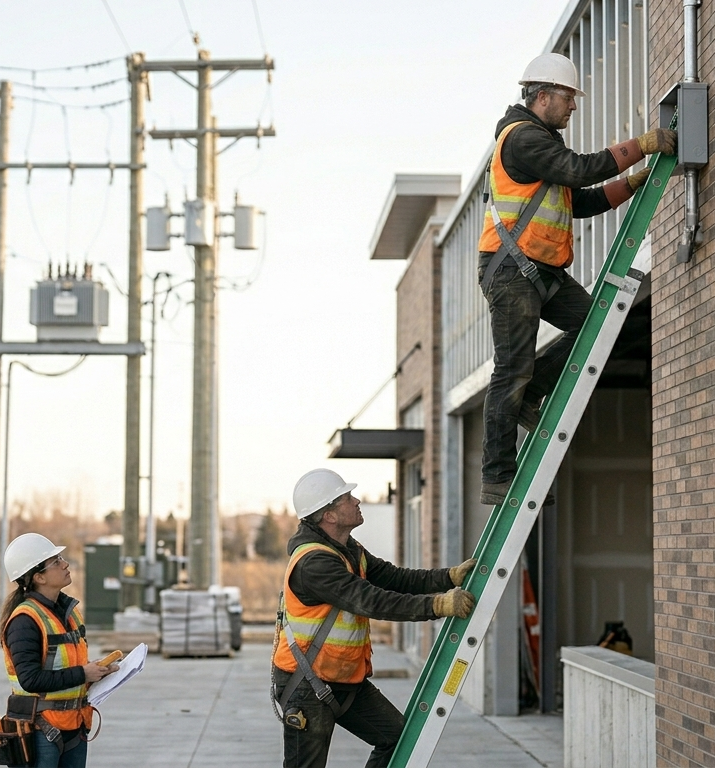
Why Extension Ladder Safety Matters: Do's and Don'ts
This extension ladder safety toolbox talk covers practices workers should follow before, during, and after using a portable extension ladder. Understanding these practices helps reduce fall hazards and protect everyone working at height.
Important Safety Reminder: Falls from ladders can cause serious injuries. Select, inspect, set up, and use the ladder as the manufacturer and OSHA require.
This talk summarizes OSHA ladder requirements. Confirm all requirements with your employer, the manufacturer's instructions, and OSHA.
Extension Ladder Angle Guide: Setting Up an Extension Ladder
Extension ladder setup affects stability. For nonself-supporting ladders such as extension ladders used in construction, OSHA sets the working angle at one-quarter of the working length of the ladder, the 4 to 1 rule (29 CFR 1926.1053(b)(5)(i)). The portable ladder paragraphs of the general industry rule (29 CFR 1910.23) do not state this 1:4 formula, so follow the manufacturer's instructions.
Correct Extension Ladder Setup
- On construction work, place the base about 1 foot away from the support for every 4 feet of working length, measured along the ladder from the base to the point where it rests against the support. This 1:4 rule is a construction requirement (29 CFR 1926.1053(b)(5)(i)); in general industry follow the manufacturer’s instructions.
- Set both side rails so they rest evenly on the supporting surface, unless the ladder has a single support attachment.
- When the ladder is used to reach a roof, platform, or other landing, extend the side rails at least 3 feet above the landing surface (1910.23(c)(11); 1926.1053(b)(1)). In construction, when such an extension is not possible because of the ladder’s length, the ladder must instead be secured at its top to a rigid support that will not deflect, and a grasping device, such as a grabrail, must be provided to assist employees in mounting and dismounting the ladder. In no case may the extension be such that ladder deflection under a load would, by itself, cause the ladder to slip off its support (29 CFR 1926.1053(b)(1)).
- Place the ladder on a stable, level surface (1910.23(c)(4); 1926.1053(b)(6)).
Extension Ladder Setup Reminders
- On construction work, set the base at about one-quarter of the working length from the support (29 CFR 1926.1053(b)(5)(i)). In general industry, follow the manufacturer’s instructions.
- Support both side rails at the top unless the ladder has a single support attachment (1910.23(c)(10); 1926.1053(b)(10)).
- Set the ladder on a stable, level surface (1910.23(c)(4); 1926.1053(b)(6)).
- Inspect the ladder. In general industry, ladders are inspected before initial use in each work shift and more frequently as necessary (1910.23(b)(9)). In construction, a competent person inspects periodically and after any occurrence that could affect safe use (1926.1053(b)(15)).
Why Proper Extension Ladder Safety Matters
This extension ladder safety toolbox talk covers requirements and manufacturer guidance for setting up, climbing, and working from a portable extension ladder, whether you work in construction, maintenance, roofing, utilities, warehousing, manufacturing, or facility management.
Use this free ladder safety toolbox talk to support regular safety meetings.
Confirm the setup angle with the manufacturer's instructions and, on construction work, with the 1:4 working-length rule (29 CFR 1926.1053(b)(5)(i)).
Extension Ladder Safe Practices : What You Must Do
Before use: Inspect the ladder. In general industry, OSHA requires inspection before initial use in each work shift (29 CFR 1910.23(b)(9)). In construction, a competent person must inspect ladders periodically and after any occurrence that could affect safe use (29 CFR 1926.1053(b)(15)).
Unsafe Practices: What You Must NEVER DO
- Do not use a ladder for unintended purposes. Use ladders only for the purposes for which they were designed (1910.23(b)(8); 1926.1053(b)(4)).
- Do not use a ladder with conductive side rails where it could touch exposed energized parts. In construction, OSHA requires nonconductive side rails where the ladder could contact exposed energized parts (1926.1053(b)(12)).
- Do not carry loads that cause you to lose balance while climbing. OSHA says no employee may carry any object or load that could cause the employee to lose balance and fall while climbing the ladder (1910.23(b)(13); 1926.1053(b)(22)).
- Do not move, shift, or extend a ladder while someone is on it. In construction, ladders must not be moved, shifted, or extended while occupied (1926.1053(b)(11)).
- Do not exceed the maximum intended load. This includes the worker plus tools, equipment, and materials being carried (1910.23(c)(3) and its Note). In construction, do not exceed the manufacturer’s rated capacity (1926.1053(b)(3)).

Discussion question for your crew: Does anyone have additional questions or experiences related to portable extension ladder use? Open discussion helps identify site-specific hazards.
Before leaving today's safety meeting: Please sign the attendance record (sign-in form) on the back of the printed handout. The form records who attended this portable extension ladder talk. Signatures record attendance only, not certification or completion of required training. Keep the completed record with your site's training files.
Extension Ladder Safety Requirements and Guidance
Extension ladders must be used, inspected, and maintained according to OSHA ladder requirements (29 CFR 1910.23 for general industry and 29 CFR 1926.1053 for construction) and the manufacturer's instructions. These cover setup, safe climbing practices, load limits, inspections, and removing damaged ladders from service. Many employers add site-specific rules.
Using this toolbox talk in regular safety meetings helps reinforce safe habits. Keeping a record of attendance can help show that the topic was covered.
Reminder: This talk is a general summary, not legal advice or a substitute for OSHA standards. Double check all regulations and safety requirements with your employer and OSHA.
Keep Exploring Related Ladder Safety Guide
Download Your Free Extension Ladder Safety Toolbox Talk
Looking for a practical extension ladder safety resource? This free printable toolbox talk covers extension ladder inspection, setup, climbing, and use. Download the PDF and use it in your next safety meeting.