
Free Online Toolbox Talks, Safety Meeting Topics & Printable PDFs
Browse free toolbox talks and printable PDFs for workplace safety discussions. Select a topic for the actual work and check the resource against current regulations and the employer’s procedures.
Choose a toolbox talk topic
- Access and movement: Ladder safety | Scaffold safety | Fall protection | Slips, trips and falls | Material handling
- Tools, energy and site work: Electrical safety | Lockout/tagout | Portable tools | Trenching and excavation | Welding and compressed gas
- Exposure and health: Hazardous substances | Hazard communication / GHS | Biohazards | Heat and cold stress | Mental health and suicide prevention
- Protection and fire: PPE | Fire prevention
Need a meeting record? Use the free toolbox talk template and sign-in sheet (PDF and Word). You can also browse the printable resource library.
Safety Starts Here
Online Toolbox Talks for Today's Workforce
- Use the resources as starting points for workplace safety discussions, whether workers meet in person or remotely. The employer must ensure the chosen format meets any applicable training and participation requirements.

Find Toolbox Talks by Industry
- Select discussion material for the actual task, hazards, and workforce. A category label does not establish that every resource applies to every industry or operation.

Choosing Resources for Your Work
- Review the subject, sources, and revision before using a resource. The employer must provide the instruction and protective measures required for the actual work; a handout alone does not meet every training requirement.
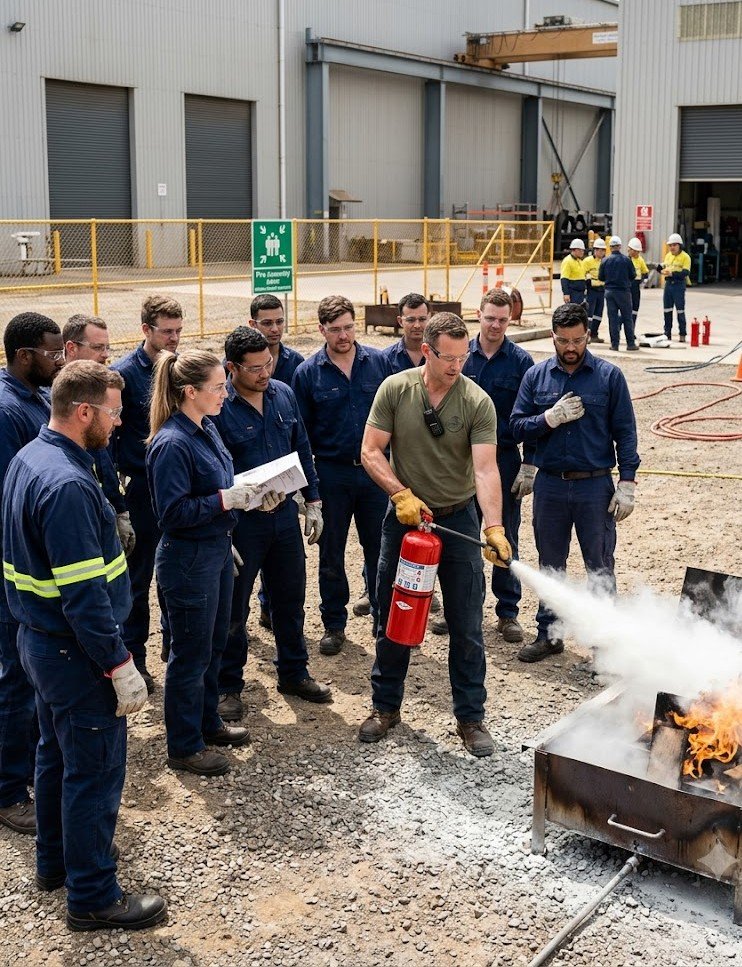
In-Person and Online Safety Discussions
- The PDFs can be read or printed for discussion. Check the actual resource and the employer's procedures before sharing it. A discussion or email alone does not establish that required practical training, evaluation, or other requirements have been met.

Browse Toolbox Talk Topics
Open a category below to review its toolbox talks and PDF resources. Select material for the actual work and hazards.
Ready for Your Next Toolbox Talk?
Browse the toolbox talk categories to select a discussion topic for the actual work. Review the resource before using it, and provide any additional instruction or practical training required by the applicable standard.
Free Workplace Safety Resources & Downloads
More safety topics and meeting tools are below. Open the category to review its resources, or use a template to record a discussion. Check each resource against current regulations and your employer’s procedures before use.
Frequently Asked Questions About Toolbox Talks
Get clear answers about toolbox talks, safety topics, and training resources.
A toolbox talk is a workplace discussion about hazards and protective measures for the actual work. The resources on this website are discussion aids, not proof of compliance or substitutes for all required training.
Allow the time needed to cover the actual hazards, procedures, and questions. There is no single duration that makes every discussion adequate. For electric-power work covered by 1910.269(c) or 1926.952, the extent of a required job briefing depends on the work and the employees’ training and experience.
Set discussions around the actual work, changes in hazards, and applicable requirements. Do not treat a weekly meeting as a universal OSHA rule. Electric-power work covered by 1910.269(c) or 1926.952 has specific job-briefing requirements; check the complete standard, including its repetitive-work and working-alone provisions.
Open a category to review its free PDF links. Check the PDF’s subject, sources, revision, and page count before using or printing it. Any sign-in sheet records attendance only, not certification or compliance.
Choose someone prepared to explain the actual hazards and protective measures and answer questions or obtain qualified help. A supervisor title alone does not establish that all training or competence requirements are met. Follow any role or qualification requirements in the applicable standard.
Resources can be discussed remotely, but delivery must meet the requirements for the actual work. Do not assume that an online discussion replaces required practical training, evaluation, employee participation, or other standard-specific duties.
Choose topics that match the actual tasks, hazards, and protective measures. Browse the categories, then verify the selected resource against current regulations and the employer’s procedures.
In-person and online discussions use different formats to discuss workplace hazards and protective measures. Choose a format workers can use and understand. Neither format automatically satisfies every training, participation, or practical-evaluation requirement.
There is no single weekly toolbox-talk rule for every workplace. Specific OSHA standards can require instruction or job briefings for covered work. For example, 1910.269(c) and construction rule 1926.952 require job briefings for covered electric-power work, with specific provisions for repetitive work, changes, and working alone. Construction employers also have instruction duties under 1926.21(b). Check the complete standards that apply to the actual work.
Reach the People Who Use Workplace Safety Resources
ToolboxTalk provides free toolbox talks and printable resources for workplace safety discussions. If your business serves the workplace safety industry, review the partnership information.
General safety information only. Verify current regulations and safety requirements with OSHA and your employer. This information does not replace required training, site-specific procedures, or professional advice.