
How Weather Conditions Affect Portable Ladder Safety on the Job
Rain, wind, ice, heat, and UV exposure can all quietly compromise a portable ladder; sometimes long before a problem becomes visible. This free weather-related portable ladder safety toolbox talk explains exactly how different weather conditions create slip hazards, structural damage, and deadly instability, and what every worker must do before climbing a ladder in adverse conditions.
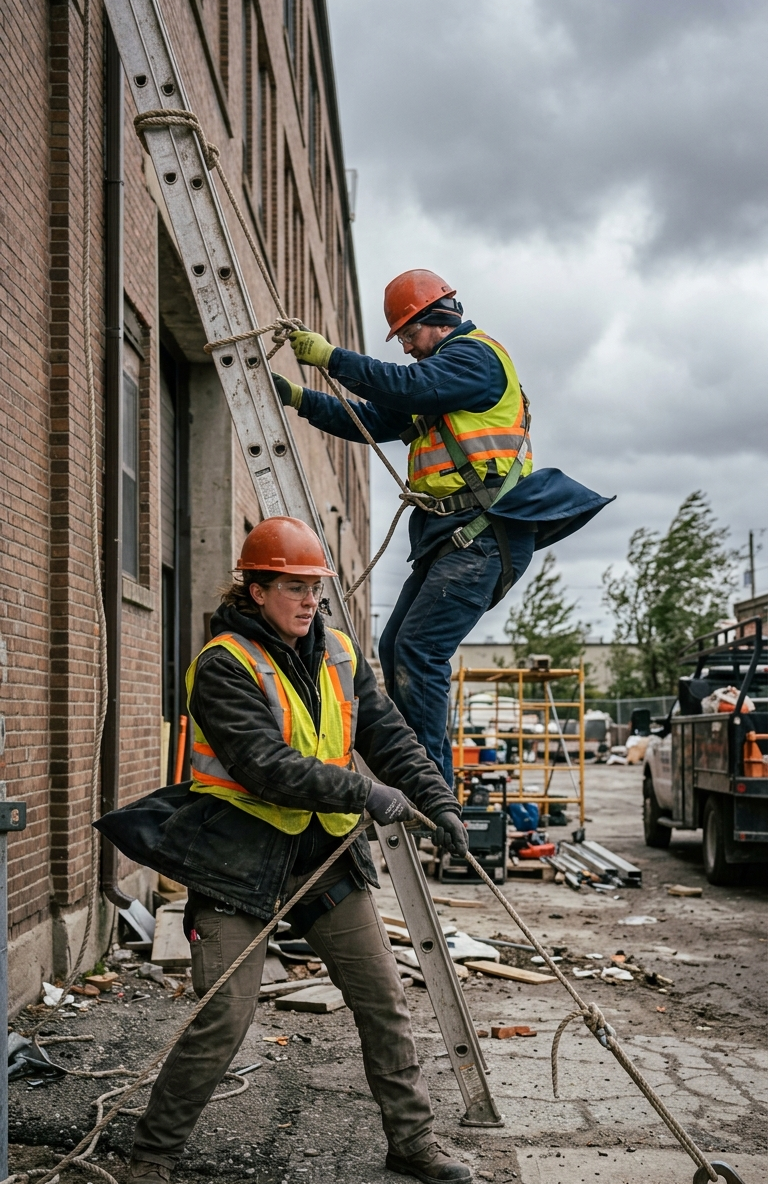
Potentially Hazardous Effects of Weather on Portable Ladder Safety
Just like nature slowly breaks mountains down into smaller and smaller pieces over time, weather also has a gradual but powerful effect on portable ladders. Wind, rain, heat, and cold can all contribute to wear and damage that may not be immediately visible, but can still make a ladder unsafe to climb. Today we'll look at how weather affects portable ladder safety and what we can do to reduce those risks.
Why weather matters for ladder safety: A ladder that looks perfectly fine after sitting through rain, wind, or sun exposure may have hidden damage to its structural components, safety labels, or footing. Weather hazards affect both the ladder itself and the environment around it — and both can cause serious falls.
How Different Weather Conditions Affect Portable Ladders
Wet Conditions: Slip Hazards
Moisture: Long-Term Deterioration
Water on Wood: Electrical Hazard
Freezing Temperatures: Ice Formation
UV Exposure: Material Breakdown
Wind: Instability and Tip-Over Risk
Actual Weather Hazard Scenarios on the Jobsite
These are not theoretical situations, they are the types of weather-related ladder accidents that happen on real jobsites when hazardous conditions go unrecognized before use.⚠️Important: In many of these scenarios, the ladder appears to be in perfectly usable condition. That's what makes weather-related portable ladder hazards so easy to underestimate, the damage or instability may not be obvious until after someone is already on the ladder.
Safe Ladder Practices in Adverse Weather Conditions
✅The single most important rule: Always inspect a portable ladder before use — and always inspect the ground conditions and environment around the ladder, not just the ladder itself. Weather affects both, and both can cause a fatal fall.
Weather Related Ladder Safety Tips for Outdoor Use and Changing Job Site Conditions
- Inspect every ladder before climbing by checking the rungs, side rails, feet, and safety components. Look for wet surfaces, ice buildup, corrosion, loose hardware, damaged rivets, worn spreaders, and other signs of weather-related deterioration that could affect ladder safety.
- Check the ground conditions at the base of the ladder before every use. Mud, standing water, soft soil, snow, ice, or uneven terrain can reduce stability and increase the risk of slips, shifts, or ladder tip-overs.
- Use footing devices, base plates, ladder levelers, or other approved stabilization equipment when working on saturated or unstable ground. When necessary, have a trained worker help secure the ladder during setup and use.
- Secure extension ladders at the top whenever they are used outdoors. Rope ties, ladder hooks, standoff brackets, or other approved anchoring methods can help prevent movement caused by wind, vibration, or accidental contact.
- Verify that all ladder safety labels, warning decals, and load rating information remain clearly visible and readable. If labels are faded, damaged, or missing due to sun exposure, moisture, or wear, remove the ladder from service until it can be properly relabeled or replaced.
- Store ladders indoors or under a weather-resistant cover when not in use. Protecting ladders from rain, UV exposure, humidity, and temperature extremes helps preserve their strength, extend their service life, and maintain safe working conditions.
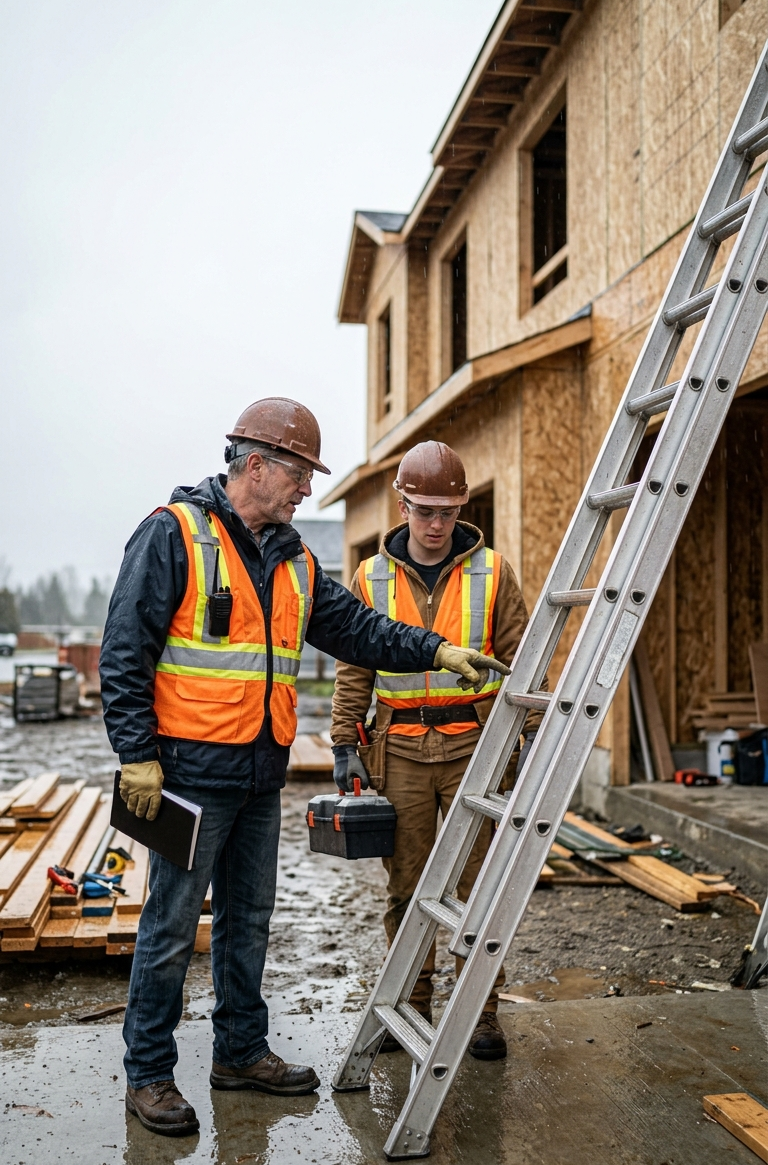
Weather Related Ladder Safety Mistakes to Avoid on the Job Site
- Never use a portable ladder during extreme wind conditions. Strong gusts can cause ladder movement, loss of balance, or tip-overs. Stop work and wait until weather conditions are safe before resuming ladder tasks.
- Never use a wet ladder near energized electrical equipment or power sources. Moisture on ladder surfaces can increase the risk of electric shock, serious injury, or electrocution.
- Never use a wooden ladder that has been exposed to standing water or appears waterlogged. Excess moisture can weaken the ladder, reduce its strength, and affect its nonconductive properties.
- Never assume a ladder is safe simply because it was used without problems the day before. Rain, humidity, temperature changes, and other environmental conditions can affect ladder safety between uses and should be evaluated before every climb.
- Never ignore visible signs of storm damage such as corrosion, cracked rails, loose hardware, fading labels, warped components, or slippery surfaces. Remove damaged ladders from service and inspect them before allowing further use.
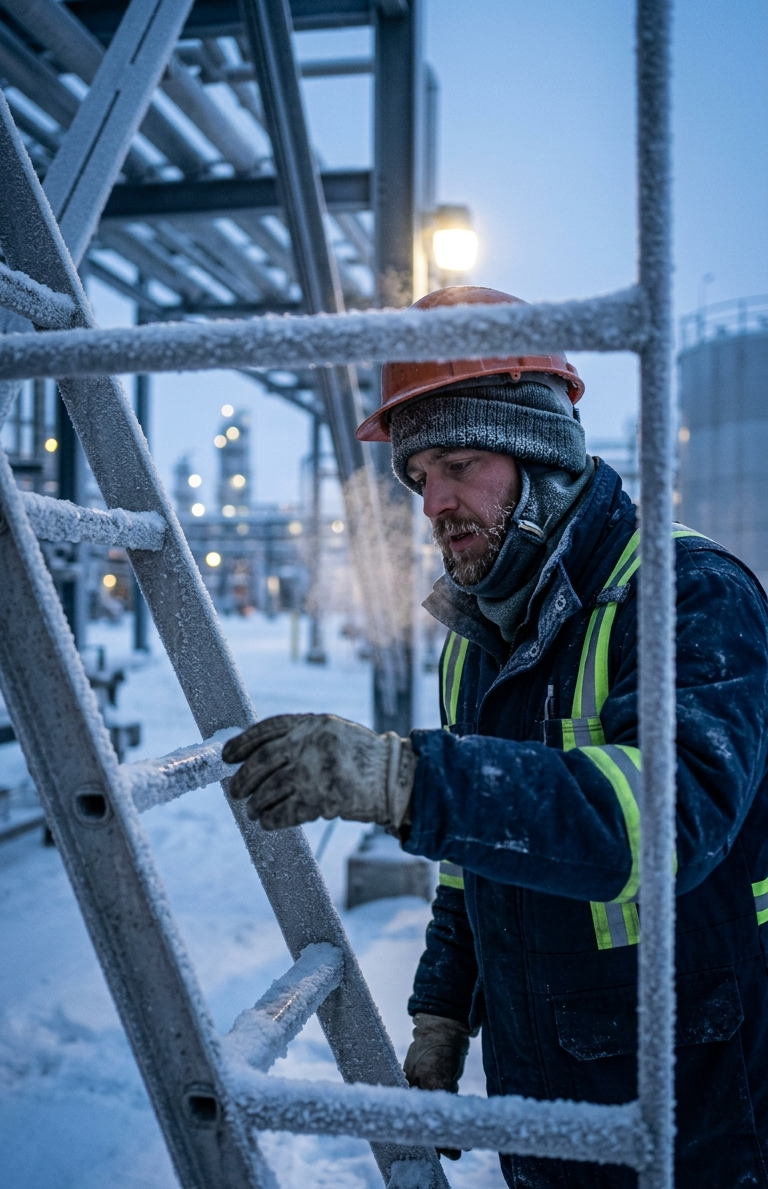
Discussion question before we wrap up: While these are some of the most common weather-related hazards that affect portable ladder safety, they are not all of them. Can anyone share additional examples of how weather conditions on this job or a previous job created a hazard when using a portable ladder?
Before you leave today's safety meeting: Please sign the attendance and certification form on the back of the printed handout. Your signature confirms you participated in this weather-related portable ladder safety training and understand the hazards discussed.
Weather Related Ladder Safety Requirements and Best Practices
Weather conditions such as rain, wind, ice, snow, and extreme temperatures can significantly increase ladder-related hazards. Before every use, workers should inspect the ladder, assess site conditions, and ensure surfaces are stable and safe for climbing. This toolbox talk helps reinforce weather-related hazard awareness, safe ladder practices, and fall prevention measures while supporting ongoing workplace safety training.
Keep Exploring Related Ladder Safety Talks
Download This Weather and Ladder Safety Toolbox Talk Free PDF
Get instant access to this free Weather and Ladder Safety Toolbox Talk PDF for your next safety meeting. Download, print, and share it with your crew to help prevent ladder-related accidents caused by wind, rain, lightning, and other hazardous weather conditions.
Frequently Asked Questions About Weather & Portable Ladder Safety
Common questions supervisors and workers ask after completing this portable ladder safety meeting topic.
While clean, completely dry wood is a natural electrical insulator, wet wood conducts electricity.
The Science: When rain falls on a wooden ladder, the wood absorbs moisture. Water conducts electricity with very low resistance. If a wet wooden ladder accidentally contacts an energized wire or a live circuit, the electrical current can travel straight through the frame to the worker.
The Shock Impact: Even a minor static shock from a wet ladder can cause a “startle effect,” causing a worker to lose their footing and fall. For comprehensive guidance on managing job site electrical hazards and equipment parameters, review the resources at the University of Iowa Environmental Health and Safety.
Structural Integrity: Check for deep dents, cracked fiberglass rails, loose rungs, or missing bolts.
The Locking Mechanisms: Ensure extension locks, ropes, and spreaders operate smoothly and lock securely.
The Safety Shoes: Make sure the rubber feet at the bottom are intact, clear of packed mud, and able to pivot correctly.
Surface Contaminants: Wipe down all rungs to ensure they are free of water, ice, oil, grease, or wet mud.
Never use a damaged ladder. If it fails inspection, tag it “Out of Service” immediately. You can access a full library of downloadable safety guides and equipment validation methods via Princeton University Environmental Health and Safety.
Yes, entirely! This weather and ladder safety resource is 100% free to print out, download, and share with your operations managers and field crews. Feel free to add it to your digital safety library or hand it out at your next morning safety briefing.