
Performing Portable Ladders Inspections Toolbox Talk Training
Portable ladder inspections are one of the most important steps in preventing ladder-related injuries on the job. A damaged ladder may appear safe at first glance, but hidden defects such as cracked rails, loose rungs, worn feet, corrosion, or damaged locking mechanisms can quickly lead to falls, serious injuries, and costly workplace incidents. This Performing Portable Ladder Inspections Toolbox Talk helps workers understand how to properly inspect ladders before each use, identify common ladder defects, recognize unsafe conditions, and remove damaged equipment from service before an accident occurs. Regular ladder inspections are a critical part of any workplace safety program and help ensure that ladders remain safe, reliable, and ready for use.
Whether you work in construction, maintenance, warehousing, manufacturing, facilities management, utilities, or general industry, understanding ladder inspection procedures can significantly reduce fall hazards and improve job site safety.

Portable Ladders: Performing Pre-Use Inspections
Safety standards require portable ladders to be inspected before their first use during each work shift. Whether you're using a step ladder, extension ladder, or any other type of portable ladder, that inspection needs to happen before you climb not after. The purpose of these pre-use checks is straightforward: to find any visible damage or defects that could cause the ladder to fail and injure the person using it.
Don't forget re-inspections: A ladder also needs to be re-inspected after any incident that could have caused damage including being dropped, knocked over, struck by equipment, or caught under a falling load. Just because a ladder looks fine after an incident doesn't mean it is. Internal cracks, weakened welds, and bent structural members are not always visible at a glance. When in doubt, take it out of service.
Not every inspection item applies to every ladder. Some defects are specific to certain materials aluminum, fiberglass, or wood and others are unique to particular ladder types, such as extension ladders with rope-and-pulley systems or mobile ladders with casters and locking devices. Run through the items that apply to the ladder you're about to use before every shift.
Common Defects and Hazards: Portable Ladder Inspection Checklist
When performing a portable ladder pre-use inspection, work through each of the following categories systematically. Check every item that applies to the ladder type and material you're using.
⚠️Important: Some of the most dangerous ladder defects hairline cracks in fiberglass rails, early-stage corrosion at joints, and internal structural damage from impact are not easy to spot. Take your time. Inspect the full length of both side rails, every rung or step, and all hardware before every use.
Structural Components: Applies to All Ladders
- Side rails are free of bends, cracks, splits, dents, splintering, or breaks
- Rungs, steps, and cleats are undamaged, tight, and free of cracks or splinters
- All screws, rivets, bolts, and fasteners are present, tight, and undamaged
- No rust, corrosion, or heat damage (blistering, charring, discoloration)
- Non-slip feet and safety pads are present, securely attached, and not worn through
- No unauthorized repairs, welded patches, taped joints, or makeshift fixes
- Rungs, steps, and side rails are free of oil, grease, mud, ice, or wet materials
- No braces or cross-members that are bent, cracked, or loose
Step Ladders: Additional Items
- Hinges are undamaged and operate smoothly without binding
- Spreader bars fully lock into position when the ladder is open, no play or slippage
Extension Ladders: Additional Items
- Ropes are in good condition; no fraying, wear, or breaks in the fibers
- Pulleys turn freely and are not cracked, bent, or missing
- Rung locks (pawls) engage securely on both sides at every rung position
Mobile Ladders: Additional Items
- Wheels and casters roll freely and are not cracked, flat, or damaged
- Locking devices engage positively and hold the ladder firmly in place before climbing
Why These Defects Are Dangerous
Preventing Ladder Damage Through Proper Handling, Transportation, and Storage
Ladder Damage Prevention Best Practices
- Inspect every portable ladder before the first use of each work shift. Perform an additional inspection after any incident involving a drop, tip-over, collision, or impact from tools, equipment, or materials.
- Store ladders in secure locations where they cannot fall, be knocked over, or be struck by vehicles, machinery, moving equipment, or stored materials.
- Support ladders horizontally at multiple points during storage to help prevent rail bending, warping, twisting, or structural distortion over time.
- Handle ladders carefully during transportation. Secure ladders properly to vehicles, trailers, racks, or equipment to prevent movement, vibration damage, or accidental impacts while in transit.
- Keep ladders clean and free from contaminants. Remove oil, grease, mud, paint, concrete residue, water, or other substances from ladder rungs and rails before storage and use.
- Report damaged ladders immediately to a supervisor or designated safety representative. Prompt reporting helps prevent unsafe equipment from remaining in service and protects other workers from potential hazards.
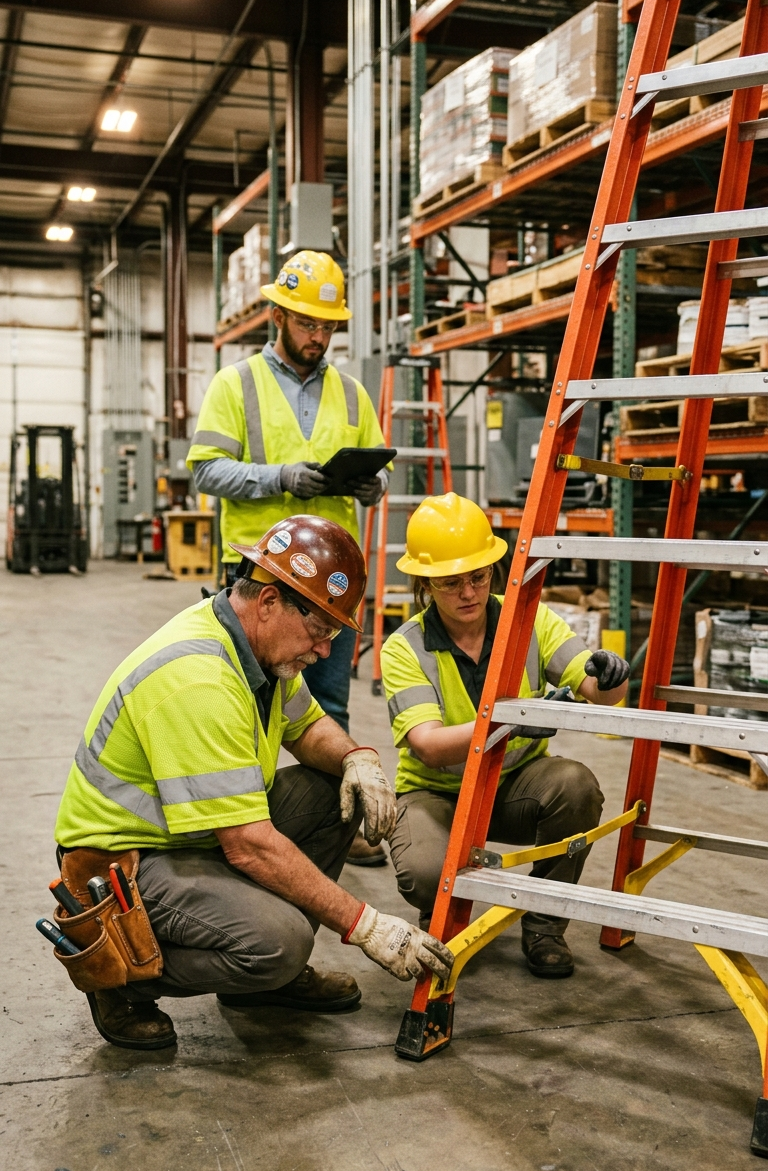
Ladder Handling and Storage Mistakes to Avoid
- Never use a ladder that has not passed a pre-use inspection, even for a quick task, short-duration work, or low-height access.
- Never attempt to repair a damaged ladder yourself. Damaged ladders should only be evaluated, repaired, or returned to service by an authorized and qualified person following manufacturer recommendations.
- Never remove, cover, alter, or ignore an out-of-service tag. These tags help prevent accidental use of unsafe equipment and play a critical role in workplace safety.
- Never leave ladders leaning against walls, vehicles, equipment, storage racks, or structures where they can be knocked over, damaged, or create hazards for nearby workers.
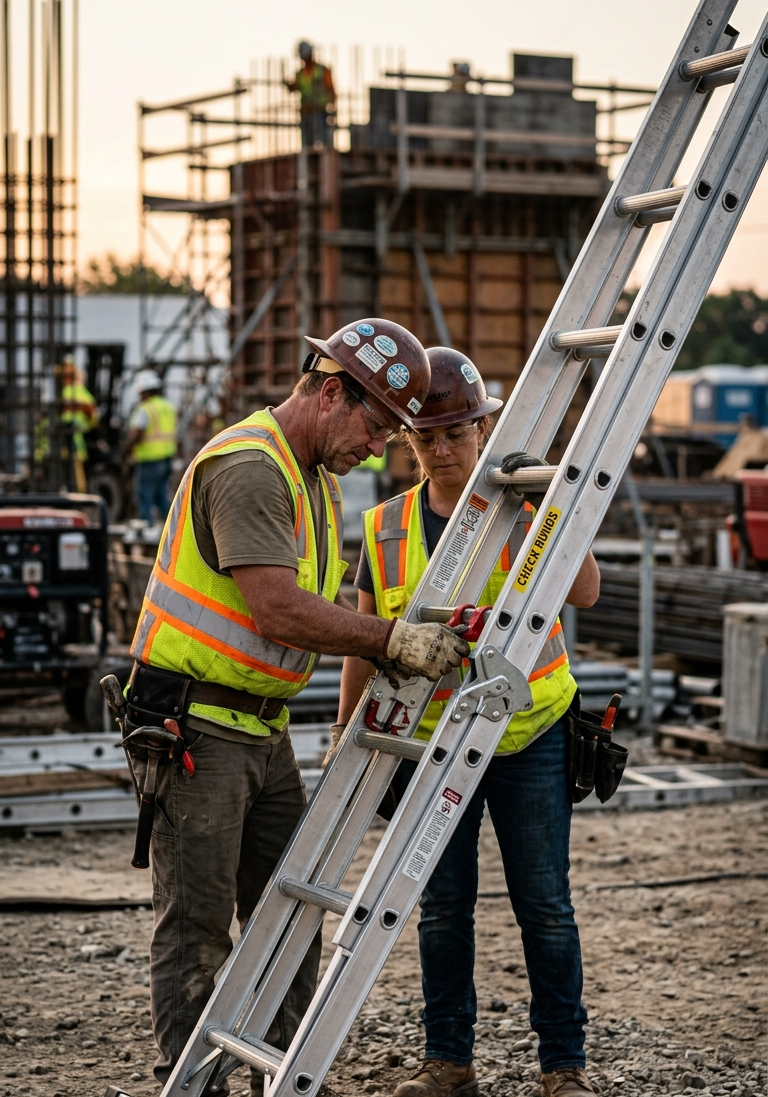
Building a Strong Ladder Safety Culture
Effective ladder safety begins long before a worker climbs the first rung. Regular inspections, proper maintenance, and ongoing safety discussions help create a workplace where hazards are identified and corrected before incidents occur.
Using a Performing Portable Ladder Inspections Toolbox Talk during safety meetings reinforces the importance of equipment inspections, encourages worker participation, and supports a proactive approach to fall prevention. When inspection procedures become part of daily work routines, organizations can improve safety performance, reduce risk exposure, and extend the service life of their ladder equipment.
More Talks in the Ladder Safety Series
Free Ladder Handling, Transport, and Storage Toolbox Talk PDF
Download this free Ladder Handling, Transportation, and Storage Toolbox Talk PDF to help workers understand how proper ladder care supports workplace safety and fall prevention. This printable safety meeting resource covers ladder damage prevention, ladder transportation safety, proper storage practices, pre-use inspections, and equipment care procedures that help keep ladders safe, reliable, and ready for use.
Frequently Asked Questions About Portable Ladder Inspection
Get quick answers to real workplace questions raised by workers and supervisors after this electrical safety meeting, and strengthen everyday electrical hazard prevention.
Every portable ladder should be inspected before the first use of each work shift and anytime it has been dropped, tipped over, struck by equipment, or exposed to conditions that could cause damage. A quick visual inspection can help identify ladder safety hazards before a worker leaves the ground.
During a portable ladder inspection, check the side rails, rungs, feet, spreaders, locks, fasteners, labels, and all moving parts. Look for cracks, bending, corrosion, loose hardware, excessive wear, or any signs of structural damage.
For additional ladder safety guidance, workers can review resources from the National Institute for Occupational Safety and Health (NIOSH), a trusted workplace safety research organization.
If a ladder shows any signs of damage, it should be removed from service immediately. Do not use it for a quick task or assume the damage is minor. Even small defects can affect ladder stability and increase the risk of a fall.
Common issues that require removal from service include cracked rails, bent rungs, damaged feet, broken locks, missing parts, corrosion, or unreadable safety labels. Report the ladder to your supervisor and follow your company’s ladder inspection and equipment safety procedures.
The Canadian Centre for Occupational Health and Safety (CCOHS) provides helpful information about identifying unsafe workplace equipment and preventing injuries.
Some of the most common ladder inspection findings include worn or damaged ladder feet, bent side rails, cracked rungs, loose rivets, corrosion, damaged locking mechanisms, missing warning labels, and contamination from oil, grease, mud, paint, or chemicals.
Workers should also check for damage caused by improper ladder storage, poor transportation practices, weather exposure, and accidental impacts. Regular inspections help prevent ladder-related accidents and support a safer work environment.
Safety labels provide critical information about ladder load capacity, inspection requirements, setup instructions, safety warnings, and proper use. If labels are missing, damaged, faded, or unreadable, workers may not have access to important safety information needed to use the ladder correctly.
As part of a portable ladder inspection checklist, workers should verify that all labels remain legible and securely attached. Clear safety markings help reduce misuse and support safe ladder practices on the job site.
Portable ladder inspections help identify hazards before they lead to falls, equipment failures, or serious injuries. When workers consistently inspect ladders before use, they are more likely to spot damaged components, unstable conditions, and unsafe equipment that should not be used.
A strong ladder inspection program supports fall prevention, improves workplace safety awareness, extends ladder service life, and helps create safer job sites for everyone. Combined with proper ladder handling, transportation, storage, and safe climbing practices, routine inspections are one of the most effective ways to reduce ladder-related incidents.