
Free Portable Ladder Handling Safety Toolbox Talk Guide: Avoiding Strains, Blows, and Pinch Injuries
Most ladder accidents get attention, but the strains, pinched fingers, and impact injuries that happen while simply moving or setting up a portable ladder are just as real, just as painful, and just as preventable. This free portable ladder handling safety toolbox talk covers the injury risks workers face before ever climbing a rung, and explains the safe handling techniques every crew member needs to know.
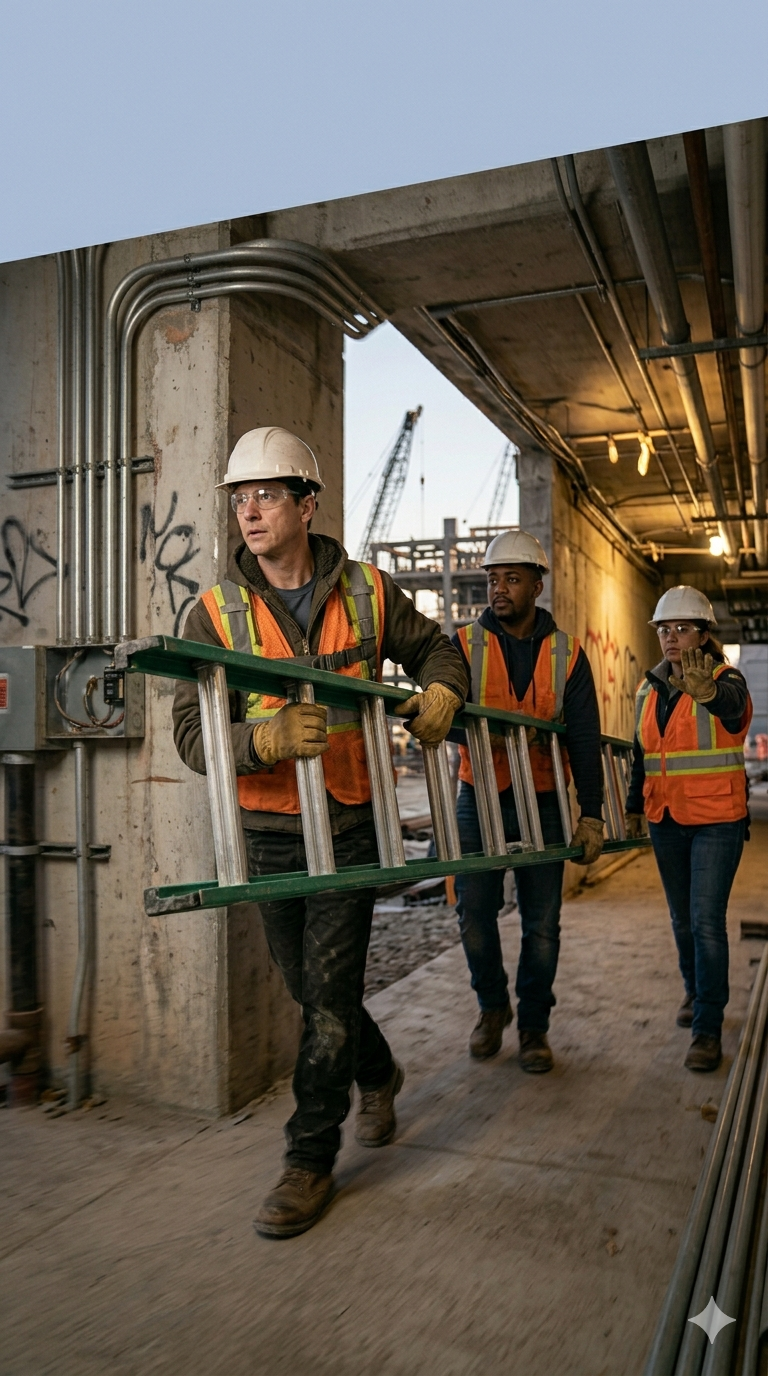
Free Ladder Safety Guide: Avoiding Strains, Blows, and Pinch Injuries When Handling Portable Ladders
When we think about ladder injuries, most of us picture a fall. And while falls from ladders are certainly serious, they're only part of the story. A significant number of ladder-related injuries happen on the ground while workers are carrying ladders from storage, setting them up against a wall, or folding them away at the end of the shift. These injuries may seem minor compared to a fall, but a strained back, a crushed finger, or a ladder striking a coworker in the face can mean days away from work, costly medical treatment, and real, lasting pain.
⚠️Don't overlook ground-level ladder hazards: Strains, pinch injuries, and impact injuries from portable ladder handling are underreported but very common. The same careful habits that keep us safe on the ladder need to apply the moment we pick one up.
The good news is that most of these injuries are entirely preventable. By slowing down, planning each move, and using the right techniques, we can protect ourselves and our coworkers every time we handle a portable ladder before a single foot ever leaves the ground.
The Most Common Portable Ladder Handling Injuries
Safe Ladder Handling and Carrying Techniques for Workplace Safety
Proper ladder handling is just as important as ladder setup and climbing. Many ladder-related injuries happen before a worker ever steps onto a rung. Strains, sprains, pinch injuries, struck-by incidents, and back injuries can occur when ladders are carried, moved, loaded, unloaded, or stored incorrectly.
This Ladder Handling and Carrying Safety Toolbox Talk helps workers understand how to safely transport, position, and store portable ladders while reducing risks to themselves and those working nearby. These ladder carrying techniques and handling practices are the foundation of portable ladder injury prevention on any jobsite. Review them with your crew before handling ladders; especially at the start of a new task or when using an unfamiliar ladder.
Work Smarter on Long Extension Ladders: When setting up a long extension ladder against a wall, don't try to lift the whole thing upright at once. Instead, lay the ladder flat on the ground with the feet positioned at the base of the wall. Lift the opposite end and carefully "walk" your hands down the rungs, pushing the ladder upward one rung at a time until it stands vertically. Then slowly pull the base outward to the correct angle. This technique distributes the effort, keeps your back straight, and dramatically reduces the strain of ladder setup.
Ladder Handling Safety Guidelines
- Ask for assistance whenever you are moving, setting up, transporting, or taking down a heavy or long ladder, especially extension ladders. Their size and weight can place additional stress on your back, shoulders, and arms. Having a second person helps improve control and reduces the risk of injury.
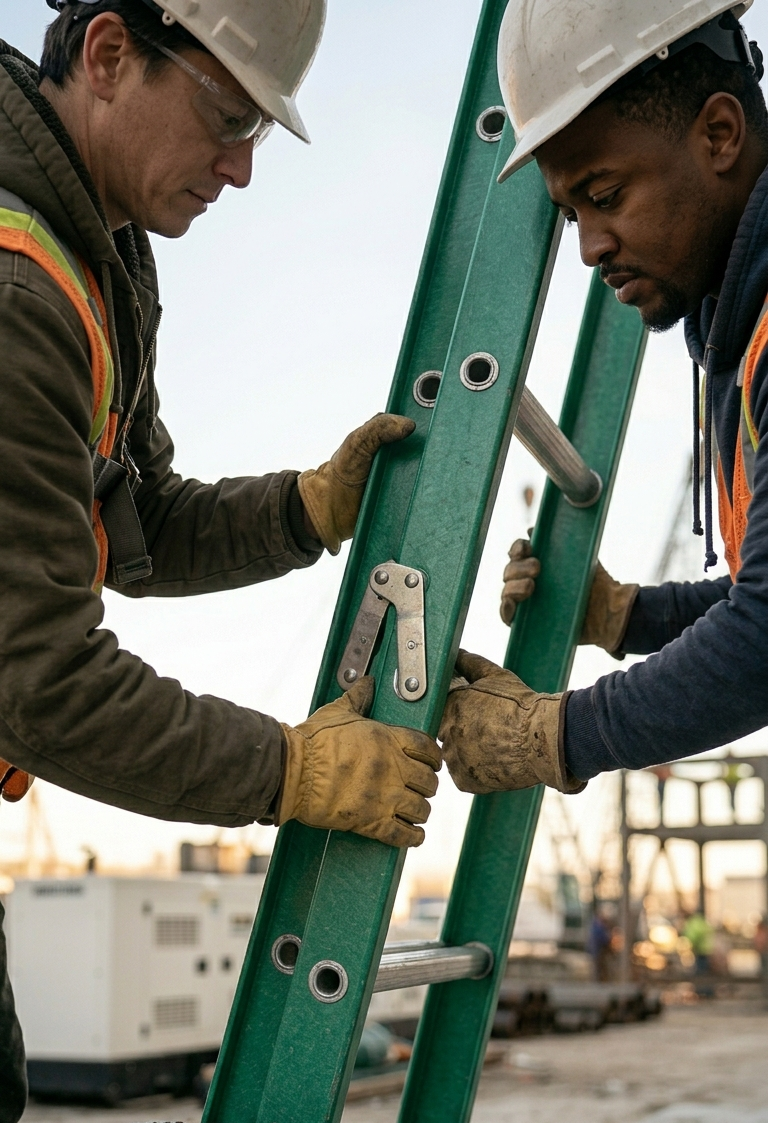
- Keep your hands and fingers away from spreader bars, hinges, locking mechanisms, and folding ladder sections. Always grip the ladder by the side rails and confirm safe hand placement before opening, closing, or repositioning the ladder.
- Slow down when carrying a ladder near corners, doorways, hallways, intersections, or other areas with limited visibility. Communicate with nearby workers by giving a clear verbal warning such as “Ladder coming through” before entering blind spots.
- Lower the front end of the ladder slightly when moving through congested work areas. Maintaining control of the leading end helps reduce the risk of striking coworkers, equipment, walls, vehicles, or overhead obstacles.
- Inspect ladders before each use and before moving them across the job site. Check for bent rails, loose hardware, damaged rungs, worn feet, missing components, or other defects that could affect safe handling and use.
- Store ladders properly when not in use. Support ladders horizontally at multiple points or place them in approved storage racks designed to prevent bending, warping, shifting, or accidental falls.
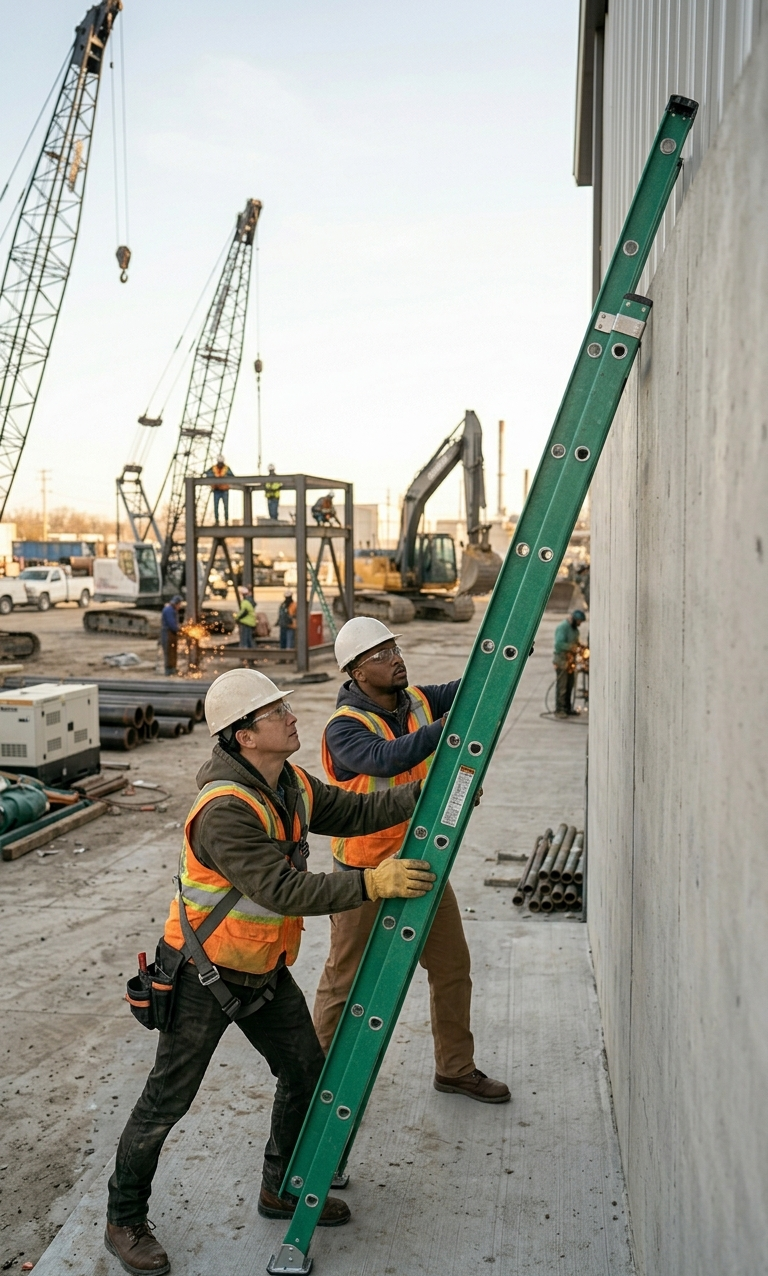
Step-by-Step: Setting Up a Long Extension Ladder Safely
- Get help first. If the ladder is heavy or long, identify a second person before moving it. Agree on who does what before you lift.
- Lay the ladder flat. Place the ladder on the ground with the feet positioned at the base of the wall where you plan to work.
- Walk it up. Lift the opposite (top) end of the ladder and walk your hands down the rungs, pushing the ladder upright one rung at a time until it stands vertically against the wall.
- Set the angle. Carefully pull the base outward to achieve the correct 4:1 angle one foot out for every four feet of ladder height.
- Secure the feet. Confirm the ladder feet are stable on a firm, level surface before anyone climbs. Use a spotter if needed.
Discussion Before You Leave Today: Can anyone share an example of a handling injury, close call, or awkward ladder situation they've encountered on the job? Your experience can help the whole crew avoid the same mistake. After our discussion, please sign the attendance and certification form on the back of the printed handout to receive credit for today's portable ladder safety training.
Why Proper Ladder Handling Matters
Safe ladder handling practices help prevent common workplace injuries such as:
1. Back strains and muscle injuries.
2. Hand and finger pinch injuries.
3. Struck-by incidents involving workers or equipment.
4. Slips, trips, and falls while transporting ladders.
5. Ladder damage caused by impacts or improper storage.
6. Property damage to vehicles, tools, materials, and structures.
By slowing down, planning your route, using proper lifting techniques, inspecting ladders before use, and asking for help when needed, workers can safely handle ladders and reduce risks across the job site.
More Talks in the Portable Ladder Safety Series
Free Ladder Handling Toolbox Talk PDF
Download this free Ladder Handling and Carrying Safety Toolbox Talk PDF to use during your next safety meeting. This printable safety training resource covers ladder transportation safety, proper lifting techniques, extension ladder handling, pinch point awareness, ladder storage best practices, and workplace injury prevention strategies designed for construction crews, maintenance teams, industrial workers, facility personnel, and other professionals who regularly work with portable ladders.
Frequently Asked Questions About Portable Ladder Handling Safety
Common questions supervisors and workers ask after completing this portable ladder safety meeting topic.
Yes, this toolbox talk and every document on ToolboxTalk.com is completely free. The downloadable PDF is formatted to print on a single page. The reverse side includes a sign-off sheet with space for worker names, signatures, and the training date; so supervisors can maintain a documented record of safety meeting attendance.