
Electrical Ladder Safety Toolbox Talk Avoiding Electrical Hazards When Using Portable Ladders
You would never intentionally hold a metal rod against an energized power line yet every year, workers are electrocuted because a portable ladder made that same contact for them. Metal and aluminum ladders conduct electricity. When they come near overhead power lines or energized equipment, they can become the path to ground that kills. This free toolbox talk on electrical hazards and portable ladder safety covers the rules every worker needs to follow: which ladders to use, how far to stay from power lines, why electricity can arc without direct contact, and when additional controls are required before work begins.
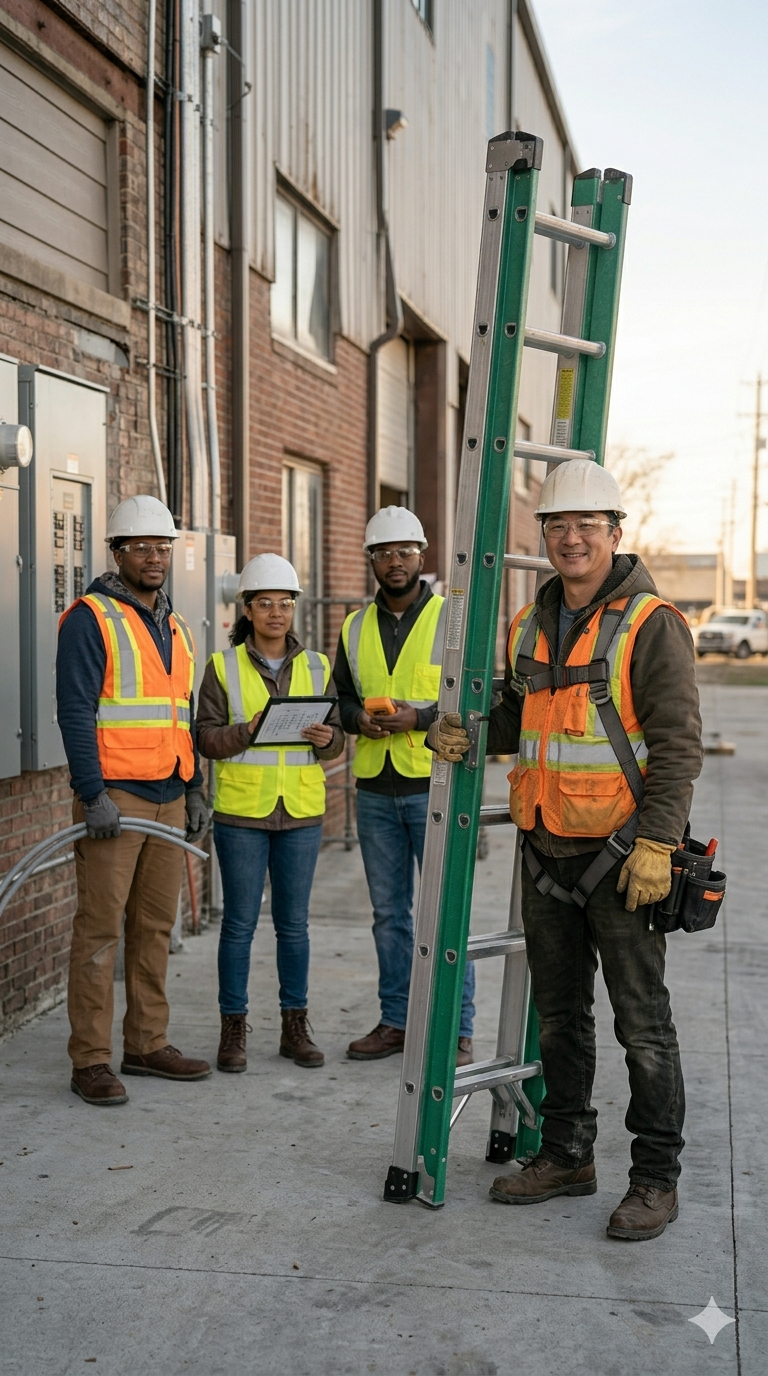
Portable Ladder Electrical Safety Preventing Shock and Electrocution Hazards
You would never intentionally touch a metal object to an energized power line, and the same principle applies when using portable ladders near electricity. Metal ladders and other conductive materials can provide a direct path to ground, creating a serious risk of electrocution if they contact energized power lines or electrical equipment. Today's toolbox talk reviews important safety practices for preventing electrical accidents while working with portable ladders.
Contact with overhead power lines is one of the leading causes of fatal electrical injuries in the construction industry. Portable ladder electrical hazards account for a significant share of those deaths and nearly all of them were preventable with proper planning and the right equipment.
The core principle is straightforward: a conductive ladder touching or getting too close to an energized source turns that ladder and anyone on it into part of an electrical circuit. The current travels through the worker's body into the ground. At typical line voltages, this is fatal. Using the right ladder material and maintaining proper clearance distances are the two most important defenses every worker must understand before climbing near any electrical source.
Actual Electrical Hazard Scenarios Involving Portable Ladders
Remember: In most of these scenarios, the overhead line or energized equipment looks completely ordinary. Power lines do not look dangerous. They don't spark, glow, or make noise. That is precisely what makes portable ladder electrical hazards so consistently deadly they rarely look like emergencies until after contact has occurred.
What Every Worker Must Know and Do About Portable Ladder Electrical Safety?
The single most important rule: When any work is being performed near overhead power lines or energized electrical equipment, always use a ladder with non-conductive side rails. Choose fiberglass or fiber-reinforced plastic. Never use a metal or aluminum ladder near electricity no exception, no shortcut, no "just this once."
Electrical Ladder Safety Best Practices
- Use non-conductive fiberglass ladders when working near overhead power lines, electrical panels, transformers, or other energized equipment. Fiberglass ladders help reduce electrical shock hazards.
- If using a wooden ladder, make sure it is completely dry and free from moisture, dirt, chemicals, paint, or other contaminants that can affect its non-conductive properties.
- Position ladders far enough away from overhead power lines and electrical equipment to prevent accidental contact if the ladder shifts, slips, or falls.
- Maintain at least 10 feet of clearance from energized overhead power lines. Higher-voltage lines may require greater distances.
- Check all tools and materials before climbing. Metal items such as conduit, gutters, pipes, rebar, and long-handled tools can create electrical hazards.
- Inspect the ladder before every use. Look for cracks, damaged rails, worn feet, loose hardware, moisture damage, or other defects that could affect safety.
- Follow all required electrical safety procedures before work begins, including equipment isolation, utility coordination, protective barriers, or other site-specific controls when necessary.
According to the Centers for Disease Control and Prevention (CDC), proper hazard assessment and planning are key steps in preventing electrical injuries and workplace accidents.
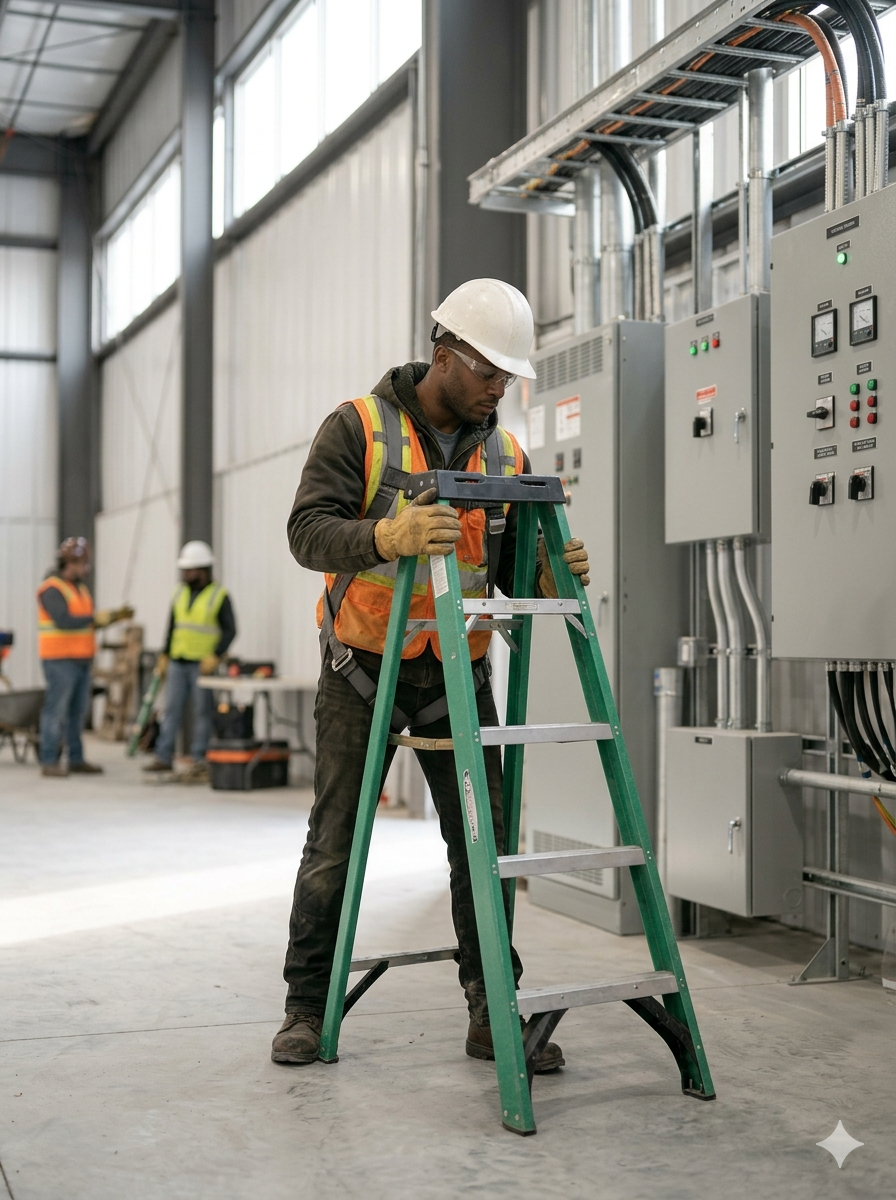
Common Electrical Hazards Associated With Portable Ladders
Workers should stay alert for electrical hazards whenever portable ladders are used. Even a small mistake near energized equipment or power lines can lead to serious injuries.
Common hazards include:
- Overhead power lines near roofs, buildings, and outdoor work areas.
- Energized electrical panels, transformers, and other electrical equipment.
- Metal tools, conduit, pipes, gutters, rebar, and other conductive materials.
- Damaged ladders with cracked rails, worn feet, or missing parts.
- Wet weather, moisture, or water on ladders and work surfaces.
- Poor visibility around electrical hazards and work zones.
- Improper ladder placement near utility lines or energized equipment.
- Long materials that could extend into electrical clearance areas.
Taking time to identify these hazards before starting work can help prevent electrical shock, electrocution, falls, and other ladder-related accidents.
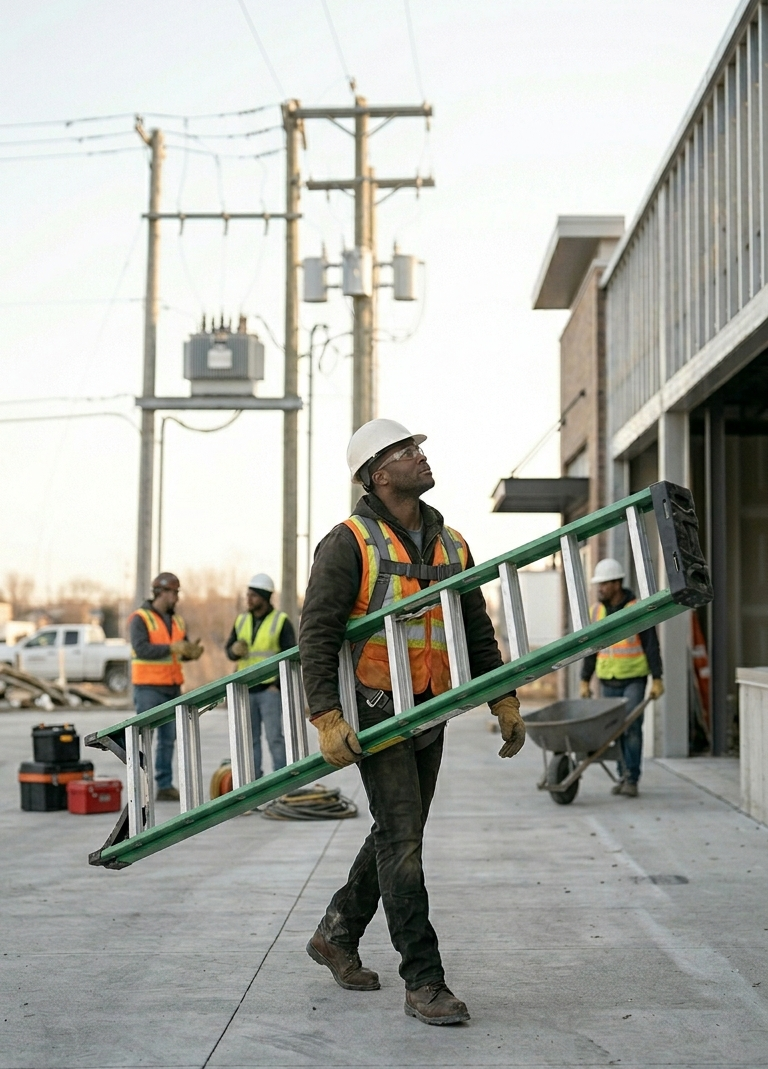
Discussion question for the crew: Does anyone have additional tips or experiences related to ladder safety around electrical hazards? Have you ever encountered a situation where the ladder setup or the materials being handled created an unexpected risk near power lines? Sharing real experiences helps everyone on the crew recognize these hazards before they become incidents.
Electrical Ladder Safety Requirements and Best Practices
Working near overhead power lines and energized equipment requires careful planning, proper ladder selection, and safe work practices. Recognized workplace safety standards emphasize the importance of using the right equipment, maintaining safe clearance distances, and implementing additional protective measures when electrical hazards are present.
This toolbox talk helps workers understand common electrical hazards associated with portable ladders, reinforces safe work procedures, and promotes hazard awareness before work begins. Documenting safety meetings and worker participation can also help support a proactive safety program focused on electrical hazard prevention, ladder safety, and workplace injury reduction.
More Talks in the Basic Ladder Safety Topics
Get Free Electrical Ladder Safety Toolbox Talk PDF
Get instant access to this free Electrical Ladder Safety Toolbox Talk PDF for your next safety meeting. Use it to train workers on overhead power line hazards, energized equipment risks, and safe ladder practices. Download, print, and share it with your crew today.
Frequently Asked Questions About Portable Ladder Electrical Safety
Get quick answers to real workplace questions raised by workers and supervisors after this electrical safety meeting, and strengthen everyday electrical hazard prevention.
Yes this toolbox talk and every document on ToolboxTalk.com is completely free. The downloadable PDF is formatted to print on a single page. The reverse side includes a sign-off sheet with space for worker names, signatures, and the training date so supervisors can maintain a documented record of safety meeting.