
Free Portable Tool and Equipment Safety Toolbox Talk For Training and Injury Prevention Topics
Portable tools and equipment are used on nearly every construction site, maintenance project, warehouse, and industrial workplace. This free Portable Tool and Equipment Safety Toolbox Talk directory helps workers recognize power tool hazards, perform proper inspections, follow safe operating procedures, and reduce workplace injuries during daily tasks. Each printable tool safety PDF is available to download for safety meetings, crew training, and toolbox talks.
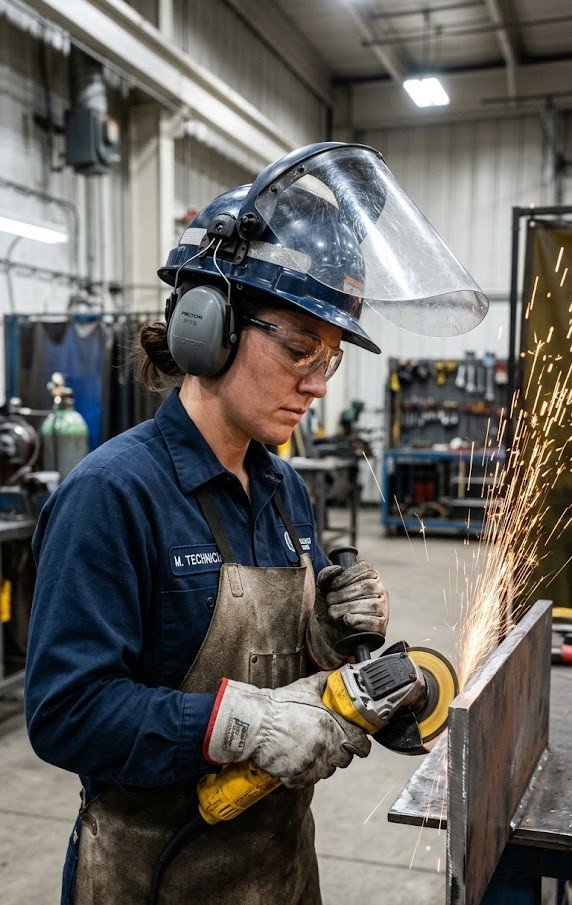
Download Your Free Portable Tool and Equipment Safety Toolbox Talk PDF
Portable Tool Safety Toolbox Talk: Safe Abrasive Wheel Mounting Procedures
Installing an abrasive wheel incorrectly can lead to wheel failure, flying debris, and serious workplace injuries. This Portable Tool Safety Toolbox Talk explains safe abrasive wheel mounting procedures, proper inspection techniques, compatibility checks, and best practices for reducing grinding wheel hazards, helping maintenance teams and machine operators work with greater confidence and safety.
Bench and Pedestal Grinder Toolbox Talk: How to Mount Abrasive Wheels Safely
Proper wheel installation is one of the most important steps in preventing grinder-related incidents. This Bench and Pedestal Grinder Safety Toolbox Talk covers abrasive wheel installation, wheel inspection, flange selection, balancing, and pre-use safety checks to help workers minimize grinder wheel failure, equipment damage, and unexpected accidents.
Bench and Pedestal Grinder Safety Toolbox Talk: Essential Safe Operating Practices
Bench and pedestal grinders are common workshop tools, but they require consistent safety habits to prevent injuries. This Grinder Safety Toolbox Talk reviews safe grinder operation, tool rest adjustment, wheel guards, spark control, proper PPE, and routine inspections to reduce grinding hazards, eye injuries, and hand injuries in industrial workplaces.
Compressed Air Safety Toolbox Talk: Preventing Injuries from Air Blowers
Compressed air blowers can create hidden hazards when used improperly for cleaning or maintenance tasks. This Compressed Air Safety Toolbox Talk discusses safe compressed air blower use, controlling airborne particles, preventing high-pressure injection injuries, and following safe cleaning practices to protect workers and nearby personnel.
Compressed Air Hose Safety Toolbox Talk: Preventing Hose Failures and Whip Hazards
Damaged or poorly secured air hoses can quickly become dangerous in any work environment. This Compressed Air Hose Safety Toolbox Talk explains air hose inspection, proper hose connections, whip restraint devices, leak prevention, and safe handling practices that help reduce compressed air hose hazards, trips, equipment damage, and worker injuries.
Portable Circular Saw Safety Toolbox Talk: Safe Cutting Techniques for Every Job
Portable circular saws are powerful tools that demand proper handling and preparation before every cut. This Portable Circular Saw Safety Toolbox Talk covers safe circular saw operation, blade inspection, kickback prevention, cutting techniques, workpiece support, and personal protective equipment to reduce power saw injuries and improve jobsite safety.
Radial Arm Saw Safety Toolbox Talk: Safe Operation and Hazard Prevention
Radial arm saws can perform accurate cuts when operated correctly, but improper use increases the risk of serious injuries. This Radial Arm Saw Safety Toolbox Talk explains safe radial arm saw operation, blade positioning, guarding, workpiece control, and operator awareness to help prevent kickback hazards, blade contact injuries, and unsafe cutting practices.
Table Saw Safety Toolbox Talk: Preventing Kickback and Blade Contact Injuries
Table saws are among the most frequently used cutting tools in workshops and construction projects, making safe work practices essential. This Table Saw Safety Toolbox Talk covers table saw safety procedures, push stick use, blade guard inspection, rip fence alignment, kickback prevention, and safe cutting techniques to reduce table saw accidents and improve workplace safety.
Band Saw Safety Toolbox Talk: Safe Cutting Practices for Shop and Industrial Work
Band saws provide precise cutting for many materials, but improper operation can expose workers to unnecessary risks. This Band Saw Safety Toolbox Talk explains safe band saw operation, blade selection, blade tension, guarding, workpiece handling, and routine inspections to reduce band saw hazards, blade breakage, and operator injuries.
Chainsaw Safety Toolbox Talk: Safe Cutting Practices for Outdoor and Industrial Work
Chainsaws require skill, planning, and constant attention to operate safely in demanding work environments. This Chainsaw Safety Toolbox Talk covers safe chainsaw operation, kickback prevention, chain maintenance, cutting techniques, PPE requirements, and hazard awareness to help workers reduce chainsaw injuries, falling object risks, and cutting accidents.
Handheld Jigsaw Safety Toolbox Talk: Safe Cutting for Precision Work
Handheld jigsaws offer flexibility for curved and detailed cuts, but safe handling remains essential for every project. This Handheld Jigsaw Safety Toolbox Talk explains safe jigsaw operation, blade selection, securing materials, preventing blade binding, maintaining control, and inspecting tools before use to reduce portable power tool hazards and improve cutting accuracy.
Chop Saw and Miter Saw Safety Toolbox Talk: Safe Cutting Practices for Accurate Results
Chop saws and miter saws deliver fast, accurate cuts when operators follow proper safety procedures. This Chop Saw and Miter Saw Safety Toolbox Talk discusses safe miter saw operation, blade inspection, material support, clamp usage, cutting techniques, and hazard awareness to help prevent saw blade injuries, kickback incidents, and workplace accidents while improving cutting precision.
Choosing the Right Personal Protective Equipment for Portable Tool Operations
Using the correct personal protective equipment (PPE) is one of the simplest ways to reduce injuries when operating portable power tools, grinders, chainsaws, table saws, and other cutting equipment. PPE should always match the task, the tool being used, and the hazards present in the work area.
- Wear ANSI-rated safety glasses or face shields to protect against flying particles and debris. Learn more about eye protection through the American National Standards Institute (ANSI).
- Use cut-resistant work gloves only when appropriate for the task and tool, ensuring they do not create entanglement hazards around rotating equipment.
- Protect your hearing by selecting suitable hearing protection when working with high-noise tools. The NIOSH provides practical guidance on occupational noise exposure.
- Wear sturdy slip-resistant safety footwear to improve stability while handling heavy or high-powered equipment and reduce the risk of slips, trips, and falls.
- Inspect all PPE before each shift and replace damaged equipment immediately to maintain reliable protection and support a strong workplace safety culture.

Building a Preventive Tool Maintenance Program That Improves Workplace Safety
A proactive maintenance program keeps portable tools and equipment operating safely while helping organizations reduce unexpected downtime, repair costs, and workplace incidents. Routine inspections also demonstrate a strong commitment to employee safety and equipment reliability.
- Develop a documented inspection schedule for portable electric tools, grinders, compressed air equipment, and cutting tools before and after use.
- Remove damaged or defective equipment from service immediately and clearly label it to prevent accidental use until repairs or replacement are completed.
- Keep manufacturer instructions readily available and ensure employees understand the recommended maintenance requirements for each tool.
- Train workers to recognize early warning signs such as unusual vibration, overheating, worn blades, damaged cords, air leaks, loose guards, or abnormal noises before equipment failure occurs.
- Explore additional workplace safety resources from the the National Safety Council (NSC) for practical guidance on equipment safety, hazard prevention, and employee safety training that supports continuous improvement across every workplace.
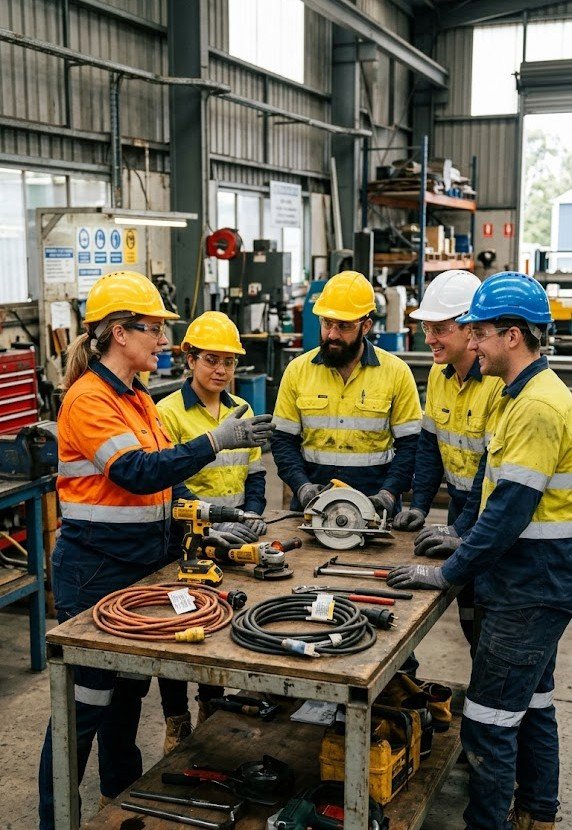
Download Free Hazardous Substances Toolbox Talks
Help your team prevent common portable power tool injuries, improve workplace safety awareness, and reinforce safe operating procedures before every job. Download this free, printable Portable Tool and Equipment Safety Toolbox Talk PDF with a ready-to-use attendance sign-off sheet for effective safety meetings, training sessions, and daily toolbox talks
Frequently Asked Questions About Portable Tool Safety PDF for Safer Jobsites
Get clear answers about toolbox talks, safety topics, and training resources.
A Portable Tool and Equipment Safety Toolbox Talk helps workers recognize common hazards before they lead to injuries or equipment damage. Regular safety discussions reinforce safe power tool operation, proper inspections, hazard awareness, and preventive work practices, creating a safer and more productive workplace.
Workers should inspect power cords, batteries, switches, guards, handles, blades, abrasive wheels, air hoses, and safety features before every use. Identifying damaged or defective equipment early helps prevent portable tool accidents, electrical hazards, kickback incidents, and unexpected equipment failure.
Portable tool safety training is valuable across many industries, including construction, manufacturing, warehousing, maintenance, utilities, facilities management, transportation, oil and gas, mining, and public works. Any workplace that uses hand-held or powered equipment can improve safety, reduce downtime, and strengthen employee awareness through regular toolbox talks.
Most organizations conduct toolbox talks weekly, before high-risk tasks, when introducing new equipment, after workplace incidents, or whenever new employees join the team. Frequent safety meetings help reinforce best practices, improve hazard recognition, and encourage workers to report unsafe conditions before they become serious problems.
Many portable tool injuries occur because of poor equipment inspections, missing safety guards, improper tool selection, inadequate training, worn or damaged accessories, lack of personal protective equipment, and rushing through tasks. Following established safety procedures and maintaining tools properly significantly reduces the likelihood of workplace injuries.