
Free Scaffold Safety Toolbox Talks and Workplace Fall Prevention Training PDFs
Scaffolds are used on many construction sites, maintenance projects, and industrial work areas where employees perform tasks at elevated heights. This free Basic Scaffold Safety Toolbox Talk directory helps workers recognize scaffold hazards, follow safe setup practices, improve inspection awareness, and reduce fall risks during daily operations. Each printable scaffold safety PDF is designed for effective workplace safety meetings and crew training discussions.

Scaffold Safety Training and Fall Prevention Topics
Basic Scaffold Safety – Competent Person Requirements for Scaffolding
A competent person is responsible for ensuring scaffolding is properly designed, assembled, and inspected before use. They check for hazards, structural stability, and compliance with safe work practices. No scaffold should be used unless it has been reviewed and approved by a qualified individual.
Basic Scaffold Safety – Identifying Different Types of Scaffolds
Scaffolds come in different types such as supported, mobile, suspended, and specialty systems. Each type has specific uses, risks, and setup requirements that workers must understand. Knowing the differences helps ensure the right scaffold is used for the job.
Basic Scaffold Safety – Safety Begins at Ground Level
A safe scaffold starts with a strong and stable base. Ground conditions, leveling, and proper foundation support are critical to prevent shifting or collapse. If the base is not secure, the entire structure becomes unsafe.
Basic Scaffold Safety – Do’s and Don’ts for Accessing Scaffolding
Workers should always use approved access points such as ladders or built-in stair systems. Climbing on frames or unsafe areas increases the risk of falls and injuries. Always maintain three points of contact and avoid carrying materials while climbing.
Basic Scaffold Safety – Fall Protection Requirements for Scaffolding
Fall protection systems such as guardrails, personal fall arrest systems, or safety nets must be used depending on scaffold height and conditions. These protections help reduce the risk of serious injury from falls. Workers should always verify which system is required before starting work.
Basic Scaffold Safety – Prevention of Falling Objects on Scaffolding
Tools and materials should be secured to prevent them from falling to lower levels. Toe boards, debris nets, and proper housekeeping help protect workers below. Never leave loose items on scaffold platforms.
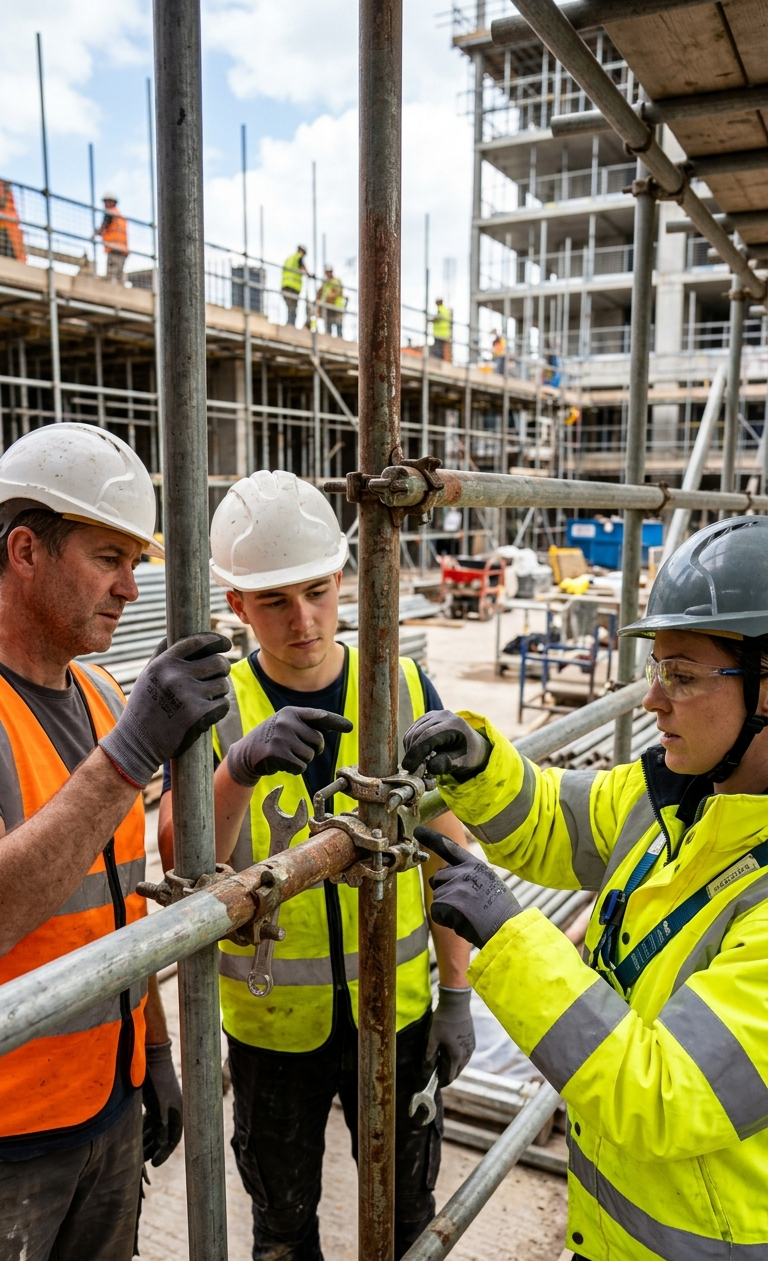
Basic Scaffold Safety – Keeping It All Together (pins, clamps, & couplers)
All scaffold components must be properly connected using secure pins, clamps, and couplers. Loose or missing parts can weaken the entire structure and create serious hazards. Regular inspection ensures everything remains tight and stable.
Basic Scaffold Safety – Work Platform Construction
Work platforms must be built using proper planking, spacing, and full support across the scaffold frame. Only approved materials should be used to ensure strength and stability. A correctly built platform reduces the risk of collapse or imbalance.
Basic Scaffold Safety – Manually Propelled Mobile Scaffolds
Mobile scaffolds must have wheels locked before use to prevent movement. They should only be moved when no one is on the platform. Uneven surfaces and overhead hazards must always be checked before relocation.
Basic Scaffold Safety – Safety on Work Platforms
Workers should maintain balance, keep platforms clear, and avoid overloading materials. Movement should be controlled to prevent slips or trips at height. Good housekeeping is essential for safe platform use.
Basic Scaffold Safety – Working Safely on Suspended Scaffolding
Suspended scaffolds require careful rigging, inspection, and controlled movement during use. All suspension systems must be checked before workers go up. Proper training is essential to ensure safe operation at height.
Additional Scaffolding Safety Training Resources
Why Scaffolding Safety Matters
Scaffolding creates temporary work platforms at elevated heights, which increases exposure to falls, unstable surfaces, and falling tools or materials. Most scaffold-related incidents happen due to:
- Missing or incomplete guardrails
- Improper access to platforms
- Poor scaffold assembly or loose components
- Lack of inspection before use
- Unsafe working behavior on platforms

Core Principles of Basic Scaffolding Safety
To maintain a safe scaffolding environment, every job site should follow these key principles:
- Ensure scaffolds are built on firm, stable ground
- Inspect all components before use
- Maintain proper load limits at all times
- Use fall protection when required
- Keep platforms clear of unnecessary materials
- Secure tools to prevent falling hazards
- Only trained and authorized workers should access scaffolds
Stay aware. Stay stable. Stay safe on every scaffold.
Scaffolding safety is not just about equipment. It is about daily decisions, awareness, and discipline on site. Using structured scaffolding safety toolbox talks helps build a safer work environment where risks are identified early and controlled effectively.
Get Full Scaffolding Safety Toolbox Talks Pack
Access a complete set of Basic Scaffolding Safety Toolbox Talks designed for daily safety meetings, site briefings, and worker training. Each topic is written in simple language to improve understanding and reduce risks on site. Use these ready-to-print safety talks to strengthen compliance and build a safer work environment.
Reach Professionals Focused on Safer Work at Height
ToolboxTalk.com provides practical scaffold safety resources for workers, supervisors and safety teams. If your company supports construction, access equipment or workplace safety, explore partnership opportunities with ToolboxTalk.
Frequently Asked Questions (FAQs) Basic Scaffolding Safety Guide
These FAQs are designed to support the Basic Scaffolding Safety Guide and improve understanding of safe scaffold use on real job sites. They cover common risks, best practices, and safety responsibilities using simple, clear language for workers and supervisors.
A basic scaffolding safety guide includes essential rules for safe scaffold setup, inspection, and use. It focuses on preventing falls, ensuring stability, and maintaining safe working platforms.
For deeper reference on safe construction practices, the UK Health and Safety Executive provides clear guidance on scaffold systems and risks: HSE Scaffolding Safety Guidance
Scaffold safety is managed by a competent person who inspects, approves, and monitors scaffold conditions. Workers also share responsibility by following safety rules and reporting hazards immediately.
According to industry safety research from NIOSH construction safety resources, strong supervision and communication significantly reduce scaffold-related incidents.
Common hazards include falls from height, unstable platforms, falling tools, and contact with overhead power lines. Poor assembly or missing components can also create serious risks.
The CPWR construction safety research center highlights that most scaffold incidents are preventable with proper inspection and training.
Fall protection should be used whenever there is a risk of falling from elevated platforms. This may include guardrails, safety nets, or personal fall protection systems depending on the work setup.
Proper use of fall protection systems is a key part of any scaffolding safety toolbox talk and should be checked before work begins.
Falling objects can be prevented by securing tools, using toe boards, and keeping platforms organized. Workers should never leave loose materials on elevated surfaces.
Good falling object prevention practices protect both workers on the scaffold and those working below.
A scaffold inspection checklist is a structured guide used to verify that all parts of the scaffold are safe before use. It includes checking base stability, guardrails, connections, and platform conditions.
Regular inspections help ensure scaffold structural stability and reduce risks caused by damaged or missing components.
Safe scaffolding starts at ground level with proper leveling, stable soil, and strong base support. If the base is weak or uneven, the entire structure becomes unsafe.
This is a core principle in every working at height safety guide, ensuring stability before upward construction begins.
Scaffolds must always be kept at a safe distance from overhead power lines and electrical equipment. Workers should identify electrical hazards before setup or movement.
Safety experts from the NIOSH electrical safety program emphasize hazard awareness as a key prevention method for serious injuries.
Scaffold safety toolbox talks help reinforce daily safety habits and keep workers alert to hazards. They improve communication and ensure everyone understands safe procedures before starting work.
Regular scaffolding safety toolbox talks help reduce risks and improve overall site safety performance.