
Trenching and Excavation Safety Toolbox Talk Training and Workplace Trench Hazard Awareness
Trenching and excavation work can expose crews to serious hazards including cave-ins, falling materials, underground utilities, and unstable soil conditions. This free Trenching and Excavation Safety Toolbox Talk directory helps workers recognize trench hazards, follow safe excavation practices, understand protective systems, and improve workplace safety awareness. Each printable trench safety PDF is available to download for toolbox talks, job site meetings, and crew training.
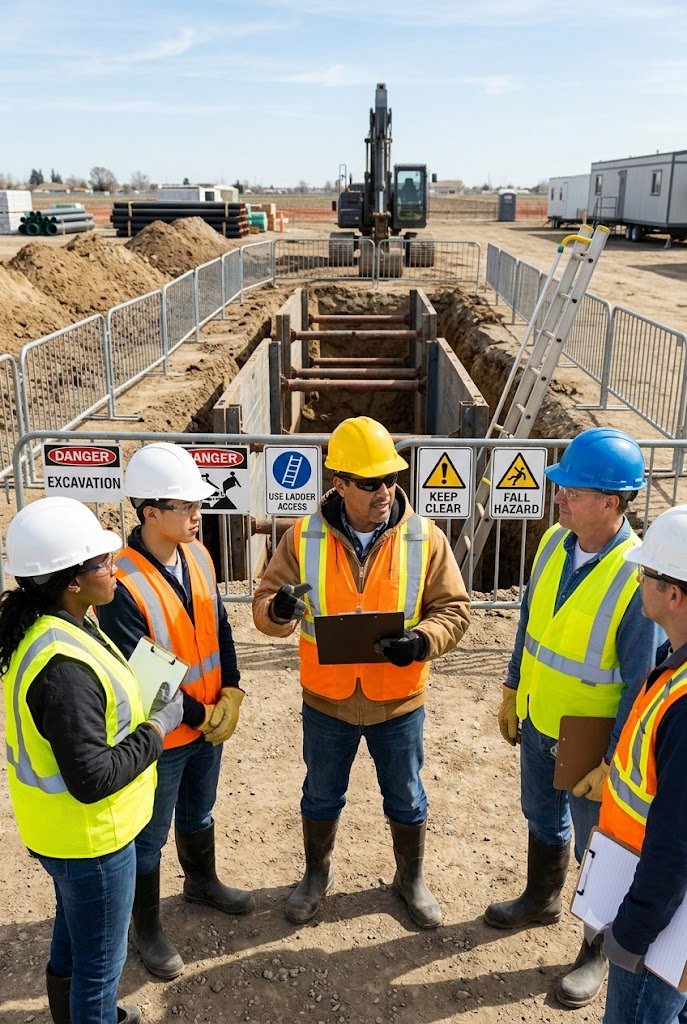
Free Trenching and Excavation Safety Toolbox Talks
Excavation Safety Toolbox Talk: Understanding the Difference Between Excavations and Trenches
Many workers use the terms excavation and trench interchangeably, but understanding the difference is essential for recognizing hazards and selecting the right protective measures. This toolbox talk explains the key definitions, common job site examples, and how proper hazard recognition improves excavation safety, trench safety awareness, ground disturbance hazards, construction site safety, and safe digging practices.
Excavation Safety Toolbox Talk: Why a Competent Person Is Critical to Every Digging Operation
Every excavation project needs someone who can identify hazards before they become life-threatening. Learn the responsibilities of a competent person, including inspecting excavation conditions, recognizing soil instability, identifying cave-in hazards, monitoring changing site conditions, and protecting crews through effective excavation risk assessment and worksite safety inspections.
Excavation Safety Toolbox Talk: Identifying Ground-Level Hazards Before Work Begins
Hazards around an excavation often exist long before anyone enters the trench. This toolbox talk covers how to recognize surface hazards, equipment traffic risks, unstable ground conditions, slip and trip hazards, fall hazards, and nearby obstacles that can threaten worker safety throughout excavation operations.
Excavation Safety Toolbox Talk: Staying Safe Around Underground Utilities
Hidden utilities can create serious risks during excavation if they are not properly identified and protected. Learn best practices for preventing contact with underground electrical lines, gas pipelines, water mains, fiber optic cables, and other buried services while improving utility locating, excavation planning, and safe digging procedures.
Excavation Safety Toolbox Talk: Safe Ladder Access for Entering and Exiting Excavations
Getting in and out of an excavation safely is just as important as working inside it. This toolbox talk explains proper portable ladder safety, safe access and egress, ladder placement, excavation entry procedures, and practical ways to reduce falls while maintaining efficient worksite operations.
Excavation Safety Toolbox Talk: Protecting Workers from Falling Objects
Even small tools or loose materials can become serious hazards when workers are below ground level. Discover simple methods for preventing falling object hazards, securing equipment, managing material storage, maintaining safe overhead work practices, and improving overall excavation site safety.
Excavation Safety Toolbox Talk: Recognizing Hazardous Atmospheres in Excavations
Excavations can contain invisible dangers that cannot be detected without proper precautions. Learn how to recognize the risks of oxygen-deficient environments, toxic gases, flammable vapors, confined work areas, air quality monitoring, and other atmospheric hazards before entering an excavation.
Excavation Safety Toolbox Talk: Managing Water Hazards in Excavations
Water inside an excavation can quickly weaken soil and increase the risk of collapse. This toolbox talk discusses groundwater hazards, flooded excavations, soil erosion, water accumulation, drainage control, and practical methods for maintaining a stable and safe excavation environment.
Excavation Safety Toolbox Talk: Safe Practices for Vehicles and Equipment Near Excavations
Heavy equipment and vehicle traffic can place dangerous pressure on excavation walls and increase the risk of collapse. Learn how to safely manage construction equipment, vehicle movement, edge protection, equipment setback distances, traffic control, and excavation work zone safety.
Excavation Safety Toolbox Talk: Knowing When Protective Systems Are Needed
Not every excavation presents the same level of risk, but every job requires careful hazard evaluation. This toolbox talk explains when to consider protective systems, including sloping, benching, shoring, and trench shields, to reduce the risk of soil collapse and improve worker protection.
Excavation Safety Toolbox Talk: Spotting Early Warning Signs of Soil Failure
Soil conditions can change rapidly throughout the workday, making continuous observation essential. Learn how to identify cracks in the ground, bulging excavation walls, water seepage, soil movement, vibrations, and other warning signs that may indicate an increased risk of collapse.
Excavation Safety Toolbox Talk: Understanding Soil Types and Ground Stability
Different soil conditions require different safety strategies to reduce excavation risks. This toolbox talk introduces the basics of soil classification, ground stability, soil testing, excavation planning, and how understanding soil behavior helps prevent cave-ins and other ground failures.
Excavation Safety Toolbox Talk: Best Practices for Working with Trench Boxes
Trench boxes provide valuable protection when used correctly and inspected regularly. Learn practical guidance for trench box safety, protective shielding systems, safe installation, equipment inspections, and protecting workers during excavation and trenching operations.
Excavation Safety Toolbox Talk: Safe Use and Inspection of Hydraulic Shoring Systems
Hydraulic shoring helps stabilize excavation walls when properly installed and maintained. This toolbox talk covers hydraulic shoring safety, excavation support systems, equipment inspections, pressure monitoring, and safe installation techniques that help minimize the risk of soil collapse.
Excavation Safety Toolbox Talk: Safe Work Practices for Timber Shoring Systems
Timber shoring remains an effective excavation support method when designed, installed, and inspected correctly. Learn practical guidance on timber shoring safety, structural support systems, proper installation, routine inspections, and maintaining safe working conditions throughout excavation projects.
Excavation Safety Toolbox Talk: Safe Sloping and Benching Techniques to Prevent Cave-Ins
Sloping and benching can significantly reduce excavation hazards when they are planned for the existing ground conditions. This toolbox talk explains sloping techniques, benching methods, soil stability, excavation wall protection, ground collapse prevention, and safe excavation planning that helps keep workers protected on every job site.
Emergency Response Planning for Excavation Incidents
Even with careful planning, emergencies can happen without warning. Every excavation project should have a clear response plan so workers know exactly what to do if conditions suddenly become unsafe.
- Establish emergency communication procedures before work begins.
- Make sure rescue equipment is readily available and regularly inspected.
- Identify the fastest emergency access routes for first responders.
- Train workers to recognize situations that require immediate evacuation.
- Practice emergency drills to improve response time and worker confidence.
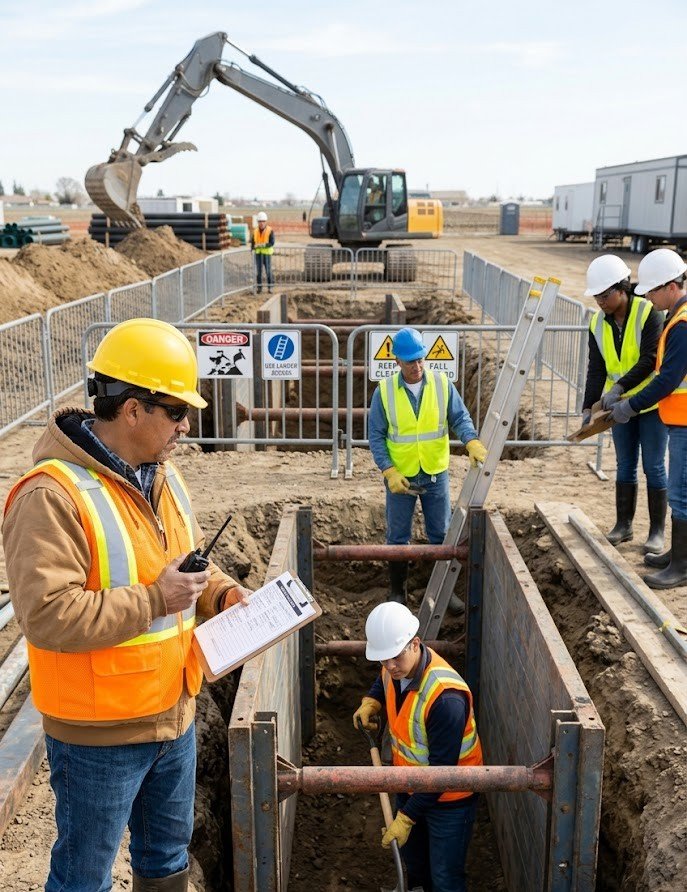
Weather Conditions That Can Affect Excavation Safety
Weather can change excavation conditions within minutes and significantly increase job site hazards.
- Monitor weather forecasts in National Weather Services throughout the workday.
- Inspect excavations after heavy rain or flooding.
- Watch for freezing and thawing that can weaken soil stability.
- Protect workers from heat stress and cold stress during outdoor excavation work.
- Delay work whenever weather creates unsafe excavation conditions.
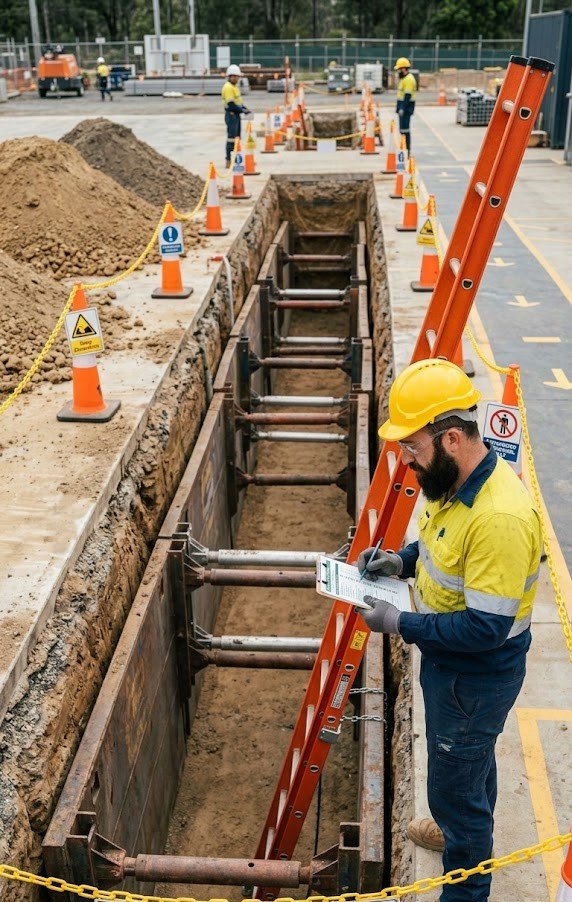
Common Mistakes That Lead to Excavation Accidents
Many excavation incidents occur because workers become comfortable with routine tasks or overlook changing job site conditions. Recognizing these common mistakes can help prevent serious injuries, equipment damage, and costly project delays.
- Skipping pre-work safety inspections before excavation activities begin.
- Entering an unsupported excavation without proper protective systems in place.
- Ignoring changing soil conditions after rainfall, vibrations, or nearby construction activity.
- Working too close to unprotected excavation edges without maintaining safe setback distances.
- Using damaged or improperly installed trench boxes, shoring systems, ladders, or other protective equipment.
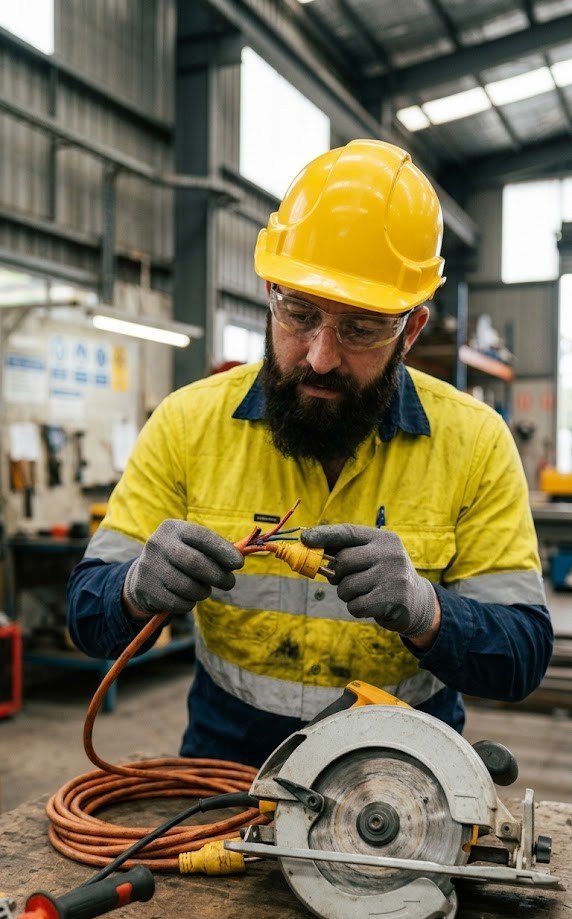
Download Free Trenching and Excavation Safety Toolbox Talk PDF
Help your team stay informed before excavation work begins with our free, printable Trenching and Excavation Safety Toolbox Talk PDF. This ready-to-use resource covers essential excavation hazards, cave-in prevention, safe work practices, and includes a convenient employee sign-off sheet to support daily safety meetings, training sessions, and job site documentation.
Frequently Asked Questions About Free Trenching and Excavation Safety Toolbox Talk For Workers in the Jobsite
Get clear answers about toolbox talks, safety topics, and training resources.
A trenching and excavation safety toolbox talk is a short safety meeting designed to educate workers about common excavation hazards, safe digging procedures, protective systems, emergency preparedness, and hazard recognition before work begins. These discussions help reinforce safe work habits and improve communication across the job site.
Excavation work involves hazards such as soil collapse, falling materials, underground utilities, heavy equipment, hazardous atmospheres, and unstable ground conditions. Without proper planning and protective measures, these hazards can develop quickly and place workers at significant risk.
Safety toolbox talks should be held before excavation work starts, whenever site conditions change, after severe weather, when new workers join the project, or before beginning a new phase of excavation. Regular discussions help crews remain alert to changing hazards throughout the project.
An effective excavation safety meeting may cover hazard identification, soil stability, safe access and egress, protective systems, underground utility awareness, equipment safety, emergency response procedures, weather-related risks, and daily inspection requirements. Tailoring each meeting to current job site conditions makes the discussion more practical and valuable.
You can find free, easy-to-use Trenching and Excavation Safety Toolbox Talks on ToolboxTalk.com, including printable PDFs with employee sign-in sheets, practical safety guidance, and workplace training resources designed for construction companies, contractors, supervisors, safety managers, and crews looking to improve daily job site safety.