
Free Hazardous Substances Awareness Toolbox Talks and Chemical Safety Meeting Topics
Hazardous substances are present on nearly every jobsite, warehouse, manufacturing facility, and construction environment. This free chemical safety toolbox talk directory helps supervisors conduct effective safety meetings, reduce exposure risks, and maintain OSHA compliance. Each document is available for you to print.

Hazardous Substances Awareness Toolbox Talks
Hazardous Substance Awareness — Introduction (Read First)
Start here before conducting individual chemical safety talks. Covers basic hazard recognition, exposure routes, labeling awareness, and employee responsibilities when working around hazardous substances.
Hazardous Substance Awareness — Arsenic
Understand arsenic exposure risks commonly found in industrial processes, treated materials, and contaminated environments. Learn safe handling practices and exposure prevention methods.
Hazardous Substance Awareness — Asbestos
Review asbestos hazards, disturbance risks during renovation or demolition work, and required safety precautions to prevent airborne exposure.
Hazardous Substance Awareness — Benzene
Learn how benzene exposure occurs, recognize health risks, and apply workplace controls to minimize inhalation and skin contact hazards.
Hazardous Substance Awareness — Beryllium
Understand beryllium exposure risks in manufacturing and metal work environments, including respiratory protection and contamination control practices.
Upcoming Releases for 2026
How to Lead Hazardous Substances Safety Meetings?
Follow these steps before and during your safety meeting for maximum effectiveness.
- Gather crew members before work begins in an area away from loud equipment.
- Review one specific chemical hazard topic from the documents above.
- Discuss real jobsite exposure risks relevant to your current work tasks.
- Explain prevention controls and PPE requirements for the specific hazard.
- Allow workers to ask questions and share concerns openly.
- Document attendance using the sign-off sheet included in each PDF.

Common Hazardous Substance Exposure Risks
- Inhaling harmful dust, fumes, gases that may cause breathing problems.
- Skin contact with hazardous chemicals that can cause irritation, chemical absorption.
- Accidental ingestion caused by poor hygiene or contaminated food and drinks.
- Improper chemical storage or missing labels that increase exposure and spill risks.
- Poor ventilation that allows hazardous airborne contaminants to build up in the work area.
- Lack of safety training or leading to unsafe work practices and preventable injuries.
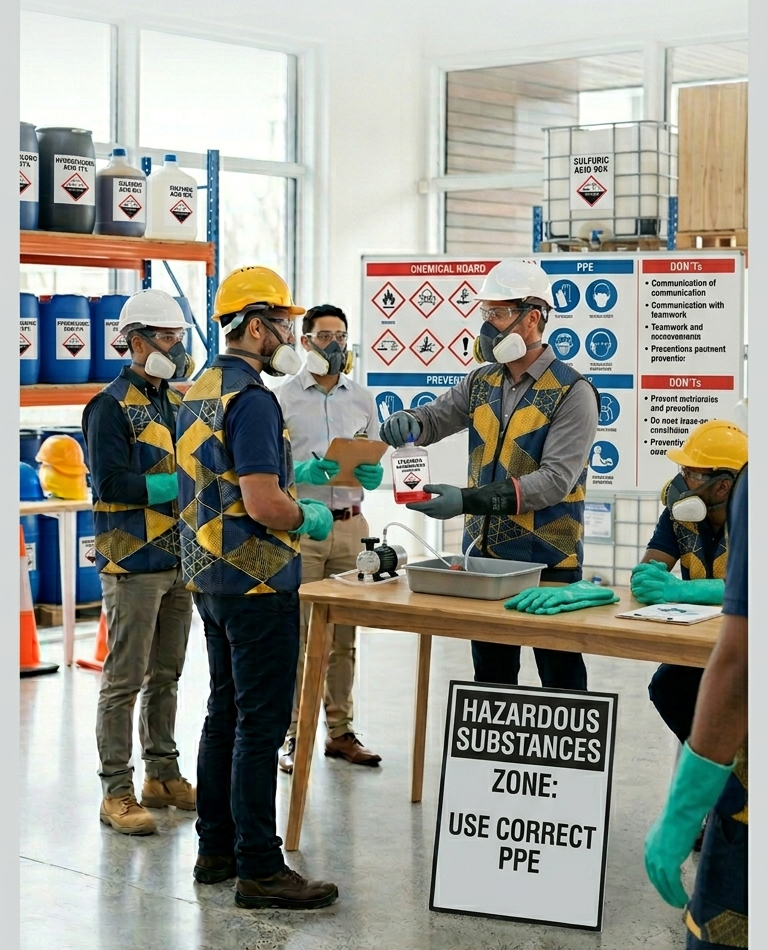
OSHA Compliance and Hazard Communication
OSHA requires employers to inform workers about chemical hazards through proper labeling, training, and hazard communication programs. These toolbox talks directly support that requirement.
How These Talks Support Compliance?
- Educate workers on chemical hazards regularly
- Reinforce safe handling procedures
- Document safety training activities with sign-off sheets
- Reduce liability and injury risk
- Demonstrate ongoing commitment to OSHA standards
Key OSHA Standards Referenced
- 29 CFR 1910.1200 Hazard Communication Standard
- GHS and SDS labeling requirements
- Permissible Exposure Limits PELs
- Respiratory Protection Standard 1910.134
- Choose Personal Protective Equipment PPE and use the requirements guide.
Additional OSHA Training Resources on Hazardous Substances
Download Free Hazardous Substances Toolbox Talks
Help your team stay informed and reduce chemical exposure risks through clear, practical safety discussions. Our free printable PDF toolbox talks make it easy to run effective workplace safety meetings. Designed for quick use on-site, they help promote awareness and a safer work environment.