
Transporting Portable Ladders Safely: Protecting Ladders Before They Ever Leave the Ground
A damaged ladder is an unsafe ladder and many portable ladders are damaged not during use, but while being moved to, from, or around the jobsite. This free toolbox talk training on portable ladder transportation safety covers the practices every worker needs to know: how to carry, load, secure, and inspect ladders so they arrive on the job ready to work safely.
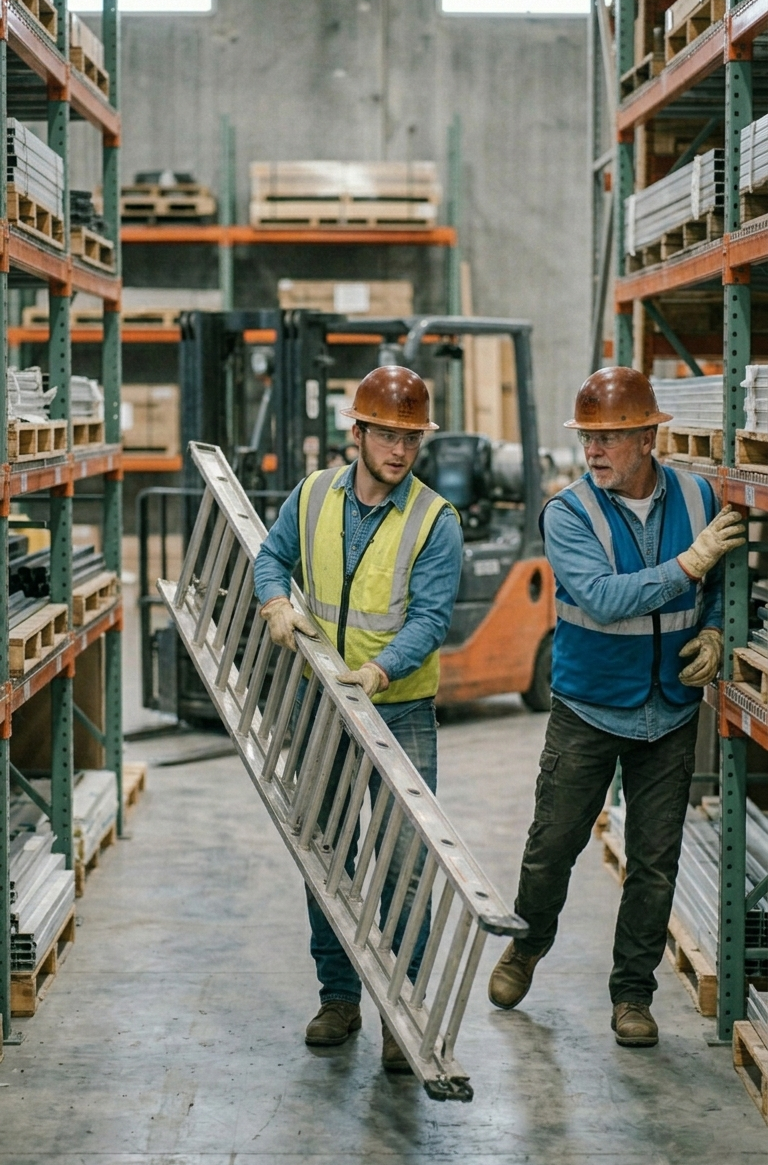
Portable Ladder Safety: Transporting Portable Ladders Safely
When we think about ladder safety on the job, most of us picture what happens while the ladder is in use setting it up at the right angle, maintaining three points of contact, not overreaching. Those are critical habits. But ladder injuries and equipment failures don't always happen during use. A significant number of portable ladders arrive at the worksite already damaged, weakened rungs, bent rails, cracked feet because of how they were handled during transport. Ladder transportation safety is where protection starts..
Why ladder transport damage is so dangerous: Structural damage from rough handling dropped ends, unsecured loads, dragging across pavement may not be visible to the naked eye. A ladder that looks fine after being tossed into a truck bed may have hairline cracks in the rails or loosened rung joints that fail under load. This is why proper handling and transport are just as critical as how you use the ladder once it's up..
Today we'll go through the most important practices for transporting portable ladders safely from picking the ladder up at the storage area, through loading it onto a vehicle, and right up to the moment before it goes into service on the job.
Portable Ladder Transportation Safety Quick Reference Guide
Before and During Ladder Carrying
- Never drag a ladder across the ground. Dragging can damage ladder feet, rails, rungs, and other critical components that affect safe performance.
- Ask for assistance when carrying a ladder that is too long, too heavy, or difficult to control safely. Team lifting can help prevent strains, sprains, and loss of control.
- Stay alert for blind spots, corners, doorways, overhead obstacles, and nearby workers while moving a ladder through the work area.
- Secure step ladders in the fully closed position before carrying them to prevent unexpected movement or pinch-point injuries.
- Lower and secure the fly section of an extension ladder before transporting it. Verify that all locks and rope systems are properly secured before movement.
Loading and Vehicle Transportation
- Place ladders carefully onto vehicles, ladder racks, trailers, or storage systems. Never throw, drop, or forcefully load a ladder, as impact damage may not always be visible.
- Fully support the ladder along its length when transporting it on a truck, van, trailer, or roof rack. Proper support helps prevent bending, twisting, and structural damage.
- Use approved straps, tie-downs, ropes, or securing devices to keep ladders from shifting, sliding, or falling during transport.
- Add padding or protective materials where appropriate to reduce vibration, friction, and transport-related wear that can shorten ladder service life.
- Avoid excessive ladder overhang beyond the front or rear of the vehicle. Follow transportation requirements and ensure ladders remain visible, stable, and securely fastened throughout the trip.
Common Ladder Transportation Hazards on the Jobsite
These are the situations where portable ladders are most often damaged before they ever reach the work area, and where safe ladder transportation habits make the biggest difference.
Important: Transport-related ladder damage is often invisible, bent rail fibers, loosened hardware, and stress fractures may not appear until the ladder is under load. A ladder that "looks fine" after rough handling is not necessarily safe to use. Always inspect after transport before putting any portable ladder into service.
Safe Portable Ladder Handling and Transport: What Every Worker Must Do
✅ The key rule for portable ladder transportation safety: Always follow the manufacturer's instructions for transporting your specific ladder. Different ladder types fiberglass, aluminum, wood; and different size classes have specific handling requirements. When in doubt, treat the ladder like the safety-critical tool it is, and handle it accordingly.
Safe Work Practices to Prevent Reversed Polarity Hazards
- Never drag a portable ladder across the ground or slide it out of a truck bed in a way that lets it drop; always carry it or have a second person help lower it safely
- Watch for blind spots while carrying; slow down before corners, doorways, or congested areas to avoid striking workers, materials, or equipment
- Secure step ladders before carrying; tie the two sections together using rope, twine, or wire to prevent unexpected opening and protect hands from pinch points
- Lower the fly section on extension ladders fully before carrying or repositioning; this reduces weight imbalance and lowers the risk of strain or loss of control
- Place ladders carefully into truck beds or trailers; never throw, toss, or drop a ladder, and ensure it is not resting on objects that prevent it from lying flat
- Use straps or ropes to secure ladders on racks during transport; the ladder must not bounce, slide, or shift, and contact points should be padded with rubber, foam, or carpet
- Inspect every portable ladder after unloading; perform a visual check of rails, rungs, feet, and hardware before putting the ladder into service on the job
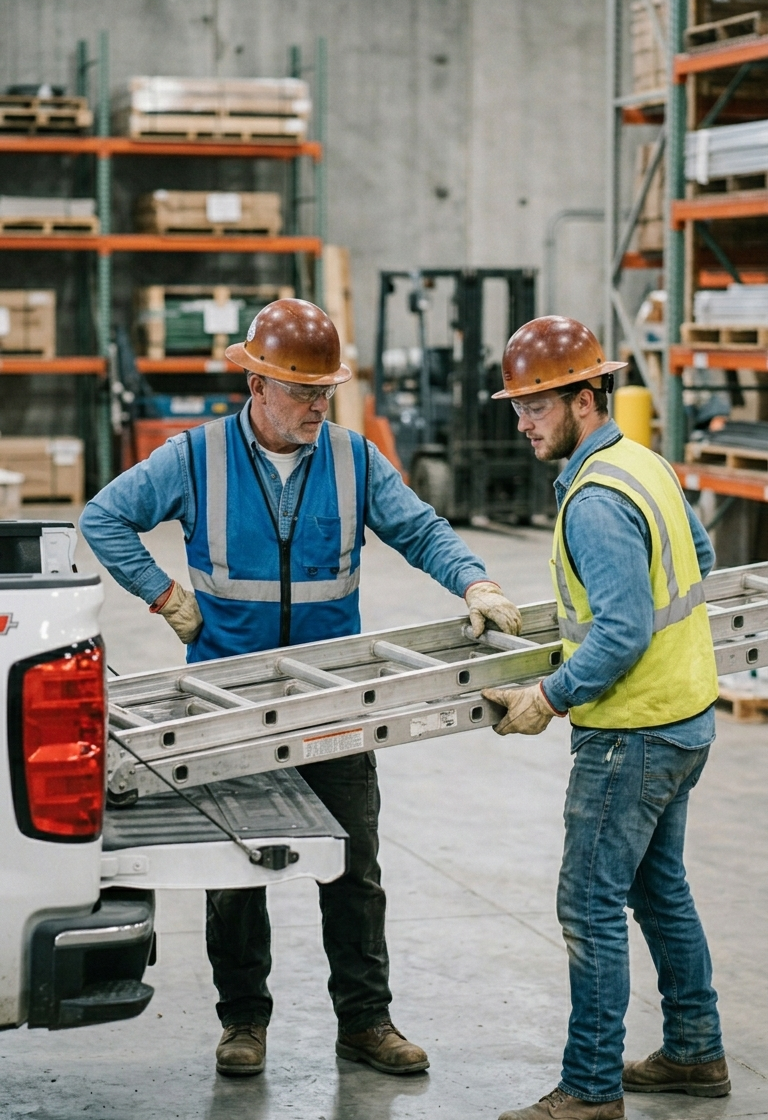
Portable Ladder Transportation Safety Mistakes to Avoid
- Never allow a ladder to overhang too far beyond the vehicle. Unsupported sections can flex under road vibration, increasing the risk of permanent bowing, rail damage, or reduced ladder stability.
- Never use a ladder that was visibly dropped, thrown, impacted, or transported without being properly secured. Remove it from service and have it inspected before it is used again.
- Never assume a ladder is undamaged simply because it appears normal after rough transportation. Structural damage, weakened components, or hidden defects may not be visible until the ladder is placed under load.
- Never transport a ladder with loose tie-downs, damaged straps, or inadequate securing methods. A shifting ladder can damage equipment, create roadway hazards, and pose serious risks to workers and other drivers.
- Never load tools, materials, or heavy equipment on top of a ladder during transport. Excess weight and uneven pressure can bend the rails, damage ladder components, and reduce the ladder’s safe working life.
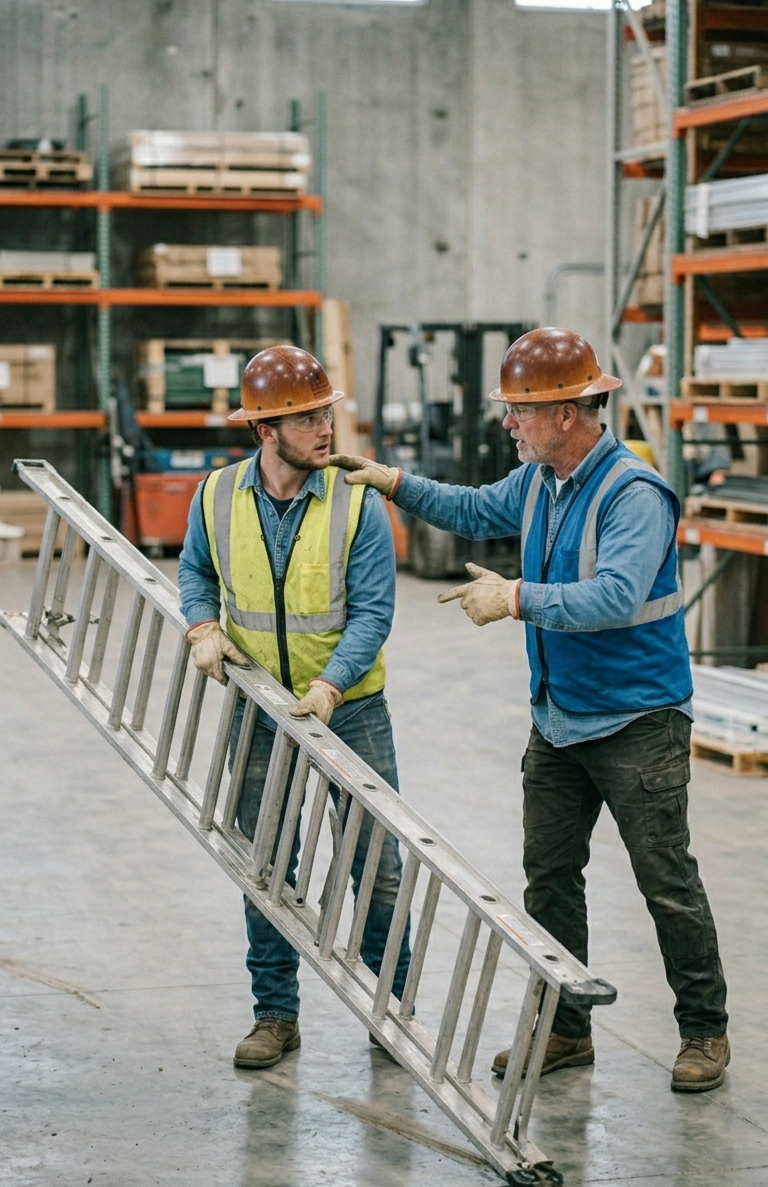
Before you leave today's safety meeting: Please sign the attendance and certification form on the back of the printed handout. Your signature confirms you participated in this portable ladder transportation safety training and understand the handling practices discussed. This signed record supports your employer's safety training documentation. Does anyone have additional tips or experiences to share about safely transporting portable ladders?
Federal Safety Standards That Cover Portable Ladder Transportation and Handling
Federal workplace safety regulations require that portable ladders be maintained in safe working condition and that defective ladders be removed from service immediately. Proper ladder transport and handling is part of that maintenance requirement. This toolbox talk helps employers document that workers have been trained in safe ladder handling and transportation practices as part of an overall ladder safety training program. Manufacturers are also required to provide transport guidance, which workers are expected to follow; consistent with the general duty to maintain ladders in accordance with their design and labeling.
More Talks in the Portable Ladder Safety Guides
Download This Free Ladder Handling Safety Talk
Print-ready PDF with employee sign-off sheet included. Use it at your next basic ladder safety meeting. No registration, no cost, always free. Continue building your crew’s ladder safety hazard awareness with these related safety meeting topics from the Toolbox Talk.