
Free Basic Ladder Safety Toolbox Talks and Workplace Ladder Safety Meeting Topics
Ladders are used on nearly every job site, warehouse, maintenance task, and construction project. This free ladder safety toolbox talk resource helps crews recognize ladder hazards, prevent falls, perform proper ladder inspections, and follow safe climbing practices before starting work. Each printable PDF is designed for quick and effective safety meetings.

Ladder Safety Guide and Fall Prevention Safety Meeting Topics
Toolbox Talk — Portable Step Ladder Safety: DO’s and DON’Ts Every Worker Must Know
Step ladders are commonly used on job sites, but unsafe setup and climbing habits can quickly lead to falls and injuries. This toolbox talk covers safe step ladder practices, proper positioning, and common mistakes workers should avoid during daily tasks. A printable PDF version is available for safety meetings and crew training.
Toolbox Talk — Extension Ladder Safety
Using an extension ladder correctly is critical for preventing falls and maintaining stability while working at height. This toolbox talk explains safe ladder positioning, proper climbing techniques, and how to secure extension ladders before use. Download the printable PDF for workplace safety briefings and toolbox talks.
Toolbox Talk — Portable Ladders: Types and Working Loads
Choosing the correct ladder type and understanding ladder duty ratings are essential for safe work practices. This toolbox talk helps workers identify portable ladder types, weight limits, and safe working loads for different job tasks. Includes a printable PDF toolbox talk for safety meetings and training sessions.
Toolbox Talk — Portable Ladder Safety: Seven Things You Should NEVER Do
Portable ladders are involved in many workplace falls and preventable injuries each year. This toolbox talk provides general ladder safety guidelines, safe climbing practices, and hazard prevention tips to help workers use ladders more safely. Download the printable PDF for job site safety meetings.
Toolbox Talk — Portable Ladder Handling Safety
Improper lifting and carrying of ladders can cause strains, sprains, and other handling injuries. This toolbox talk covers safe ladder handling techniques, carrying methods, and injury prevention practices for workers on active job sites. Includes a printable PDF safety guide for crews and supervisors.
Toolbox Talk — Portable Ladder Storage
Improper ladder storage can damage equipment and create unsafe working conditions over time. This toolbox talk explains safe storage practices, proper placement, and ways to protect portable ladders from damage and environmental exposure. A printable PDF version is available for workplace training and inspections.
Toolbox Talk — Weather and Portable Ladder Safety
Rain, wind, mud, and slippery surfaces can make ladder use far more dangerous. This toolbox talk helps workers recognize weather-related ladder hazards and understand when conditions may no longer be safe for ladder work. Printable PDF available for toolbox talks and workplace safety training.
Toolbox Talk — Portable Ladder Inspection
A damaged ladder should never be used on the job. This toolbox talk explains how to inspect portable ladders for cracks, loose parts, damaged feet, and other unsafe conditions before every use. Printable PDF available for daily toolbox talks and workplace safety reminders.
Toolbox Talk — Portable Ladder Electrical Hazards
Portable ladders can become dangerous when used near overhead power lines, energized equipment, or electrical hazards. This toolbox talk teaches workers how to maintain safe distances, recognize electrical risks, and prevent electrocution incidents while using ladders. Download the printable PDF for electrical safety discussions.
Toolbox Talk — Transporting Portable Ladders Safely
Transporting ladders incorrectly can lead to damaged equipment, struck-by hazards, and handling injuries. This toolbox talk covers safe ladder transportation methods, securing techniques, and carrying practices for safer job site operations. Download the printable PDF for quick crew discussions and safety reminders.
Upcoming Releases for 2026
How to Lead Basic Ladder Safety Toolbox Talks and Workplace Safety Meetings
Follow these simple steps to make your ladder safety toolbox talk, or workplace safety discussion more effective and practical for workers on the job site.
- Gather workers in a safe area away from active equipment and distractions before work begins.
- Review one specific portable ladder safety topic such as ladder inspections, safe climbing practices, or fall prevention.
- Discuss real workplace hazards involving step ladders, extension ladders, slippery surfaces, or unstable ladder setup.
- Explain proper ladder use, safe positioning, weight limits, and other ladder accident prevention practices workers should follow daily.
- Encourage workers to ask questions and share concerns about unsafe ladder conditions or recent near misses.
- Use the printable Ladder Safety Toolbox Talk PDF to document attendance and support ongoing safety awareness training.
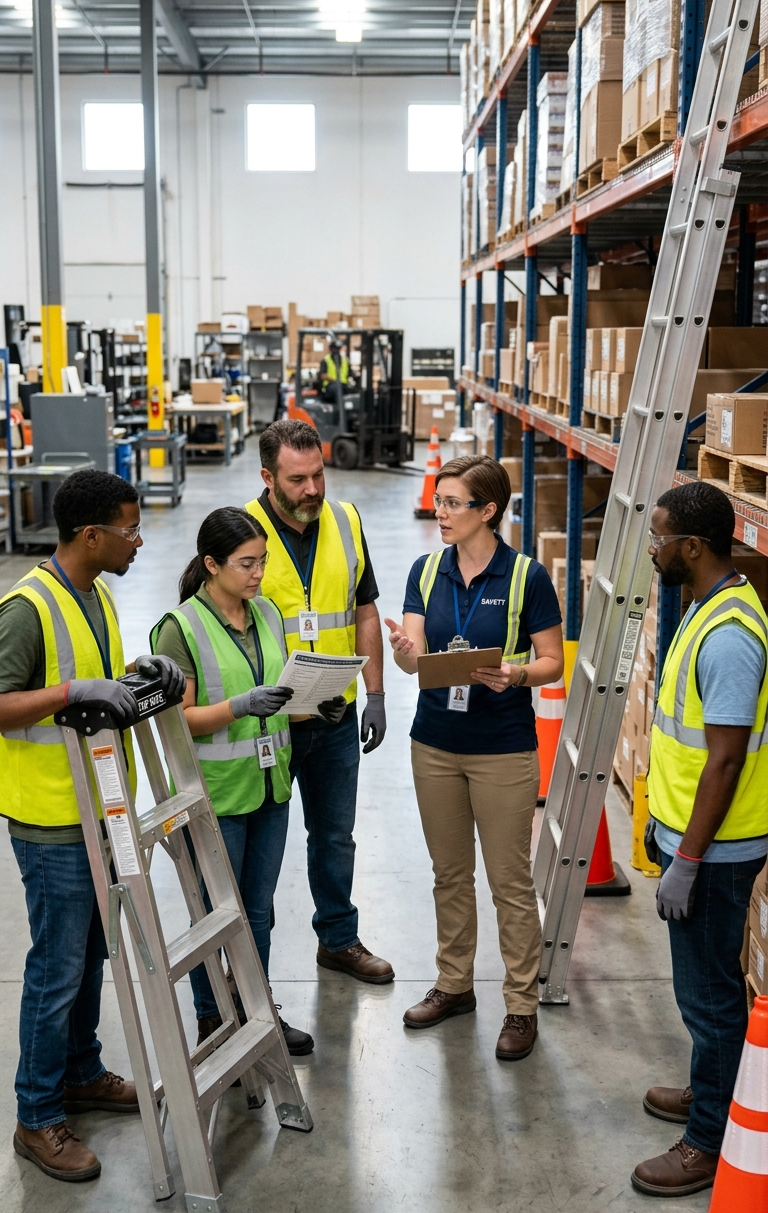
Why Are Basic Ladder Safety Toolbox Talks Important?
Regular ladder safety toolbox talks help workers recognize hazards before accidents happen. Discussing safe ladder setup, inspections, climbing practices, and fall prevention can reduce workplace injuries and improve daily safety awareness on the job site. Each topic is available as a printable PDF for quick safety meetings and crew training.
- Improve awareness of common portable ladder safety hazards before work begins.
- Reinforce safe ladder setup, climbing techniques, and fall prevention practices.
- Help workers identify damaged ladders through proper ladder inspection procedures.
- Reduce risks related to unstable surfaces, weather conditions, and improper ladder use.
- Encourage open discussions about workplace hazards, near misses, and safe work habits.
- Support safer job sites with downloadable Ladder Safety Toolbox Talk PDF guides for daily meetings and training.

Ladder Safety Compliance & Injury Prevention
Proper ladder safety isn't just about common sense; it’s about establishing daily habits that protect your team from preventable falls. These printable toolbox talks provide the exact training, checklists, and safety reminders your crew needs before they step off the ground.
How These Talks Protect Your Team
Prevent catastrophic falls by teaching right setup and stability rules.
Reinforce the 3-point contact rule during every climb and descent.
Simplify pre-use inspections so damaged equipment never gets used.
Build a strong safety culture with quick, engaging daily huddles.
Keep formal paper trails using our built-in sign-off sheets for training records.
Important Safety Focus Areas Covered
Choosing the right ladder for the job (Step, Extension, or Platform).
Weight capacity and load limits including tools and materials.
Proper setup angles and securing the base on uneven ground.
Working near electrical hazards and choosing fiberglass over aluminum.
Essential PPE selection like slip-resistant footwear and fall-arrest harnesses.
Support Safer Work at Height
ToolboxTalk.com provides practical ladder safety resources that help supervisors and workers prepare for safer jobsite practices. If your company provides ladders, fall-prevention equipment, training or related safety services, explore ways to partner with ToolboxTalk.
Explore Toolbox Talk Training Resources on Ladder Safety Guide For Meetings
Download Ready-to-Use Ladder Safety Resources for Your Next Toolbox Talk
Don’t let preventable falls disrupt your project or injure your team. These clear, user-focused training materials and printable guides help your crew spot hazards instantly and choose the right equipment every time. Perfect for morning briefings, shift handovers, or weekly safety meetings.
Frequently Asked Questions About Running Effective Ladder Safety Meetings
Get clear answers about toolbox talks, safety topics, and training resources.
You must calculate the combined weight of the worker plus all the tools, clothing, and gear they will carry at any one time. Never rely on guesswork; always check the manufacturer’s duty rating sticker on the side of the frame to ensure the ladder can safely support that total load. Understanding these limits is critical because structural failure is a leading cause of injuries when materials exceed the designated load threshold.
Supervisors can keep meetings fresh by using hands-on demonstrations and real job site examples rather than just reading from a script. Have a crew member demonstrate how to check for cracks, or physically set up an extension ladder together to test the proper angle and ground stability. Utilizing an interactive tool like the NIOSH ladder safety mobile app during your meeting gives crews a live, visual way to measure angles and learn proper placement on the spot.
You can find complete kits and printable resources directly on our landing page, designed to make meeting prep completely effortless. These downloadable PDFs give you professional, easy-to-read materials that you can print out instantly to hand to your team and keep your records organized.
You must immediately tag the ladder as unsafe and remove it from the work area so no one else uses it by mistake. Do not attempt temporary fixes on cracked rails or loose rungs. For more details on setting up proper administrative controls, you can review the official regional state safety criteria for tool inspections to understand exactly how damaged equipment should be documented and permanently pulled out of service.
You should consider full protective gear whenever a worker is exposed to vertical drops that a simple ladder cannot safely guard against, such as working near unprotected edges or on high-reach scaffolding. When standard equipment isn’t enough, investing in high-quality 3M fall protection gear provides your team with the full-body harnesses, lanyards, and anchor points necessary to stop a descent and prevent serious injuries on the job.
To prevent dropped objects from injuring workers below, your crew should use specialized tethering systems, wristbands, and attachment points for their equipment. Adding reliable 3M tool tethers and fall protection accessories to your setup ensures that every wrench, hammer, and radio is securely locked to the worker’s belt, keeping the ground level safe for everyone on site.