
Portable Extension Ladder Safety: Seven Things You Should NEVER Do
OSHA requires that ladders be used only for the purpose for which they were designed (29 CFR 1926.1053(b)(4); 29 CFR 1910.23(b)(8)). This free portable ladder safety toolbox talk is a discussion aid. It covers seven misuses to avoid: using a ladder as a scaffold, climbing the back of a stepladder, connecting ladders together, and more. Discuss what to avoid, why it is hazardous, and what safe ladder use looks like.
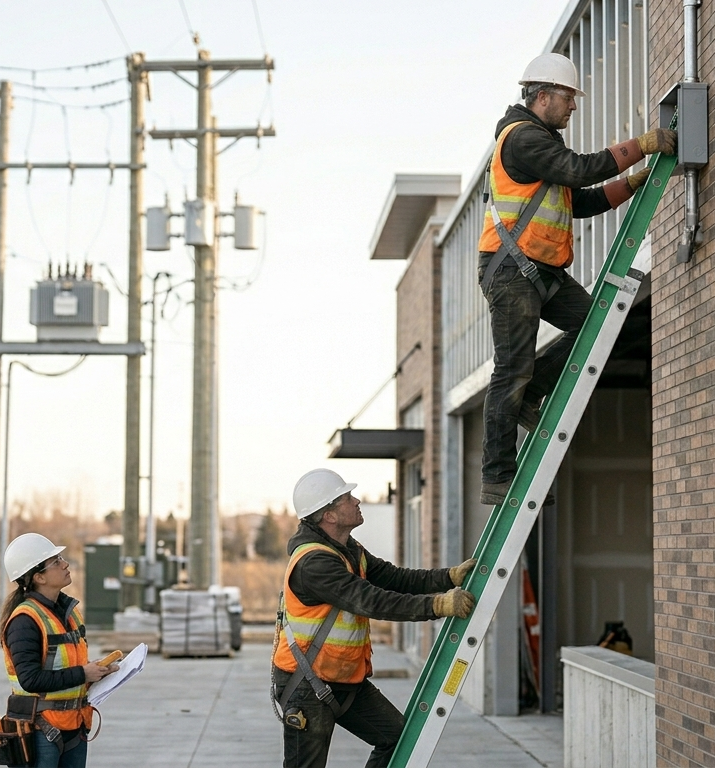
Portable Ladder Safety: Seven Things You Should NEVER Do
We have covered portable ladder selection and use in other toolbox talks. It is just as important to recognize how ladders get misused. Today we will go over seven practices to avoid with a portable ladder.
Why this matters: Falls from ladders cause injuries on construction, maintenance, and general industry jobs. OSHA's ladder rules require ladders to be used only for the purpose they were designed for. Each item on this list is a shortcut that can lead to a fall. Follow your employer's procedures and the manufacturer's instructions.
The Seven Things You Should NEVER Do With a Portable Ladder
Do not place a board between two stepladders to make a walking surface. Do not lay an extension ladder across sawhorses or other supports to use as a platform. Do not use a ladder as a ramp or runway. Ladders are designed for a person to climb. They are not designed to span distances or carry horizontal loads. OSHA requires ladders to be used only for the purpose for which they were designed (29 CFR 1926.1053(b)(4); 29 CFR 1910.23(b)(8)). If you need an elevated work platform, use scaffolding, an aerial lift, or other equipment designed and rated for the task.
The rear section of a stepladder holds the ladder open and stable. Do not climb the rear cross-bracing unless the ladder is designed and provided with steps for climbing on both the front and rear sections (29 CFR 1926.1053(b)(14)). Climbing the back of a stepladder that is not designed for it can cause the ladder to tip or collapse. Follow the manufacturer’s labels for two-sided ladders.
Do not use a ladder as a storage rack. Tools or materials left on the rails, rungs, or braces can fall on people below, shift under a climber, and block hand placement on the rungs. Keep the area around the top and bottom of a ladder clear (29 CFR 1926.1053(b)(9)). When a ladder is not being climbed, store it as your employer’s procedures and the manufacturer’s instructions describe.
Do not tie or fasten ladders together to get a longer ladder unless they are specifically designed for that use (29 CFR 1926.1053(a)(7); 29 CFR 1910.23(c)(12)). Joined ladders can twist, slip, or fail. If you need more height, use a ladder that is the right length for the job.
Do not set a ladder on a truck bed, trailer, forklift forks, or the bucket of heavy equipment. Ladders must be used on stable and level surfaces unless they are secured to prevent accidental displacement (29 CFR 1926.1053(b)(6); 29 CFR 1910.23(c)(4)), and they must not be placed on boxes, barrels, or other unstable bases to gain height (29 CFR 1910.23(c)(13)). Equipment can move unexpectedly. If work at height must be done from a vehicle or equipment, use a lift or platform designed for that purpose, under your employer’s procedures.
In general industry, a ladder with structural or other defects must be immediately tagged “Dangerous: Do Not Use” or with similar language and removed from service until repaired (29 CFR 1910.23(b)(10)). In construction, a portable ladder with structural defects must be immediately marked in a manner that readily identifies it as defective, or tagged “Do Not Use” or similar language, and withdrawn from service until repaired (29 CFR 1926.1053(b)(16)). Repairs must restore the ladder to its original design criteria (29 CFR 1926.1053(b)(18)). Report the damaged ladder to your supervisor.
In general industry, ladders must not be loaded beyond the maximum intended load (29 CFR 1910.23(c)(3)). In construction, ladders must not be loaded beyond the maximum intended load or the manufacturer’s rated capacity (29 CFR 1926.1053(b)(3)). A second person adds load. Follow the manufacturer’s instructions and the ladder’s labels for how many people the ladder may carry.
What Every Worker Must Remember About Portable Ladder Safety
The most important rule: A portable ladder is designed for one purpose, to let one person climb to a working height. If you are thinking about using it for anything else, stop and ask whether you have the right equipment for the job.
Basic Portable Safety Guidelines
- Inspect every ladder before use. Check rungs, rails, feet, and spreaders for damage, wear, cracks, or corrosion.
- Set non-self-supporting ladders at the correct angle. On construction work, the base is about one-quarter of the working length from the support (29 CFR 1926.1053(b)(5)(i)). The working length is the distance along the ladder from the foot to the top support. Follow the manufacturer’s instructions.
- Make sure the ladder is on a stable, level surface or is secured, and keep the area around the top and bottom clear. Secure a ladder that can be displaced by traffic or work activities, or barricade it.
- Face the ladder and keep at least one hand on it while climbing up or down (29 CFR 1926.1053(b)(20)-(21); 29 CFR 1910.23(b)(11)-(12)). Many employers also require three points of contact. Follow your employer’s procedure.
- Keep your body centered between the side rails. If you cannot reach, climb down and move the ladder.
- Do not carry any object or load that could cause you to lose balance and fall (29 CFR 1926.1053(b)(22)). Use a tool belt or hoist line, as your employer’s procedures allow.
Ladder Safety “Never Do” Rules
- Do not use any of the unsafe practices described in this talk.
- Do not use a ladder that is tagged out, damaged, or removed from service.
- Do not use a ladder on an unstable, uneven, or slippery surface unless it is secured or stabilized to prevent accidental displacement (29 CFR 1926.1053(b)(6)-(7); 29 CFR 1910.23(c)(4), (c)(9)).
- Do not use a ladder with conductive side rails where you or the ladder could contact exposed energized electrical equipment (29 CFR 1926.1053(b)(12)). Follow your employer’s electrical safety procedures.
- Do not use the top step or top cap of a stepladder as a step (29 CFR 1926.1053(b)(13); 29 CFR 1910.23(c)(8)). Follow the manufacturer’s labels for the highest safe standing level on other ladders.
- Do not overload a ladder or carry materials that affect your balance.
Before you leave today's safety meeting, please sign the attendance record (sign-in form) on the back of the printed handout. The form records who attended this portable ladder safety talk. Signatures record attendance only, not certification or completion of required training. Keep the completed record with your site's training files.
If you have seen unsafe ladder use, report it to your supervisor so it can be corrected.
Discussion question for your crew: Can anyone share other examples of unsafe ladder use you have seen on site?
Ladder Safety Standards and Best Practices for Portable Ladder Use
This talk draws on OSHA's ladder rules for construction (29 CFR 1926.1053) and general industry (29 CFR 1910.23), selected paragraphs only. It is a discussion aid and does not replace your employer's procedures, the manufacturer's instructions, or required training (29 CFR 1926.1060; 29 CFR 1910.30). Double-check all regulations and safety requirements with your employer and OSHA.
Keep Exploring Related Ladder Safety Toolbox Talks
Grab This Free Guide: 7 Things You Should NEVER Do on a Ladder
This print-ready PDF has a sign-in sheet on the back for recording attendance. It is free, with no sign-up. It is a discussion aid for your next safety meeting. Check regulations and safety requirements with your employer and OSHA.
FAQS for Portable Extension Ladder Safety
Common questions supervisors and workers ask after completing this portable ladder safety meeting topic.
No. A ladder must be used only for the purpose for which it was designed (29 CFR 1926.1053(b)(4); 29 CFR 1910.23(b)(8)). A plank between two stepladders is not a ladder use. Stepladders are not designed to carry a person walking across them. Use scaffolding, an aerial lift, or other equipment designed and rated for the work.
Take the ladder out of service and report it to your supervisor. In general industry, a ladder with structural or other defects must be immediately tagged “Dangerous: Do Not Use” or with similar language and removed from service until repaired (29 CFR 1910.23(b)(10)). In construction, a portable ladder with structural defects must be immediately marked in a manner that readily identifies it as defective, or tagged “Do Not Use” or similar language, and withdrawn from service until repaired (29 CFR 1926.1053(b)(16)). Repairs must restore the ladder to its original design criteria (29 CFR 1926.1053(b)(18)).
Tell your supervisor or site safety representative, using your employer’s hazard reporting method. Section 11(c)(1) of the OSH Act says no person may discharge or in any manner discriminate against an employee because the employee filed a complaint or exercised any right afforded by the Act. An employee who believes they were discriminated against may file a complaint with OSHA within 30 days after the violation occurs (OSH Act section 11(c)(2)).
Yes. This toolbox talk is free to download, print, and share with your crew. The PDF has a sign-in sheet for names, signatures, and the date. Signing records attendance only. It is not certification or proof of completed training. No registration is required.