
Responding to Electrical Emergencies Toolbox Talk: What to Do When Seconds Count
Electrical emergencies call for a calm, deliberate response. This talk covers downed power lines, helping a person who has been shocked, and what to know before an emergency happens. It is a discussion aid and does not replace your employer’s emergency procedures, first-aid training or instructions from emergency responders.
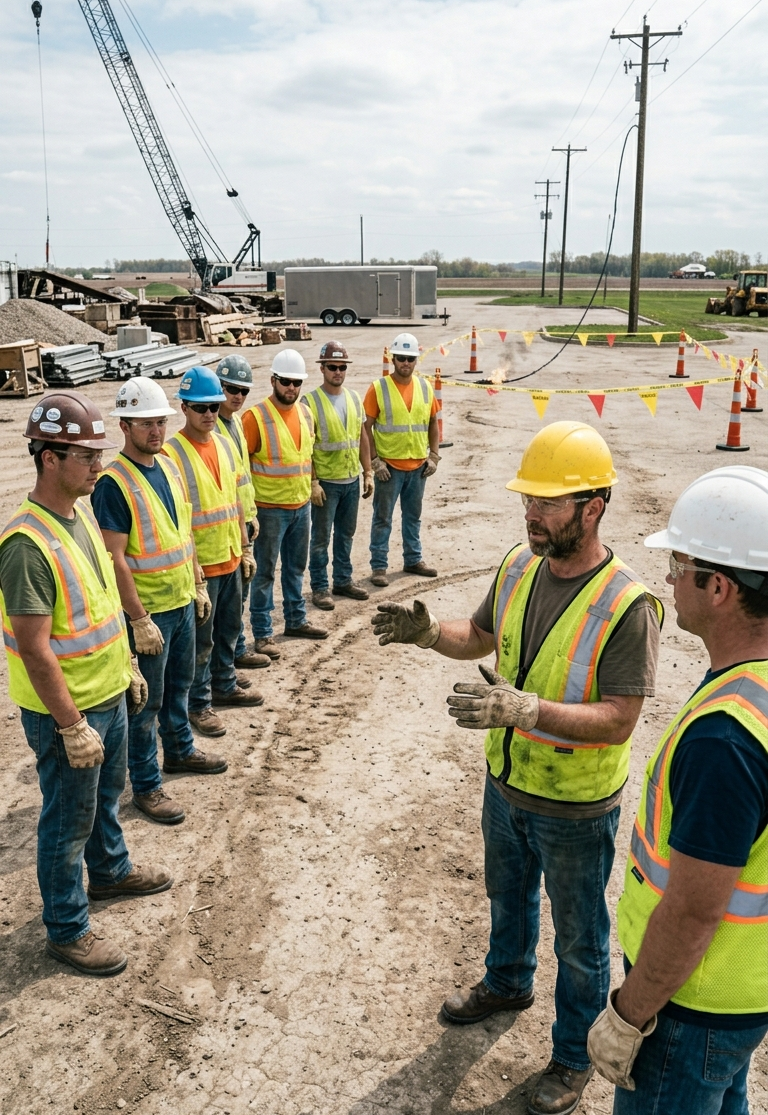
Basic Electrical Safety: Responding to Electrical Emergencies
Electrical emergencies call for a calm, deliberate response. A rescuer who rushes in can be hurt too, so protect yourself first. A worker who is injured during a rescue cannot help anyone else. Take a moment to assess the situation, look for electrical hazards, and confirm the area is safe before acting. This talk is a discussion aid and does not replace your employer's emergency procedures, first-aid training or instructions from emergency responders.
Downed power lines: Downed power lines are a serious hazard to workers and the public. Treat them as energized even if they are not sparking or moving. Only the utility can confirm that a line is deenergized.
Electrical Emergency Response Safety Guide
Downed Power Line Emergency Response
Treat every downed power line as energized. Keep your distance and keep other people away.
What workers should do:
- Stay well back and keep others away from the hazard area.
- Do not walk, drive or move equipment over the line, even if it appears inactive. Current can also spread through the ground and through water around a downed line.
- If a line falls on your vehicle, stay inside unless fire or smoke makes staying unsafe (see the vehicle steps below).
- Stay out of water and wet ground near the line.
- Call 911 and report the emergency. Leave the line to the utility and emergency responders.
Responding to an Electrocution Emergency
Quick, informed action can help, but a rescuer who is shocked cannot help anyone. Protect yourself and others first.
Steps:
- Do not touch the person while they may still be in contact with an energized source.
- Call 911 or direct someone to call, and say it is an electrical injury.
- Turn the power off only if you are trained and authorized and can reach the switch, breaker or plug safely.
- If the power cannot be turned off safely, stay back and wait for emergency responders. For a downed line, do not approach the person or try to move the line or anything touching it.
- Check breathing once the person is clear of the source, and follow your first-aid training, including CPR if you are trained. Call for an AED if one is available.
Stay far away from downed electrical lines. Do not walk, drive or move objects over them, and do not try to remove lines from rooftops, vehicles, trees or roads. A line may still be energized even if it is not sparking or moving. Keep a safe distance and call 911 so trained emergency personnel can respond.
If a power line falls on your vehicle: ESFI advises staying inside, warning others to stay at least 35 feet away, and calling 911. If fire or smoke forces you out, do not touch the vehicle and the ground at the same time. Jump clear with your feet together, then shuffle away with small steps without lifting your feet. Move at least 35 feet away, and farther if the ground is wet.
Water can conduct electricity. If a live line is in contact with a puddle, pond or flooded area, the water can be energized. Do not enter it to help someone, and do not walk through wet ground near a downed line.
Helping an Electrocution Victim: The Right Order of Response
Your first reaction may be to rush to the person. Resist it. Following the right order protects you and the person you are trying to help.
Do not touch the person while they may still be in contact with an energized source. Touching them can expose you to the same shock. Check before you act.
Electrical Emergency Response: Every Worker Must Know These Rules
The most important thing you can do right now: Know where your site's emergency disconnects and first-aid supplies are, who is trained in first aid, and how to give emergency services your location, before an emergency happens. Seconds count.
When Seconds Count: Critical Electrical Emergency Response Actions
- Call 911, or direct someone to call, before approaching an electrical emergency scene.
- Stay back from downed lines and from water that may be energized, and wait for the utility and emergency responders.
- Confirm the person is no longer in contact with an energized source before touching them.
- If the power cannot be turned off safely, stay back and wait for emergency responders. Do not try to move a downed line or anything touching it.
- Know where your site’s emergency disconnects and first-aid supplies are, and who is first-aid trained. Only someone trained and authorized should turn power off, and only if it is safely reachable.
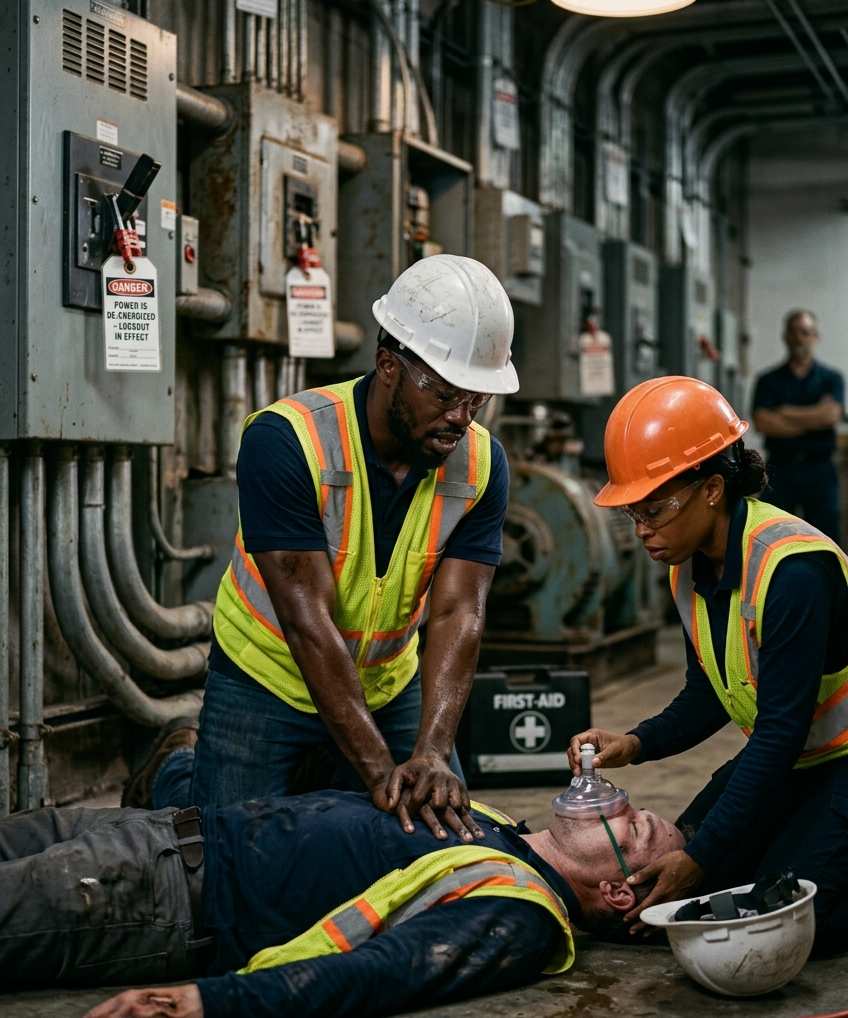
Critical Electrical Emergency Actions Workers Must NEVER Do
- Never touch a person who may still be in contact with an energized source. You can become a second victim.
- Never walk on, drive over or try to move a downed power line. Treat it as energized.
- Never enter water that may be in contact with a live electrical source.
- Never try to pull a person off a live source unless you are trained and authorized. Leave it to the utility and emergency responders.
- Never assume a burn is the only injury. Shock can also affect the heart and breathing, and falls and muscle contractions can cause other injuries.

Discussion question for your crew: Are there other electrical emergency situations specific to your worksite we should discuss to help everyone stay prepared and safe? Take a moment to walk through your facility's emergency electrical shutdown procedures together so every worker knows the locations of breakers, disconnects, and emergency contacts.
Before you leave today's safety meeting: Please sign the attendance record (sign-in form) included with the PDF handout. The form records who attended. It does not establish qualification or completion of required training.
Electrical Emergency Response Discussion and Training Records
Use this toolbox talk to discuss electrical emergency response, your employer's emergency procedures, and how to get help without exposing another person to the hazard. This page is a discussion aid, not a safety standard. Recording attendance shows who attended; it does not by itself establish that required electrical-safety or emergency-response training has been completed. Check the rules that apply to the work and arrange any additional instruction, practice, and evaluation your employer requires.
Build Your Crew's Electrical Hazard Awareness with these Related sSafety Meeting Topics.
Download this free Electrical Emergency Response Toolbox Talk
Download this discussion aid and attendance sign-in form. Use it with your crew to talk about electrical emergencies at your site. The form records attendance, not qualification or completion of required training. No registration is required.
General safety information only. This material does not replace required training, a site-specific hazard assessment, or professional safety advice. Before using it, verify current requirements with OSHA (osha.gov) and your employer. Follow applicable regulations, equipment manufacturers’ instructions, and your employer’s safety procedures.
Frequently Asked Questions About Responding to Electrical Emergencies
Common questions supervisors and workers ask after completing this electrical emergency response safety meeting topic.
Lorem ipsum dolor sit amet, consectetur adipiscing elit. Ut elit tellus, luctus nec ullamcorper mattis, pulvinar dapibus leo.