
Free Portable Ladder Storage Toolbox Talk Safety Training
A portable ladder can become damaged even when it’s not being used. Improper storage, poor handling, and exposure to harsh conditions can weaken a ladder over time, creating safety risks that may not be immediately visible. Storing ladders correctly helps protect the equipment, extends its service life, and reduces the chance of accidents on the job.
This free ladder safety toolbox talk explains the basics of proper portable ladder storage, including where ladders should be stored, how they should be positioned, environmental conditions to avoid, and simple handling practices that help keep ladders safe and job-ready. It’s a practical resource for crews looking to improve ladder safety, prevent equipment damage, and maintain a safer workplace.
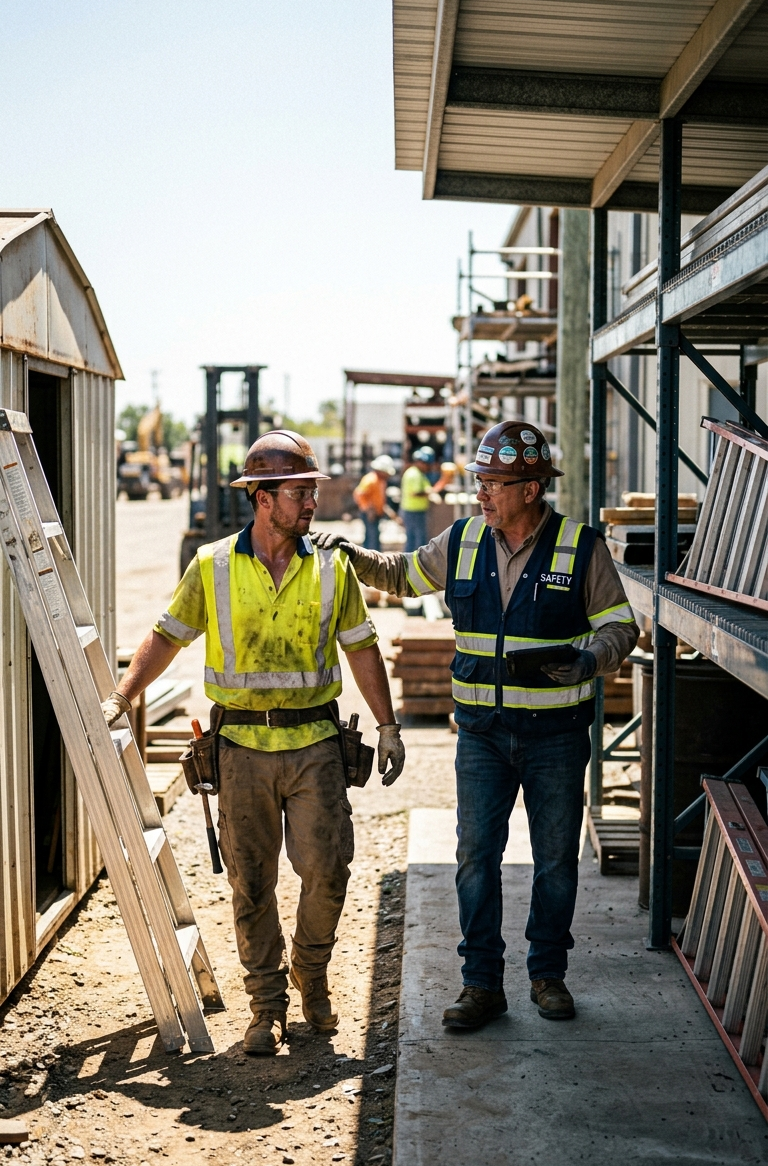
Portable Ladder Safety Toolbox Talk Training: Storage of Portable Ladders
Portable ladders are exposed to damage not only during use on the jobsite, but also when they are stored improperly. Over time, poor storage conditions can weaken a ladder and make it unsafe to use and often without any outward sign that a problem exists. Today we'll review simple precautions that help extend the life of portable ladders and keep them safe for future use.
Why proper ladder storage is a safety issue, not just a housekeeping issue: A ladder weakened by UV exposure, moisture, heat, or physical impact may look fine on the outside but fail under a worker's weight. The time to catch a storage-related defect is before someone climbs it and not after. That's why ladder storage safety is a core part of any complete workplace ladder safety program.
Portable Ladder Storage Best Practices and Common Mistakes to Avoid
Proper ladder storage is just as important as proper ladder use. Storing ladders correctly helps prevent damage, extends equipment life, and reduces the risk of ladder failures that can lead to workplace injuries. Before putting a ladder away, make sure it is stored in a clean, dry, and secure location where it will remain protected from environmental damage and job site hazards.
Correct Portable Ladder Storage
- Store ladders indoors or under a protective cover to shield them from direct sunlight, rain, and harsh weather conditions.
- Keep ladders in a dry area away from moisture, humidity, and standing water that can cause corrosion, warping, or material deterioration.
- Store extension ladders flat on properly supported racks to prevent bending, twisting, or structural damage.
- Keep step ladders fully closed and secured in an upright position when not in use.
- Place ladders away from vehicle traffic, forklift routes, walkways, doorways, and overhead hazards.
- Inspect stored ladders regularly to ensure they remain in safe working condition and ready for use.
Result: Proper storage helps keep ladders safe, reliable, and serviceable for future work.
Incorrect Portable Ladder Storage
- Leaving ladders outdoors where they are exposed to direct sunlight, rain, wind, or changing weather conditions.
- Storing ladders near boilers, heaters, welding areas, or other heat and ignition sources that can damage ladder materials.
- Storing extension ladders vertically without adequate support, increasing the risk of bending or structural stress.
- Leaving step ladders open, unsecured, or leaning against walls where they can fall or become damaged.
- Placing ladders in doorways, access points, forklift travel paths, or other high-traffic work areas.
- Ignoring signs of storage-related damage such as cracks, corrosion, loose components, or warped rails.
Result: Poor storage practices can shorten ladder lifespan, and create hidden safety hazards that may not be noticed until an accident occurs.
Common Storage Conditions That Damage Portable Ladders
Important: In many of these situations, the ladder will still look usable from the outside. Faded labels, hairline cracks in fiberglass, rust on metal fasteners, and warped rails can all be easy to miss during a quick visual check — especially if you don't know what caused them. Safe portable ladder inspection and storage go hand in hand: understanding what poor storage looks like helps workers know what to look for.
We all know to check our ladders before stepping onto them, but how we store them between shifts matters just as much. A ladder sitting in the wrong spot can suffer hidden structural damage, turning a routine climb into a serious fall risk.
Let's look at four storage traps we need to avoid to keep our gear safe and reliable.
Always choose a storage location completely away from direct sunlight. Ultraviolet (UV) rays degrade fiberglass and plastic-reinforced materials, causing them to lose their strength over time.
The Risk: Sun exposure makes plastic parts; like end caps and tool trays or brittle and easy to snap. It also fades critical safety labels until they are impossible to read.
Indoor Warning: This doesn’t just happen outside; storing ladders near indoor skylights or large facility windows causes the exact same UV breakdown. You can learn more about how weather affects material durability through the National Science Foundation.
Protect your ladders from moisture by avoiding unventilated spaces, or areas exposed to rain, steam, and high humidity.
The Risk: Water causes wooden parts to swell, promotes slippery mold growth, and rusts metal fasteners.
The Hidden Danger: A ladder might look bone-dry on the surface, but internal moisture can quietly corrode the rivets, bolts, and brackets holding it together. When these rust, they can snap without warning while you are standing on them.
Keep all ladders away from excessive heat, boilers, furnaces, or hot-work zones.
The Risk: Extreme heat warps and ruins materials differently depending on what the ladder is made of. Fiberglass softens, aluminum loses its structural strength, and plastic components melt or distort.
The Hidden Danger: Avoid areas where welding sparks or open flames occur. A heat-compromised ladder might look completely normal to the naked eye, but its weight capacity could be cut in half. For detailed insights on fire prevention and managing hot-work zones safely, check out resources from the National Fire Protection Association.
Never store ladders near doorways, blind corners, walkways, or forklift paths.
The Risk: It is incredibly easy for a forklift, cart, or heavy piece of machinery to ding a stored ladder.
The Hidden Danger: If a forklift bumps a ladder, the ladder might still look straight and fine. However, that impact can create invisible stress fractures in the side rails or ruin the rung connections. You won’t know it is broken until you stand on it with a full tool belt. For a deeper dive into preventing workplace vehicle accidents, review the safety guides provided by the National Safety Council.
Safe Portable Ladder Storage: What Every Worker Must Know and Do
✅ Always follow the manufacturer's instructions regarding proper ladder storage. Every ladder is built differently, and the manufacturer's guidelines account for the specific materials and construction of that ladder. When in doubt, check the label or contact the manufacturer; their storage recommendations exist for a reason.
Best Practices to Prevent Damage and Extend Ladder Life
- Store ladders in the correct position to prevent damage and maintain structural integrity. Keep step ladders fully closed and secured in an upright position, and store extension ladders flat with even support to help prevent twisting, sagging, bending, or rail distortion.
- Secure stored ladders when necessary to prevent them from tipping, falling, or being knocked over. This is especially important in busy work areas where workers, vehicles, tools, or equipment frequently pass nearby.
- Choose a clean, dry, and well-ventilated storage area with stable temperatures. Keep ladders away from excessive heat, direct sunlight, open flames, welding operations, moisture, steam, and other conditions that can weaken ladder materials over time.
- Inspect ladders before and after storage to identify potential safety issues. Look for cracked or bent rails, damaged rungs, loose components, missing safety labels, corrosion, impact damage, and signs of heat or water exposure.
- Select a storage location that reduces workplace hazards and allows safe access when ladders are needed. Make sure ladders are not stored near electrical lines, energized equipment, or overhead obstructions that could create contact hazards during handling and transport.
- Maintain an organized ladder storage system so ladders remain easy to locate, inspect, and retrieve. Proper storage helps extend ladder service life, supports workplace safety compliance, and reduces the risk of ladder-related accidents caused by damaged equipment.
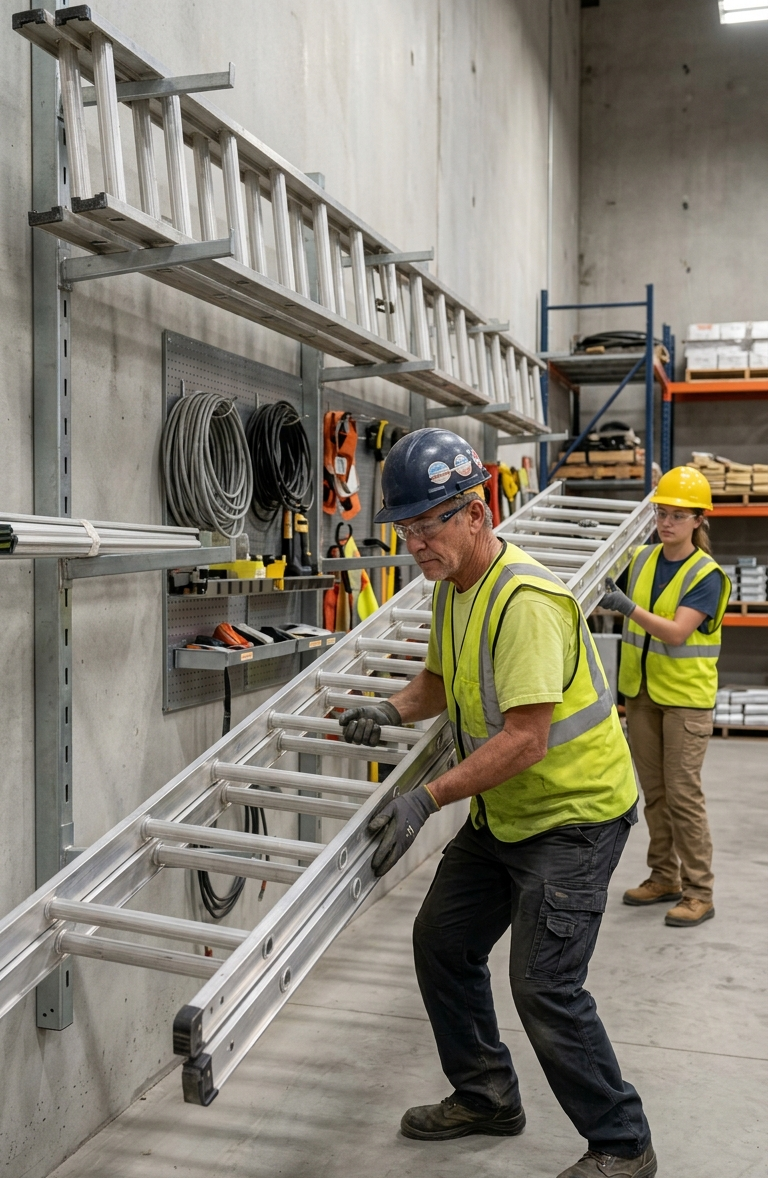
Ladder Storage Mistakes to Avoid for Safer Worksites and Longer Equipment Life
- Never use stored ladders as hooks, brackets, or hangers for tools, hoses, extension cords, ropes, or other equipment. Additional weight and uneven pressure can place unnecessary stress on the ladder and lead to bending, warping, or long-term structural damage.
- Never lean materials, supplies, or equipment against a stored ladder. Even lightweight items can cause the ladder to shift, become distorted over time, or fall and create a struck-by hazard for nearby workers.
- Never store a damaged ladder without clearly removing it from service. Tag the ladder, report the damage, and place it in a designated inspection or repair area to prevent accidental use.
- Never store extension ladders vertically against a wall without proper support at multiple points. Unsupported ladders can bend, bow, slide, or fall, creating safety risks and reducing the ladder’s service life.
- Never leave ladders in walkways, access routes, doorways, or high-traffic work areas. Improper storage can create trip hazards, obstruct movement, and increase the risk of accidental damage.
- Never ignore signs of wear, corrosion, moisture damage, or missing components before placing a ladder into storage. Addressing issues early helps maintain ladder safety, reliability, and long-term performance.

Discussion question for your crew: Does anyone have additional suggestions or experiences related to safe ladder storage from your own work areas? Take a moment to share your team's observations can help prevent a future incident. Before leaving today's safety meeting, please remember to sign the training certification form so you receive credit for attending today's session. Your signature confirms you participated in this portable ladder storage safety training and understand the practices discussed.
Toolbox Talk Ladder Safety Standards That Cover Portable Ladder Storage
Portable ladders should be maintained in safe condition, which includes storage practices that prevent deterioration and damage. The portable ladder storage requirements referenced by these standards are rooted in industry-recognized safety codes that specify how ladders should be positioned, protected from environmental hazards, and kept free from conditions that could compromise their structural integrity. This toolbox talk supports employer documentation by establishing that workers have been trained on proper ladder handling and storage before using ladders on the job.
Keep Exploring Related Electrical Safety Toolbox Talks
Download This Free Reverse Polarity Safety Talk
Print-ready PDF with employee sign-off sheet included. Use it at your next basic electrical safety meeting. No registration, no cost, always free. Continue building your crew’s electrical hazard awareness with these related safety meeting topics from the Basic Electrical Safety series.
Frequently Asked Questions For Portable Ladder Storage Safety
Common questions supervisors and workers ask after completing this ladder safety toolbox talk training.
Ladders should always be kept in a clean, dry area that is protected from extreme weather and physical impacts.
Horizontal Storage: Whenever possible, you should hang ladders horizontally on dedicated wall hooks or storage racks. This keeps them off the floor and prevents them from warping or bending under their own weight.
Keep Clear: Never store materials, tools, or heavy equipment on top of a stored ladder, as this causes unnecessary stress on the rails and rungs. For detailed guidance on basic equipment care, you can review the industrial safety resources provided by Princeton University Environmental Health and Safety.
It is highly discouraged. While a ladder might seem tough enough to handle the elements, keeping it outside long-term exposes it to rain, snow, extreme heat, and freezing temperatures.
Moisture can cause wood components to rot, cause plastic pieces to swell, and corrode metal rivets or bolts.
If you must temporarily keep equipment outside on a job site, ensure it is covered with a protective, breathable tarp and kept off the damp ground.
Federal workplace standards do not lay out a long list of rigid rules for storage, but they do have one firm expectation: employers must keep all walking and working surfaces clear of hazards.
Under general federal safety mandates, ladders must be stored in a way that prevents them from warping, twisting, or structurally weakening.
They also must be placed where they cannot accidentally fall over or create a dangerous trip hazard for walking employees. You can check general federal workplace rules regarding walking-working surfaces and keeping paths clear via the Federal Register.
Extension ladders are long and heavy, meaning they require extra care so they don’t bow or tip over:
Multiple Support Points: If you are storing an extension ladder horizontally on a wall rack, make sure the rack has enough support brackets (usually three or more for long ladders) to distribute the weight evenly and prevent sagging.
Yes, absolutely. This is a process known as “UV degradation” or “fiberglass blooming.”
Over time, regular exposure to the ultraviolet rays in sunlight breaks down the plastic resins holding the fiberglass fibers together.
This makes the ladder rails brittle, significantly lowers their total weight capacity, and causes the manufacturer’s safety labels to fade until they are unreadable. To keep your team safe, store fiberglass ladders away from direct sunlight, outdoor storage yards, and bright indoor skylights.
Yes! This guide is completely free to print out, copy, and hand to your crew. Use it during your weekly safety huddles, or pin it up in your equipment shed as a reminder to the team to put their gear away correctly at the end of the day.