
Overhead Power Line Safety Toolbox Talk Stay Aware and Prevent Electrical Contact Hazards
Many electrical injuries and fatalities happen even when workers are aware of hazards at ground level. The danger is often overlooked specifically for overhead electrical power lines. These lines are frequently uninsulated, and if a person or anything they are handling makes contact with them, electricity can travel through the person to the ground, resulting in serious injury or death. This free overhead power line safety toolbox talk covers the high-risk activities that lead to electrocutions, the minimum clearance distances, and the steps every worker must follow before starting any task near energized lines.
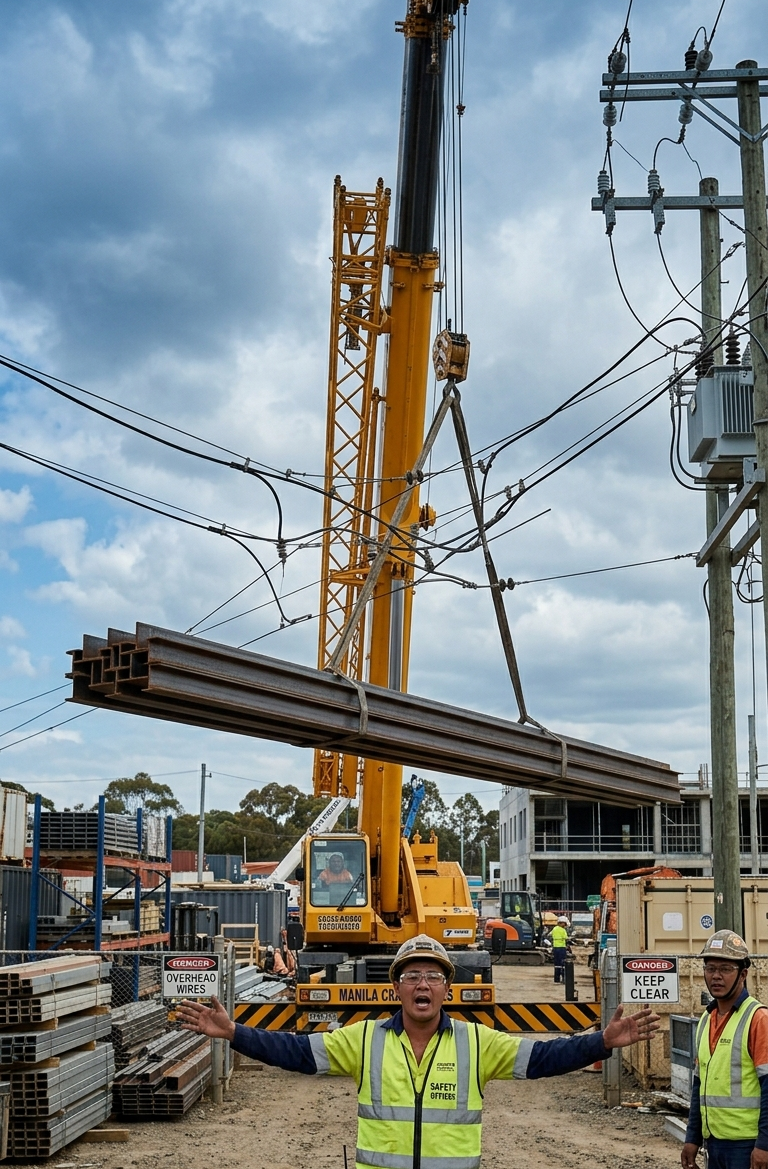
Basic Electrical Safety: Stay Aware of Overhead Power Lines
Many electrical injuries and fatalities happen even when workers are aware of hazards at ground level. The real danger is often overlooked — overhead electrical power lines. These lines are frequently uninsulated, and if a person or anything they are handling makes contact with them, electricity can travel through the person to the ground, resulting in serious injury or death.
Critical fact about overhead power lines: Most overhead distribution lines including those running through job sites and along roadsides are uninsulated or have weatherproofing only. They are not rated to protect a person who contacts them. Any overhead line you encounter must be treated as energized and uninsulated unless a qualified utility worker has confirmed otherwise in writing.
The reason overhead power line hazards are so dangerous is that they combine two problems at once: the lines are nearly always energized, and workers on the ground naturally focus their attention on the work in front of them rather than above. Overhead electrical lines are frequently the last hazard anyone thinks to check until it is too late.
Safe vs. Unsafe Working Distance From Overhead Lines
Safe Working Distance
- Minimum of 10 FEET. clearance maintained
- Applies to worker, tools, and equipment
- Line surveyed and noted before work begins
- Supervisor contacted if any doubt about voltage
Unsafe For Contact Risk
- Equipment or material within10 FEET
- No pre-task overhead line survey performed
- High-voltage lines may arc before contact
- Electricity travels through person to ground
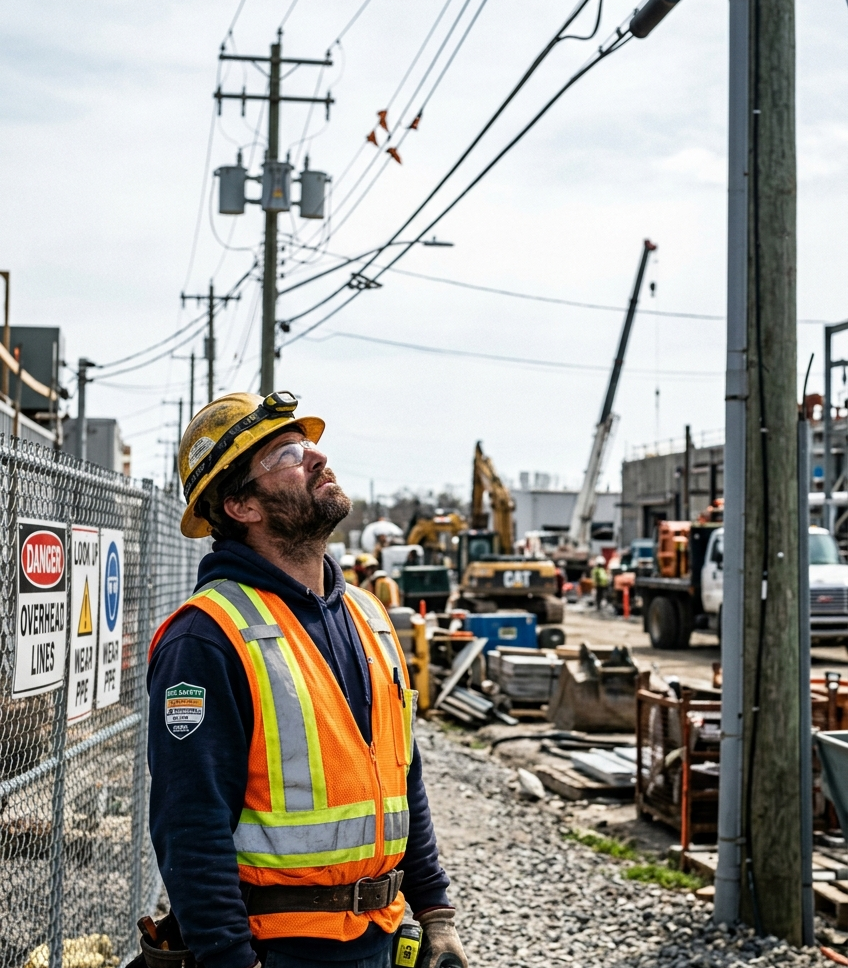
Before starting any task, take a moment to look up and identify any overhead electrical lines in your work area and along your travel path. If there is any doubt about whether a line is energized, treat it as live and contact your supervisor or safety representative for guidance. Always maintain a minimum clearance of at least 10 feet from overhead power lines for yourself, your tools, and any equipment you are operating or moving. In some cases involving high-voltage lines, even greater clearance distances may be required to prevent electrical arcing.
High-Risk Work Activities That Have Led to Electrocutions
These are not theoretical situations as they represent real construction power line safety incidents that have injured or killed workers when overhead line awareness was lost during routine job tasks.
Remember: These situations may seem obvious when discussed in a training setting, but in the field it is easy to lose awareness of hazards above us while focusing on the work in front or around us. Overhead power lines are often overlooked, yet they can be one of the most dangerous hazards on a job site.
Jobsite Overhead Power Line Hazards What Workers Must Know and Do
✅ The single most important habit: Before starting any task or moving any equipment or material to look up and identify all overhead electrical lines in your work area and along your travel path. A three-second check before every task could save your life.
Before Starting Work
- Look up. Survey the entire work area and travel path for overhead electrical lines before any work or equipment movement begins.
- Identify the lines. Note their location, approximate height, and whether they pass over or adjacent to your work area.
- Assume all lines are live. If you cannot confirm a line is de-energized by a qualified utility worker, treat it as fully energized at all times.
- Contact your supervisor if any line is within or close to your working zone. Do not proceed until the line position and voltage are confirmed and a safe plan is established.
During the Work
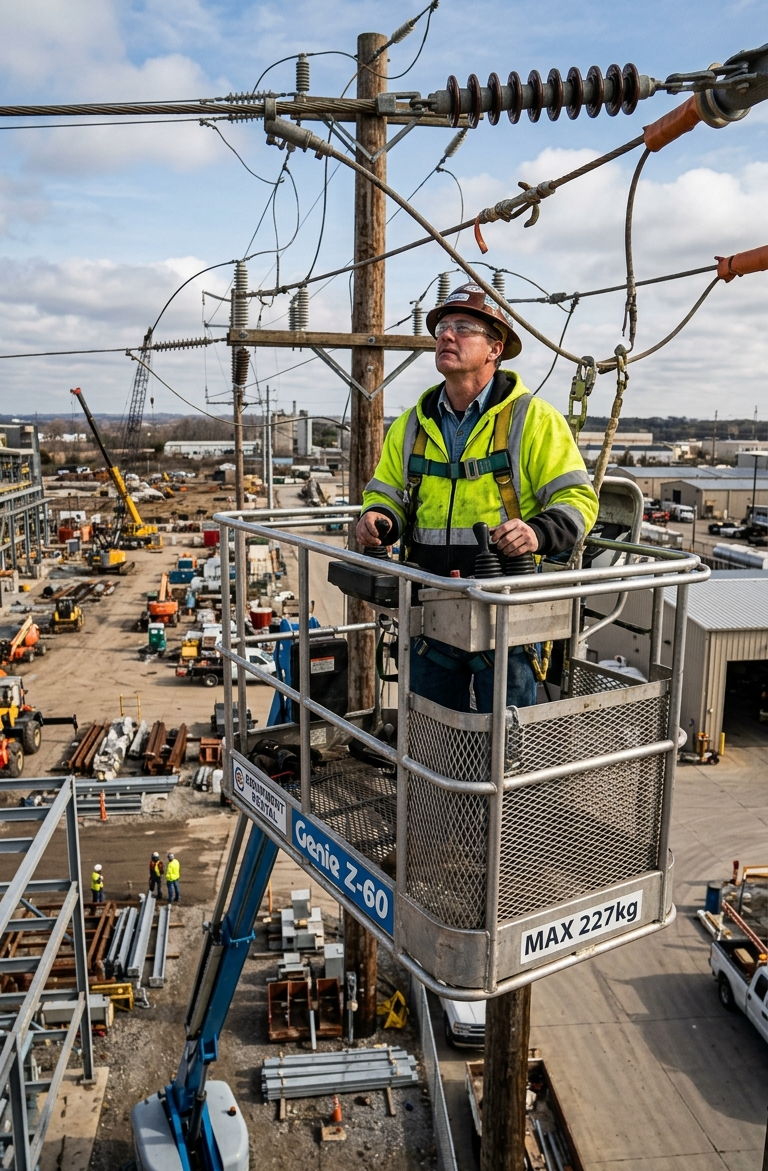
- Maintain 10-foot clearance at all times for yourself, your tools, equipment, and any materials being handled or moved near overhead power lines.
- Use a spotter for overhead clearance whenever moving tall equipment, vehicles, or large conductive materials near power lines, ensuring constant visual monitoring.
- Stop and reassess conditions if anything changes, such as wind, load swing, or repositioning, since these can quickly reduce safe clearance from overhead lines.
- If electrical contact occurs, stay inside the equipment cab if it is safe, call emergency services immediately, and avoid exiting until it is confirmed safe.
- Keep all bystanders at least 30–50 feet away from the vehicle or equipment until the power line has been de-energized and the area is safe.
Before you leave today's safety meeting: Please sign the attendance and certification form on the back of the printed handout. Your signature confirms you participated in this overhead power line safety training and understand the hazards discussed.
Toolbox Talk Overhead Power Line Safety Requirements and Standards
Workplace safety rules for overhead power lines are designed to prevent electrical contact hazards and protect workers from serious injury. These guidelines set clear expectations for safe clearance distances, safe operation of equipment near power lines, and proper jobsite awareness. This toolbox talk helps strengthen overhead power line safety awareness, ensuring workers understand how to identify risks, maintain safe distances, and follow safe work practices before starting tasks near electrical lines.
Keep Exploring Related Electrical Safety Toolbox Talks
Download This Free Overhead Power Line Safety Toolbox Talk
Print-ready overhead power line safety PDF with employee sign-off sheet included. Use it for electrical hazard awareness training and safety meetings to help prevent power line contact risks and electrical injuries. No registration, no cost, and ready to use anytime.