
The Most Abused Safety Device on the Job Toolbox Talk Guide: Risks, Regulations & Prevention
We protect guardrails. We wear seat belts. We never bypass backup alarms. But one critical electrical safety device gets removed, broken, or ignored every single day on job sites and the grounding pin. This toolbox talk covers what the grounding pin does, why a damaged or missing pin puts lives at risk, and what every worker must do to keep this protection in place.

Basic Electrical Safety: The Most Misused Safety Device on the Jobsite
Think about the safety devices we rely on every day. Guardrails keep workers from falling off elevated surfaces. Backup alarms warn people around heavy equipment. Seat belts reduce the impact of collisions. Most of us would never intentionally damage or bypass any of these protections, and if we found one that was broken, we'd take it out of service immediately.
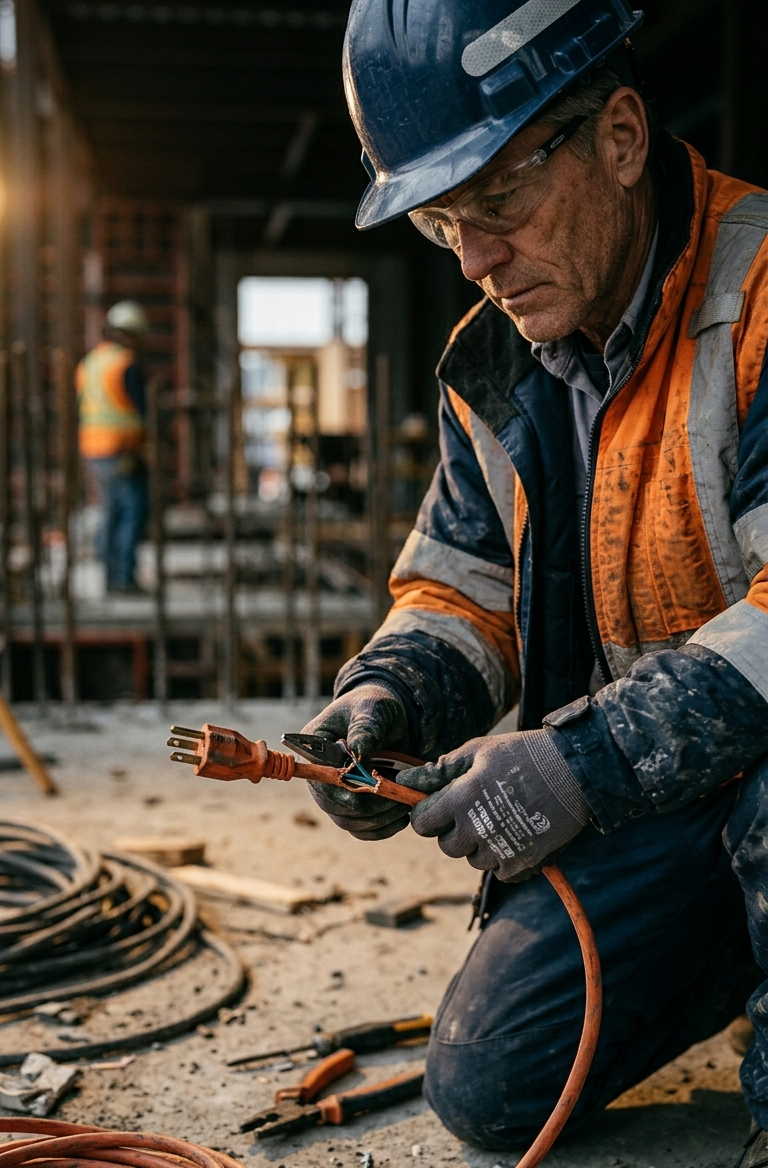
But there is another important electrical safety device that gets removed, bent, broken, or simply ignored far too often: the grounding pin on electrical plugs and power cords. It may be small, but it plays a critical role in protecting workers from serious electric shock and electrocution on the job site.
Many power tools and pieces of electrical equipment use metal housings or contain other conductive materials as part of their construction. Under normal conditions, those metal surfaces are safe to touch. But internal wiring can wear, vibrate loose, or become damaged over time. If a wire inside the tool breaks free and makes contact with the metal housing, that exterior surface can become energized — essentially turning the outside of the tool into a live electrical conductor.
Anyone who touches an energized tool housing while in contact with the ground or another grounded surface creates a path for electricity to flow through their body. The result can be a serious electric shock or fatal electrocution.
To protect against this hazard, manufacturers design many tools with a three-wire power cord. Each wire serves a specific purpose in workplace electrical safety:
How a Three-Wire Power Cord Protects Workers?
When the Grounding Pin Is Intact Safe Condition
The hot wire supplies electrical energy to the tool allowing it to operate as designed while maintaining normal electrical flow through the equipment as part of proper workplace electrical safety training.
The neutral wire safely carries electrical current back through the circuit which helps keep the electrical system balanced and supports safe operation discussed in an electrical safety device toolbox talk.
The ground wire connects the metal housing of the tool directly to the grounding pin providing an additional layer of protection and helping prevent electrical safety device misuse.
If an internal fault or wiring failure occurs the dangerous electrical current is safely redirected through the grounding path instead of passing through the tool or the worker which reduces the chance of improper use of electrical devices at work leading to injury.
Because the grounding system remains complete the worker is protected from electrical shock and exposure to one of the most common electrical safety violations is greatly reduced.
When the Grounding Pin Is Missing Unsafe Condition
- The hot wire continues to supply electricity to the equipment even though an important safety protection has been removed which is a clear example of electrical safety device misuse.
- The neutral wire may still return electrical current normally which can make the tool appear safe even while a serious hazard exists often discussed during an electrical safety meeting topic equipment misuse.
- Without the grounding pin there is no safe path for fault current to travel meaning the protective system designed to prevent injury is no longer effective which increases misuse of electrical equipment safety risks.
- During an equipment fault electricity can energize the metal housing of the tool creating a hidden danger commonly linked to improper use of electrical devices at work.
- In this unsafe condition electrical current may travel through the worker’s body creating a high risk of electric shock severe injury or electrocution and reinforcing why workplace electrical safety training is essential.
The grounding wire connects the metal housing of the tool directly to the grounding pin on the plug. If the tool becomes energized due to an internal fault, the electricity is safely directed through the grounding wire and back into the electrical system, instead of through the body of the person using the tool. This is how grounding pin protection prevents electrical shock injuries. This protection only works, however, if the grounding pin is intact, properly connected, and in good condition. The moment that pin is broken, damaged, bent, or removed, the safe path disappears entirely.
Why Workers Remove Grounding Pins and How That Decision Can Become Deadly?
These are not edge cases. These are the decisions and situations that lead to electrical injuries and fatalities on real job sites every year. The tool still works, and that's the problem. A missing or damaged grounding pin does not stop a tool from operating. The hot and neutral wires still function. There is no immediate sign that anything is wrong. That false sense of normal is exactly why this electrical protection device is so frequently overlooked and so dangerous when ignored.
Safe Work Practices: What Workers Must Do to Maintain Grounding Pin Protection
The cardinal rule for electrical safety devices: If you find a power tool, cord, or extension cord with a missing, bent, or damaged grounding pin, do not use it. Remove it from service immediately. Tag it out and report it to your supervisor or safety representative so it can be repaired or replaced by a qualified person.
Before You Use Any Tool or Cord
- Inspect the plug. Check that the grounding pin is present, straight, secure, and undamaged. Do not assume physically look at the plug before connecting it.
- Check the full cord. Look for cuts, fraying, crushed sections, damaged insulation, or signs of heat damage from end to end. A damaged cord can compromise the grounding wire even if the pin looks fine.
- Inspect extension cords too. Every cord in the circuit matters. If the extension cord has a damaged or missing grounding pin, the entire tool circuit loses ground protection, and even if the tool’s own cord is perfect.
- If in doubt, pull it out. Don’t use a cord or tool you’re uncertain about. Tag it, report it, and get it replaced. The job can wait. An electrical injury cannot be undone.

A Note on Double-Insulated Tools
- Not every power tool is designed with a grounding pin. Some tools are double-insulated, which means they use a reinforced internal insulation system rather than a ground wire as their primary shock protection. Double-electrical insulated tools typically have two-prong plugs and are labeled with a distinctive double-square symbol. How to identify double-insulated tools and understand their protection method will be covered in a future talk in this series.
- GFCI protection matters too. Ground Fault Circuit Interrupters (GFCIs) are required on most temporary job site power circuits and add an important layer of electrical accident prevention. However, a GFCI is not a substitute for a properly functioning grounding pin. Both protections should be in place wherever they are required.
Before you leave today's safety meeting: Please sign the attendance and certification form on the back of the printed handout. Your signature confirms that you participated in this electrical safety training on grounding pins and abused electrical safety devices, and that you understand the hazards discussed. This record is kept for OSHA compliance documentation.
Toolbox Talk Electrical Safety Standards That Cover Grounding Pin Protection
OSHA's electrical safety standards require that grounding conductors and grounding protection devices be maintained in proper working condition on all job sites. Using a tool with a missing or damaged grounding pin can constitute a direct OSHA violation, and can result in citations, fines, and project shutdowns in addition to the immediate risk of injury. This toolbox talk supports employer compliance by documenting that workers have been trained to recognize and report damaged electrical protection devices before they cause an injury.
More Talks in the Basic Electrical Safety Series
Download Your Free Grounding Pin Electrical Safety Toolbox Talk
Get a print-ready electrical safety device toolbox talk designed to help prevent the misuse of electrical equipment on the jobsite. This free PDF includes an employee sign-off sheet, making it easy to use during your next workplace electrical safety training or safety meeting.
Grounding pins are one of the most commonly ignored safety features and are involved in many of the most common electrical safety violations. Use this toolbox talk to educate workers, address improper use of electrical devices at work, no registration required, no hidden costs, always free.