
The Dark Side of Electricity Toolbox Talk: Understanding Electrical Hazards in the Workplace
Electrical current can cause shock, burns, muscle contractions and heart or breathing problems. Electrical arcs can cause severe burns and blast injuries. Use this talk to discuss those hazards and the employer’s safe-work procedures; it does not qualify a worker for electrical work.
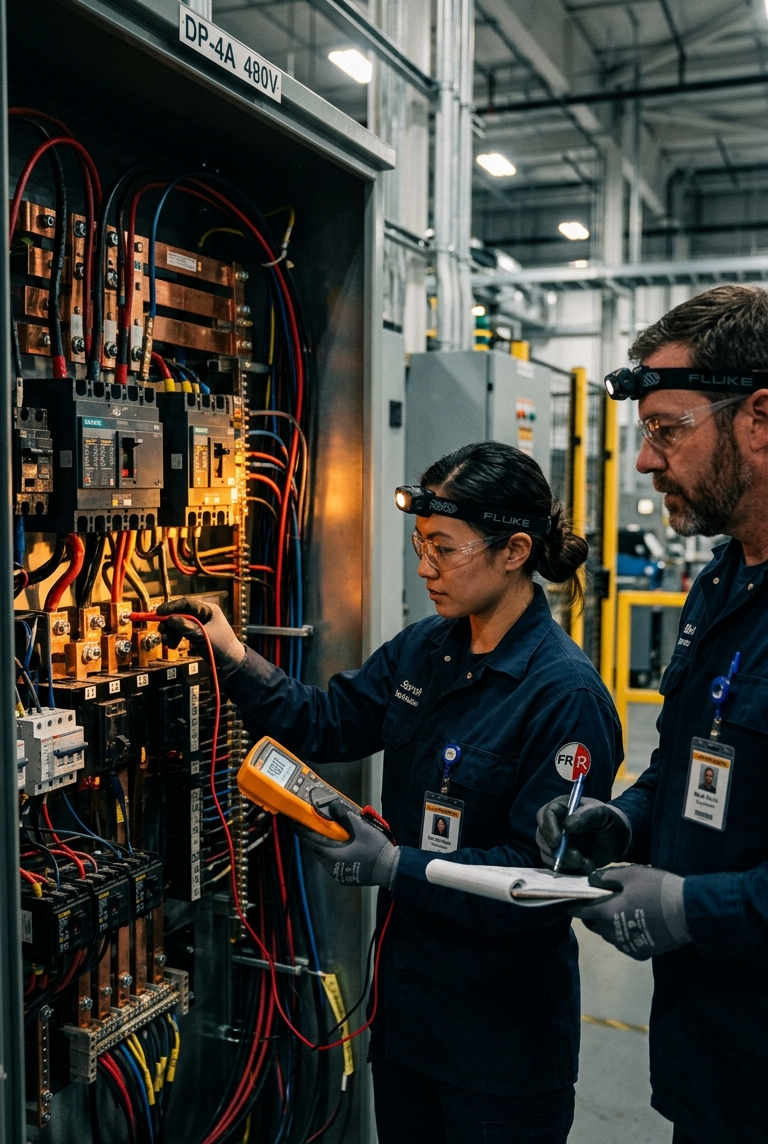
Basic Electrical Safety: The Dark Side of Electricity
Electricity powers tools, equipment and workplaces, but it also presents serious hazards. OSHA's Electrical Safety guidance describes shock, electrical burns, arc burns, fires and explosions.
Current through the body can cause involuntary muscle contractions, breathing failure or cardiac arrest. Electrical arcs can cause burns and blast injuries without current passing through the body.
Use this discussion to identify the electrical hazards in the actual work and review the employer's safe-work procedures. It is not permission to perform energized electrical work.
Understanding How Electricity Affects the Human Body: Four Major Electrical Hazards
OSHA's Electrical Safety guidance describes burns, muscle contractions, breathing and heart effects, and injuries from falls or collisions following a shock. Arc-flash guidance also describes intense heat, molten metal and blast forces. The severity depends on the exposure and conditions; a normal-looking tool or a minor external mark does not establish that there is no hazard or injury.
How Can Electricity Harm the Body?
OSHA’s Electrical Safety and arc-flash guidance describe these hazards:
- Burns: Current through tissue can generate heat and cause serious injury. An electrical injury may have no visible skin mark.
- Muscle reactions: Shock can cause involuntary contractions, including inability to let go, and can lead to falls or collisions.
- Heart and breathing: Shock can interfere with breathing and the heart’s pumping action, including cardiac arrest.
- Arc flash and blast: An electrical arc can produce intense heat, molten metal and blast forces that injure people nearby.
Why Can Electrical Hazards Be Hard to Recognize?
- Do not rely on appearance: Equipment can present electrical hazards even when it is operating. Inspect it and follow the applicable safe-work procedures.
- Brief contact can be serious: OSHA’s guidance states that injury depends on current, path through the body, exposure time and frequency.
- More than one injury can occur: Shock can cause burns, muscle reactions and secondary injuries from falls or collisions. An arc can also cause burns, fire or blast injury.
- Report defects: For covered portable equipment, 1910.334(a)(2)(ii) requires damaged equipment that could expose an employee to injury to be removed from service until the necessary repairs and tests make it safe.
Electrical Injuries Explained: What Happens to the Body During Shock and Arc Flash Exposure
Electrical current through tissue generates heat and can cause serious burns. External marks do not establish the extent of an injury: Mayo Clinic states that an electrical shock may leave no visible skin mark while causing internal damage or cardiac arrest. OSHA’s Electrical Safety guidance says electrical burns require immediate medical attention.
OSHA’s Electrical Safety guidance explains that shock can cause involuntary muscle contractions. A person may be unable to let go of a live contact; other muscle reactions can cause collisions or falls, including fatal injuries. The response depends on the exposure, not on a guarantee that everyone will freeze.
OSHA’s Electrical Safety guidance describes effects ranging from tingling to cardiac arrest. Its current-effects table includes respiratory arrest and severe muscle contractions. Injury severity depends on current, path through the body, exposure time and frequency. Seek emergency medical help after an electric shock; visible skin damage may not show the internal injury.
OSHA’s arc-flash guidance describes intense heat, molten metal, ignition of clothing and explosive blast forces that can cause severe or fatal injuries. A worker can be injured by an arc without current passing through the body. PPE is one protective measure, not the only effective control: the guidance places elimination, substitution and engineering controls ahead of administrative controls and PPE.
Electrical Hazard Recognition and Safe Work
Electrical hazards can affect both qualified and unqualified workers, but their permitted work and training are not the same. Under 1910.333(c)(2), only qualified persons may work on covered energized circuit parts or equipment. In construction, 1926.21(b)(2) requires instruction in recognizing and avoiding unsafe conditions and the rules applicable to the work.
Safe Work Practices — Do These
- Have the employer identify electrical hazards and the safe-work procedures that apply to the task. In construction, 29 CFR 1926.416(a)(1) requires protection against contact with electric circuits by deenergizing and grounding or by effective guarding.
- For general-industry work covered by 29 CFR 1910.333, exposed live parts must be deenergized before work on or near them unless the employer establishes an exception allowed by 1910.333(a)(1). Follow the applicable isolation, lockout/tagging and qualified-person verification procedures before treating equipment as deenergized.
- Follow the employer’s hazard assessment and required protective measures. OSHA’s arc-flash guidance puts elimination and other preventive controls ahead of PPE; PPE is not the only effective protection.
- Under 1910.334(a)(2)(i), visually inspect portable cord-and-plug equipment and extension cords before use on any shift for external defects and evidence of possible internal damage. Equipment that remains connected after being put in place and is not exposed to damage need not be visually inspected until relocated. In construction, worn or frayed cords and cables must not be used under 1926.416(e)(1).
- Stay outside the employer’s electrical hazard boundaries unless your training, authorization and protective measures permit the task. Shock approach boundaries and the arc-flash boundary address different hazards.
- If someone receives an electric shock, seek emergency medical help. Do not touch a person still in contact with electricity.
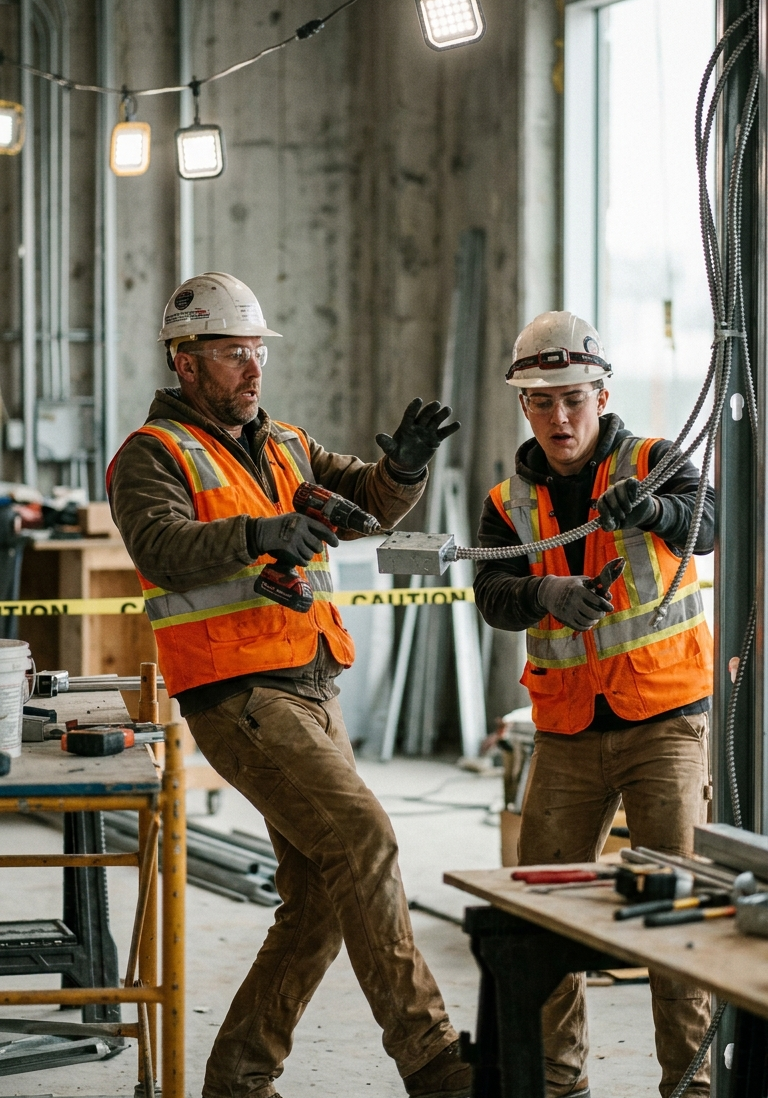
Electrical Hazard Awareness — Never Do These
- Do not assume a switch or stopped machine proves that equipment is electrically safe. For general-industry work covered by 1910.333(b), control devices are not the sole means of deenergizing, and a qualified person must perform the required verification.
- Do not work on exposed energized electrical parts unless you are a qualified person and the conditions and precautions required by the applicable rules are met. An awareness talk does not qualify someone for electrical work.
- Follow the applicable rules for electrical protective devices. Under 1910.333(c)(10), only a qualified person may defeat an electrical safety interlock, only temporarily while working on the equipment, and the interlock must be restored when the work is completed. Under 1910.334(a)(2)(ii), covered damaged portable equipment must stay out of service until the repairs and tests needed to make it safe have been made.
- Do not treat PPE, a buddy, or a permit as a substitute for eliminating electrical exposure where the rules require it. Follow the employer’s task-specific procedures and emergency arrangements.
- Do not attempt a rescue near active high-voltage lines. Call emergency services and keep others away until the responsible utility or qualified personnel make the area safe.
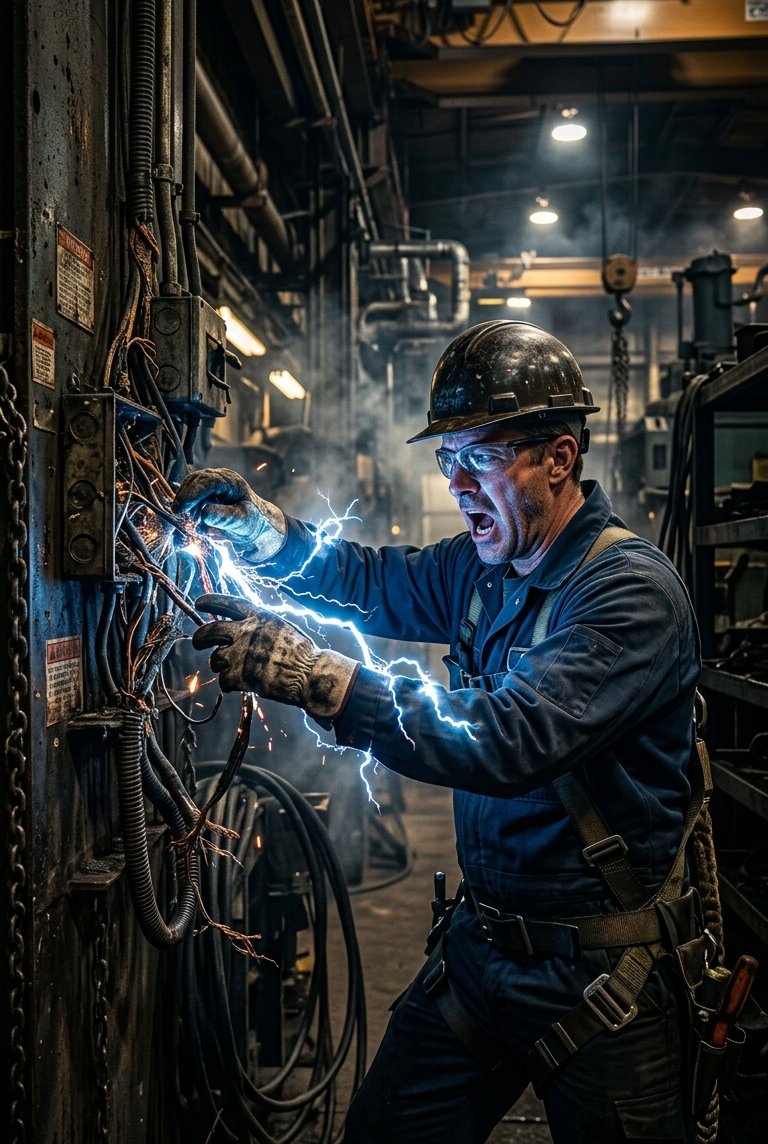
Discussion prompt: Which electrical hazards could affect today's tasks, and what procedures has the employer provided to control them? Do not use a group discussion as authorization to approach or work on energized equipment.
Attendance record: Sign the handout's sign-in form to record attendance. Page 2 is the reverse side only if the handout is printed duplex. An attendance record does not establish competence or completion of required task-specific training.
Electrical Hazard Discussion and Training Records
Use this toolbox talk to discuss electrical hazards and your employer's safe-work procedures. This page is a discussion aid, not a safety standard or proof of compliance. Recording attendance shows who attended; it does not by itself establish that required electrical-safety training has been completed. Check the rules that apply to the work and arrange any additional instruction, practice, and evaluation your employer requires.
Continue building your crew's electrical hazard awareness with these related safety meeting topics
Download This Printable Electrical Safety Toolbox Talk
Download the electrical-hazard discussion handout and attendance sign-in form. Use it alongside the employer’s procedures and the training required for the actual work. A signed form records attendance, not competence or compliance.
General safety information only. This material does not replace required training, a site-specific hazard assessment, or professional safety advice. Before using it, verify current requirements with OSHA (osha.gov) and your employer. Follow applicable regulations, equipment manufacturers’ instructions, and your employer’s safety procedures.
Frequently Asked Questions For Electrical Hazards in the Workplace
Questions for the Electrical Hazard Discussion
Shock, burns, falls following muscle reactions, and arc-flash or blast injuries can all be serious or fatal. There is no single universal ranking for every task. Review the actual hazards and the employer’s controls. OSHA’s arc-flash guidance recommends a hierarchy of controls rather than relying on PPE alone.
There is no single safe-current threshold for every person or exposure. OSHA Publication 3075 gives a general current-effects table for current flowing from hand to foot for one second. It lists painful shock and loss of muscular control at 6-25 mA for women and a 9-30 mA freezing or let-go range for men; the response can include being thrown away from the circuit. At 50-150 mA it lists extreme pain, respiratory arrest and severe muscle contractions, with death possible. At 1,000-4,300 mA it lists loss of the heart’s rhythmic pumping action, muscular contraction and nerve damage, with death likely. At 10,000 mA it lists cardiac arrest and severe burns, with death probable. These are general relationships, not safety limits: severity also depends on current path, exposure time and frequency.
OSHA’s Electrical Safety guidance explains that shock sometimes causes muscle contractions that prevent a person from letting go. Do not touch someone still in contact with electricity. Turn off the source only if this can be done safely and call emergency services. MedlinePlus and Mayo Clinic warn against approaching active high-voltage lines; do not attempt an improvised rescue there. Their first-aid guidance describes dry, nonconducting objects in other situations, but that is not permission to approach an unknown electrical source. Follow emergency-dispatch instructions and the employer’s emergency arrangements.
An electric shock occurs when current passes through the body. An arc flash releases intense heat from an electrical arc, and an associated arc blast can produce damaging forces and debris. OSHA’s guidance describes severe burns and other injuries from these events. Shock precautions and arc-flash precautions are related, but they address different hazards; neither a shock boundary nor PPE alone establishes that all hazards are controlled.
For general industry, 1910.332 applies to employees exposed to electric-shock risk not reduced to a safe level by the installation requirements. Training must cover the safety-related work practices for their assignments; qualified persons need the additional skills in 1910.332(b)(3). In construction, 1926.21(b)(2) requires instruction in recognizing and avoiding unsafe conditions and the rules applicable to the work. This talk records a discussion, not completion of all required training or qualification for energized work.
This topic’s PDF is available from the download links without registration. The handout includes an attendance sign-in form; page 2 is the back only when printed duplex. Recording attendance does not establish competence or compliance, and this awareness talk does not replace required task-specific training.