
Portable Extension Ladder Safety: Seven Things You Should NEVER Do

Most ladder accidents don’t happen because someone fell off a ladder used correctly,  they happen because a ladder was used for something it was never designed to do. This free portable ladder safety toolbox talk covers seven dangerous misuses that show up on job sites and in homes every day: using a ladder as a scaffold, climbing the back side of a stepladder, connecting two ladders together, and more. Learn what to avoid, why each practice is hazardous, and what safe ladder use actually looks like.
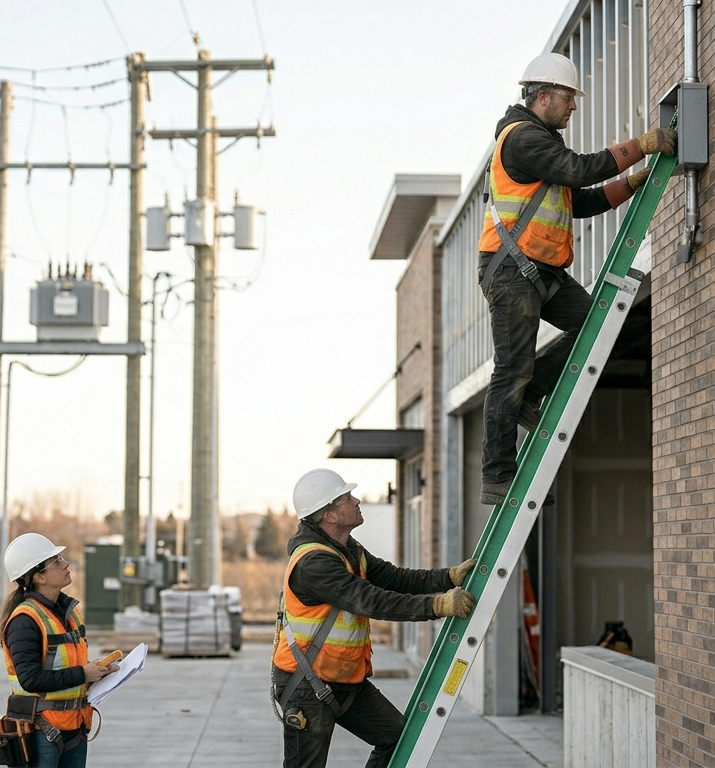
 
Electrician Using Fiberglass Ladder Near Power Lines

Portable Ladder Safety: Seven Things You Should NEVER Do

We've covered several toolbox talks on selecting and using portable ladders safely, as well as conditions and behaviors to avoid. However, it's just as important to recognize the ways ladders are commonly misused when they are used for purposes they were never designed for. Today, we'll go over a list of practices that should never be done with a portable ladder.

⚠️Why this matters: Falls from portable ladders are one of the leading causes of workplace fatalities and serious injuries in construction, maintenance, and general industry. The majority of these incidents involve a ladder that was being used for something it was never designed to do. Every item on this list is a real shortcut that real workers take — and a shortcut that can quickly end in a serious injury or a fatality.

The Seven Things You Should NEVER Do With a Portable Ladder

Do not place a board between two stepladders to create a walking surface. Do not lay an extension ladder across sawhorses or other supports to use as a platform. And never set a ladder up as a ramp for walking between levels. These arrangements create serious fall hazards and place loads on ladder components in ways they were never engineered to handle. Ladders are designed for one worker to climb vertically  not to span distances, support horizontal loads, or act as a bridge. If you need an elevated work platform, use proper scaffolding or an aerial lift that is built and rated for that purpose.
The rear braces of a stepladder are support struts   they hold the ladder open and stable. They are not rungs, they are not designed for climbing, and they do not provide safe footing. The rear surfaces are often not slip-resistant and the spacing and angles are not built to support a person’s weight in a climbing motion. Climbing the back of a stepladder can cause the ladder to collapse inward, buckle sideways, or tip over with very little warning. Note: this prohibition does not apply to ladders that have been specifically manufactured and labeled by the manufacturer for two-sided climbing, where applicable.
 
Hanging tools or placing materials on the rails, rungs, or braces of a ladder  even temporarily  introduces real hazards. Items stored on a ladder can fall and strike workers below. They can shift unexpectedly and destabilize a climber. They can interfere with proper hand placement on the rungs, which every ladder safety guideline requires. A ladder is a piece of access equipment. When it is not being climbed, it should be stored flat or secured upright  not used as a shelf, a tool hanger, or a staging area for materials.
 
Attempting to tie, lash, or attach two ladders end-to-end to reach a greater height is one of the most dangerous portable ladder mistakes anyone can make. Ladders are load-rated and structurally designed as individual units. Joining them introduces connection points that are not engineered to handle the combined bending forces, vibration, and lateral loads that occur during climbing. The joint can twist, slip, or fail suddenly, and there is often nothing to prevent a complete and catastrophic collapse. If you need more height, the right answer is a longer ladder — not two short ones combined.
 
This includes truck beds, trailers, flatbeds, forklift forks, or the buckets of heavy equipment. Even when a vehicle appears to be stationary, it is subject to unexpected movement — a truck’s suspension shifting under weight, a forklift that gets bumped, or an operator who was not aware someone placed a ladder on the machine. Any sudden movement can dislodge the ladder base and send it toppling in an instant. If work must be performed at height from a vehicle or equipment platform, use a properly secured aerial lift or man basket that is designed and rated for that application.
 
If any component of a portable ladder is cracked, bent, corroded, broken, or otherwise damaged, the entire ladder must be immediately removed from service. Do not attempt to salvage the “good” sections and set the damaged ones aside. Do not try to repair a damaged rung, rail, or locking mechanism in the field using tape, wire, cable ties, or any improvised fastener. Do not make structural modifications to a ladder for any reason. A damaged ladder has unknown load capacity and cannot be trusted to perform as rated. Tag it out, pull it from service, and follow your company’s equipment disposal procedures.
 
Multiple users on the same ladder at the same time increases the total load significantly and sharply reduces stability. Ladders flex under load, and when two people are climbing simultaneously; particularly at different heights  the lateral forces and dynamic movement can overcome the ladder’s designed stability margin. This practice is also explicitly prohibited by most ladder manufacturers, and any injury that results from multi-person use on a single-rated ladder will likely be considered a violation of the manufacturer’s use instructions. The exception is only for ladders that have been specifically designed, rated, and labeled by the manufacturer for two-person use — which is a distinct and uncommon product category.
 

What Every Worker Must Remember About Portable Ladder Safety

The single most important rule: A portable ladder is a tool designed for one purpose — to allow one person to climb vertically to a working height. Anytime you find yourself thinking about using it for anything other than that, stop and ask whether the right equipment is being used for the job.

Basic Portable Safety Guidelines

  • Inspect every ladder before use. Check rungs, rails, feet, and locking spreaders for damage, wear, cracks, or corrosion before climbing.
  • Set extension ladders at the correct 4 to 1 angle. Position the base one foot away from the wall for every four feet of ladder height.
  • Secure both the top and base of the extension ladder before use. This is especially important on soft ground, uneven surfaces, or near doorways and traffic areas.
  • Always maintain three points of contact while climbing. Use two hands and one foot or two feet and one hand to stay stable at all times.
  • Keep your body centered between the ladder rails. Do not reach or lean outside the rails; if you cannot reach, climb down and reposition the ladder.
  • Use a tool belt or hoist line to carry tools and materials. Keep your hands free so you can safely grip the rungs while climbing.

Ladder Safety “Never Do” Rules

  • Never use any of the unsafe practices described in this talk, not even just this once. 
  • Never use a ladder that is tagged out, damaged, or removed from service. Only use ladders that have been properly inspected.
  • Never set up a ladder on unstable, uneven, or slippery surfaces without proper stabilizers, levelers, or approved support equipment. Always ensure a firm and secure base.
  • Never use a metal ladder near live electrical sources. Always choose a properly rated fiberglass ladder when working in or around electrical hazards.
  • Never stand on the top rung or top step of a ladder. Maintain a safe working position below the top steps to ensure stability and balance at all times.
  • Never overload a ladder or carry materials that compromise balance. Keep loads within the ladder’s rated capacity.

Before you leave today’s safety meeting, please sign the attendance and training record on the back of your printed handout. Your signature confirms that you attended this portable ladder safety talk and understand the unsafe practices and hazards discussed.

This record is kept as part of required safety documentation for the job site. If you have noticed any unsafe ladder use or risky practices mentioned today, report them to your supervisor so it can be corrected right away and prevent incidents.

Discussion question for your crew: Can anyone share other examples of unsafe ladder use you have seen or experienced on site? Real examples from the workplace help reinforce safe habits and make portable ladder safety more effective in day-to-day work.

Ladder Safety Standards and Best Practices for Portable Ladder Use

Ladder safety rules covered in this talk align with widely accepted workplace safety standards and requirements for portable ladder use. Several of the unsafe practices discussed are commonly recognized as violations under these regulations and can increase the risk of serious falls and injuries.Using this toolbox talk and documenting worker participation helps reinforce a consistent ladder safety program, improves hazard awareness on site, and supports compliance efforts related to ladder misuse and fall prevention expectations.

Keep Exploring Related Safety Toolbox Talks

Grab This Free Guide: 7 Things You Should NEVER Do on a Ladder

We put together a quick, print-ready PDF (complete with a crew sign-off sheet) so you can run your next safety meeting without the usual hassle. No sign-ups, no catch, no annoying forms, just a tool to keep your team safe, completely free. Trying to stay on top of daily safety? Check out our other practical huddle guides to keep everyone sharp on the job.

FAQS for Portable Extension Ladder Safety

Common questions supervisors and workers ask after completing this portable ladder safety meeting topic.
The most frequent portable ladder mistakes fall into two categories: improper setup and improper use. Setup errors include placing ladders on unstable ground, setting extension ladders at the wrong angle, or failing to secure the base and top. Misuse errors  which this toolbox talk focuses; include using a ladder as a scaffold or platform, climbing the back side of a stepladder, connecting ladders to gain extra height, and allowing multiple people to climb simultaneously. These misuses are especially dangerous because they often happen quickly under time pressure, and workers frequently don’t recognize them as hazardous in the moment.


No. Placing a plank, board, or any other material between two stepladders to create a walking surface is explicitly prohibited by OSHA under 29 CFR 1926.1053(b)(3), which states that ladders shall not be used as platforms, runways, or scaffolds. This restriction exists because stepladders are not designed to support horizontal loads or provide lateral stability for a person walking between them. If you need an elevated work platform, the right solution is purpose-built scaffolding, a pump jack, or a powered aerial lift that is rated and designed for that use.


Standard portable ladders, stepladders, extension ladders, and single ladders  are designed, rated, and approved for one person at a time. Having two people on the same ladder simultaneously overloads the ladder beyond its intended use, reduces stability significantly, and is typically a direct violation of the manufacturer’s instructions. There is a limited category of ladders that are specifically designed and labeled by the manufacturer for two-person use, but these are a distinct product type and they must be explicitly rated for that purpose. When in doubt, assume one person at a time.


A damaged ladder must be immediately removed from service  not set aside, not moved to a different work area, and not repaired in the field. Tag it with a “Do Not Use” or out-of-service tag, and report it to your supervisor so it can be properly evaluated and disposed of according to your company’s equipment procedures. Never attempt to repair a damaged ladder with tape, wire, fasteners, or any improvised fix. Even if only one component appears damaged, the entire ladder must be taken out of service — you cannot safely evaluate the full extent of structural compromise from a visual inspection alone.
 
 
The most direct approach is to report what you see to your immediate supervisor or site safety representative. Most job sites have a hazard reporting system  whether that’s a verbal report, a written form, or a digital safety app, and ladder misuse qualifies as a reportable unsafe condition. If you see a co-worker using a ladder unsafely, you can also speak up directly in a respectful, non-confrontational way; many ladder accidents happen because no one said anything in the moment. Workers are protected from retaliation for reporting safety hazards under Section 11(c) of the OSH Act.
 
Yes, this toolbox talk and every document on ToolboxTalk.com is completely free to use. The downloadable PDF is formatted to print on a single page. The reverse side includes a sign-off sheet with space for worker names, signatures, and the training date so supervisors can maintain a documented record of safety meeting attendance for OSHA compliance purposes. No registration or subscription is required to download or use any talk on this site.