
Overhead Power Line Safety Toolbox Talk Stay Aware and Prevent Electrical Contact Hazards

Many electrical injuries and fatalities happen even when workers are aware of hazards at ground level. The danger is often overlooked specifically for  overhead electrical power lines. These lines are frequently uninsulated, and if a person or anything they are handling makes contact with them, electricity can travel through the person to the ground, resulting in serious injury or death. This free overhead power line safety toolbox talk covers the high-risk activities that lead to electrocutions, the minimum clearance distances required by OSHA, and the steps every worker must follow before starting any task near energized lines.
free toolbox talk safety training pintables

Basic Electrical Safety: Stay Aware of Overhead Power Lines

Many electrical injuries and fatalities happen even when workers are aware of hazards at ground level. The real danger is often overlooked — overhead electrical power lines. These lines are frequently uninsulated, and if a person or anything they are handling makes contact with them, electricity can travel through the person to the ground, resulting in serious injury or death.

Critical fact about overhead power lines: Most overhead distribution lines including those running through job sites and along roadsides are uninsulated or have weatherproofing only. They are not rated to protect a person who contacts them. Any overhead line you encounter must be treated as energized and uninsulated unless a qualified utility worker has confirmed otherwise in writing.

The reason overhead power line hazards are so dangerous is that they combine two problems at once: the lines are nearly always energized, and workers on the ground naturally focus their attention on the work in front of them rather than above. Overhead electrical lines are frequently the last hazard anyone thinks to check until it is too late.

Safe vs. Unsafe Working Distance From Overhead Lines

 Safe Working Distance

  • Minimum of 10 FEET. clearance maintained
  • Applies to worker, tools, and equipment
  • Line surveyed and noted before work begins
  • Supervisor contacted if any doubt about voltage
 
✓ Worker and equipment remain protected

Unsafe For Contact Risk

  • Equipment or material within10 FEET
  • No pre-task overhead line survey performed
  • High-voltage lines may arc before contact
  • Electricity travels through person to ground
 
✗ Electrocution, arc flash, or fatal shock risk

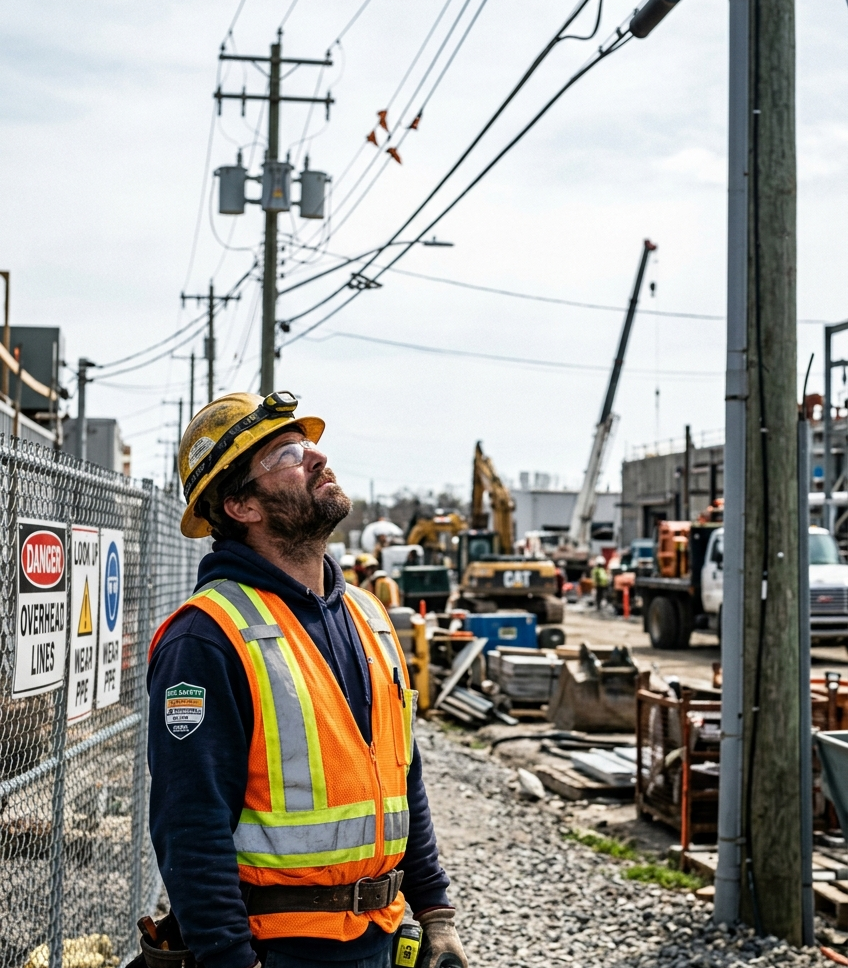
Before starting any task, take a moment to look up and identify any overhead electrical lines in your work area and along your travel path. If there is any doubt about whether a line is energized, treat it as live and contact your supervisor or safety representative for guidance. Always maintain a minimum clearance of at least 10 feet from overhead power lines for yourself, your tools, and any equipment you are operating or moving. In some cases involving high-voltage lines, even greater clearance distances may be required to prevent electrical arcing.

High-Risk Work Activities That Have Led to Electrocutions

These are not theoretical situations as they represent real construction power line safety incidents that have injured or killed workers when overhead line awareness was lost during routine job tasks.

Remember: These situations may seem obvious when discussed in a training setting, but in the field it is easy to lose awareness of hazards above us while focusing on the work in front or around us. Overhead power lines are often overlooked, yet they can be one of the most dangerous hazards on a job site.

When workers carry a metal ladder upright as they move across a site, the top of the ladder can easily reach or exceed 10 feet in height. If the travel path takes the worker under or near overhead lines, contact can occur before the worker looks up. A metal ladder is fully conductive — electricity will travel the full length of the ladder and through the worker’s body to the ground instantly. Always lower ladders to a horizontal carry position when moving them, and always check the overhead travel path before moving.
 
Metal scaffolding frames can extend well above a worker’s head, and the act of rolling or repositioning scaffolding requires the worker to focus on what is in front of them and on the ground — not above. Scaffolding that rolls into an overhead line, or that is repositioned directly under one, can create an electrocution hazard for anyone in contact with the frame. Always survey the full overhead path before moving scaffolding and assign a spotter to watch for lines throughout the move.
 
A forklift operator concentrates on the load stability, the driving path, and other workers on the ground. When the forks or load are elevated, the top of the load can approach or exceed the height of nearby overhead lines — especially when the operator is traveling or turning. Contact between an elevated forklift load and a power line is a known cause of workplace electrocutions. Before operating a forklift with any elevated load near overhead lines, the operator must be aware of clearance heights and the position of all lines along the travel path.
 
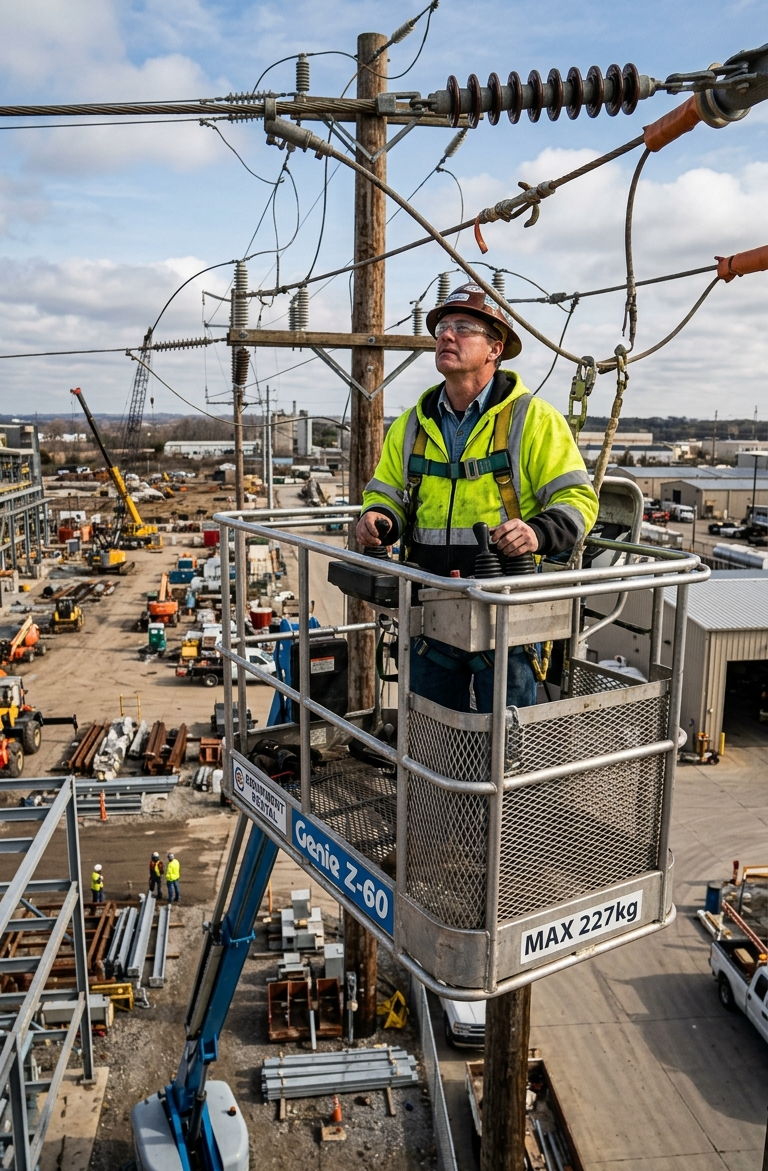
Boom lifts, bucket lifts, and scissor lifts place workers at height — directly in the zone where overhead lines run. Raising or extending a lift near overhead lines is a leading cause of aerial work electrical safety incidents. The operator may be focused on positioning for the task rather than monitoring line proximity. Platform movement, wind drift, or misjudged reach can close the gap between the equipment and an energized line faster than the operator can react. Always establish a no-go zone around overhead lines before operating any aerial lift.
 
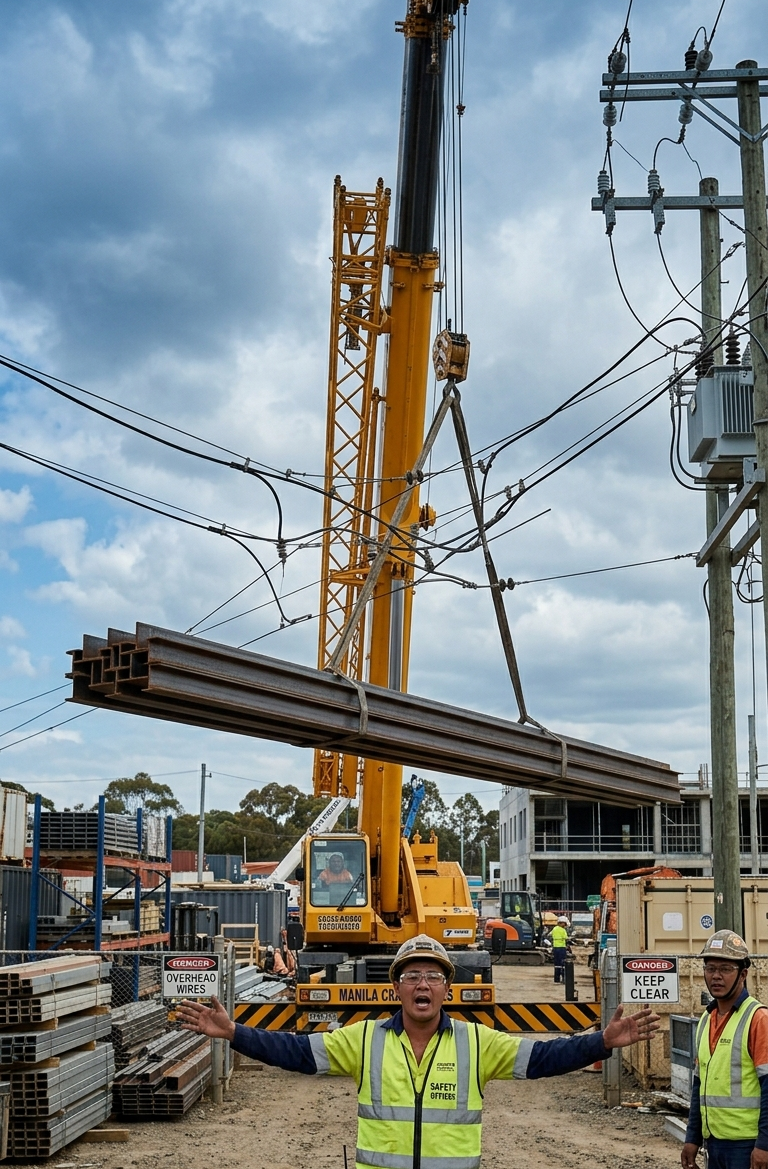
Crane operations present one of the most significant overhead power line hazards on any job site. A suspended load can swing unpredictably — especially when the crane is rotating or when wind loads change. An unintentional swing that brings the load, cable, or boom close to an energized line can result in immediate electrocution for the operator, rigger, or anyone near the load. OSHA 1926.1408 requires specific clearance distances and procedures for crane power line safety, including contacting the utility owner before bringing equipment within 50 feet of a line.
 
Paint rollers on metal extension poles, long-handled squeegees, and other tools with conductive handles can extend 10 to 20 feet above a worker’s head. A worker painting an exterior wall or cleaning a surface can easily maneuver one of these tools into an overhead line without realizing it — particularly when focused on the work surface rather than the tool’s height. Direct contact is not always necessary; at high voltages, electricity can arc across a gap. Always check overhead clearance before using any long conductive tool near or on building exteriors.
 
During construction and demolition work, workers regularly carry and position large sheets of metal roofing, aluminum siding panels, gutters, and flashing. These materials are long, unwieldy, and highly conductive. When carried by multiple workers, the panel can contact an overhead line before anyone on the crew realizes it is in range — particularly when the crew is focused on coordination and placement, not overhead clearance. Always conduct a pre-task survey for overhead lines before handling any large conductive materials near a structure’s roof line or exterior.
 
Dump trucks that raise their beds to unload material can reach heights that bring the bed into contact with overhead lines — particularly on job sites where lines run low along the property edge or across a staging area. The driver may not be able to see overhead lines from the cab once the bed is elevated. This type of contact has caused worker fatalities when bystanders touched the truck body while it was in contact with a live line. Always confirm overhead clearance before raising any dump body, and keep all workers clear of the vehicle during any raise-and-dump operation near power lines.
 

Jobsite Overhead Power Line Hazards What Workers Must Know and Do

The single most important habit: Before starting any task or moving any equipment or material to look up and identify all overhead electrical lines in your work area and along your travel path. A three-second check before every task could save your life.

Before Starting Work

  1. Look up. Survey the entire work area and travel path for overhead electrical lines before any work or equipment movement begins.
  2. Identify the lines. Note their location, approximate height, and whether they pass over or adjacent to your work area.
  3. Assume all lines are live. If you cannot confirm a line is de-energized by a qualified utility worker, treat it as fully energized at all times.
  4. Contact your supervisor if any line is within or close to your working zone. Do not proceed until the line position and voltage are confirmed and a safe plan is established.
free safety training toolbox talks printable

During the Work

  1. Maintain 10-foot clearance at all times for yourself, your tools, equipment, and any materials being handled or moved near overhead power lines.
  2. Use a spotter for overhead clearance whenever moving tall equipment, vehicles, or large conductive materials near power lines, ensuring constant visual monitoring.
  3. Stop and reassess conditions if anything changes, such as wind, load swing, or repositioning, since these can quickly reduce safe clearance from overhead lines.
  4. If electrical contact occurs, stay inside the equipment cab if it is safe, call emergency services immediately, and avoid exiting until it is confirmed safe.
  5. Keep all bystanders at least 30–50 feet away from the vehicle or equipment until the power line has been de-energized and the area is safe.
Hazardous substances awareness training

Before you leave today's safety meeting: Please sign the attendance and certification form on the back of the printed handout. Your signature confirms you participated in this overhead power line safety training and understand the hazards discussed. This record is kept for OSHA compliance documentation.

Toolbox Talk Overhead Power Line Safety Requirements and Standards

Workplace safety rules for overhead power lines are designed to prevent electrical contact hazards and protect workers from serious injury. These guidelines set clear expectations for safe clearance distances, safe operation of equipment near power lines, and proper jobsite awareness. This toolbox talk helps strengthen overhead power line safety awareness, ensuring workers understand how to identify risks, maintain safe distances, and follow safe work practices before starting tasks near electrical lines.

Keep Exploring Related Electrical Safety Toolbox Talks

Download This Free Overhead Power Line Safety Toolbox Talk

Print-ready overhead power line safety PDF with employee sign-off sheet included. Use it for electrical hazard awareness training and safety meetings to help prevent power line contact risks and electrical injuries. No registration, no cost, and ready to use anytime.

Frequently Asked Questions About Overhead Power Line Safety

This section covers the most common questions supervisors and workers ask after completing this overhead power line safety training toolbox talk. It helps clarify real jobsite situations involving high voltage line hazards, safe clearance distances, and electrical contact prevention, so crews can apply safe practices with confidence.
OSHA requires a minimum clearance of 10 feet from overhead power lines for workers, tools, and equipment. This standard applies to lines operating at voltages up to 50kV. For lines operating above 50kV, the required clearance distance increases with the voltage level — adding approximately 4 inches for every 10kV above 50kV. If you cannot confirm the voltage of a line, treat it as operating at the highest voltage present in the area and apply the corresponding clearance requirement. When in doubt, contact your utility provider before work begins.
Most overhead distribution lines are not insulated in a way that protects against contact. Some lines have a weatherproofing coating that protects against environmental exposure — but this is not the same as electrical insulation rated for contact. This coating can be damaged, degraded, or absent entirely on older lines. Never assume an overhead line is safe to touch. Treat all overhead power lines as fully energized and uninsulated unless a qualified utility worker has physically confirmed the line is de-energized and locked out.


If equipment makes contact with an overhead line, the operator should stay inside the cab if it is safe to do so — the cab provides some insulation from shock. Call 911 immediately. Do not exit the vehicle while it is in contact with a line or until the utility company confirms the line has been de-energized. Workers on the ground must stay back at least 30 to 50 feet and must not touch the vehicle, any conductive material attached to it, or the ground directly beneath the contact point, as electricity can radiate outward through the ground (step potential hazard). Do not attempt to rescue someone from equipment in contact with a live line.


OSHA 1926.1408 governs crane and derrick power line safety in construction. It requires employers to determine the voltage of any power line within working range of the equipment before operations begin. Standard clearance is 20 feet for lines up to 350kV and 50 feet for lines above 350kV during initial approach — though reduced clearances may be permitted under specific procedures outlined in the standard. Employers must notify the utility owner or operator before bringing any part of the crane within 50 feet of a line. Qualified signal persons are required whenever the crane is operating near overhead lines. OSHA penalties for violations of 1926.1408 can be severe, particularly when a fatality results.
 
 
Electrical arcing occurs when voltage is high enough to ionize the air between the conductor and a nearby object, creating a conductive plasma path. Electricity can arc across this gap without physical contact with the line. The distance over which a line can arc depends on its voltage — higher voltages can arc across greater distances. At distribution voltages (typically 4kV to 35kV), arcing distances are generally within the 10-foot minimum clearance zone. At transmission voltages (69kV and above), arcing can extend well beyond 10 feet, which is why greater clearances are required for high-voltage lines. Never rely solely on the 10-foot standard when working near transmission lines.
 
Yes,  this toolbox talk and every document on ToolboxTalk.com is completely free. The downloadable PDF is formatted to print on a single page. The reverse side includes a sign-off sheet with space for worker names, signatures, and the training date — so supervisors can maintain a documented record of safety meeting attendance. No registration or subscription is required.