
Sealing Electrical Panel Openings Safety Toolbox Talk
A damaged or missing cover, an open knockout or an empty breaker space in an electrical box or panel can look like a small maintenance item. This talk covers the OSHA rules on closing unused openings, why an open enclosure is a hazard, and what workers should do when they find one. It is a discussion aid and does not authorize anyone to work on electrical equipment.
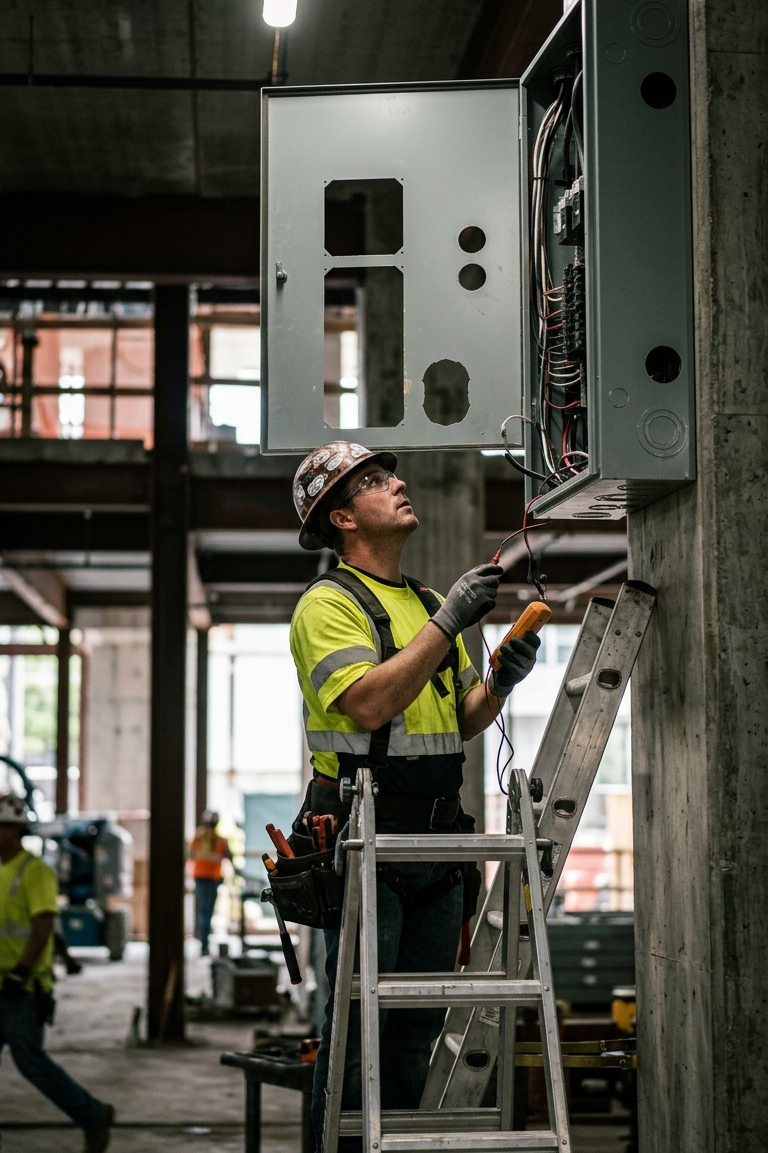
Why Sealing Electrical Panel Openings Is Important for Workplace Safety
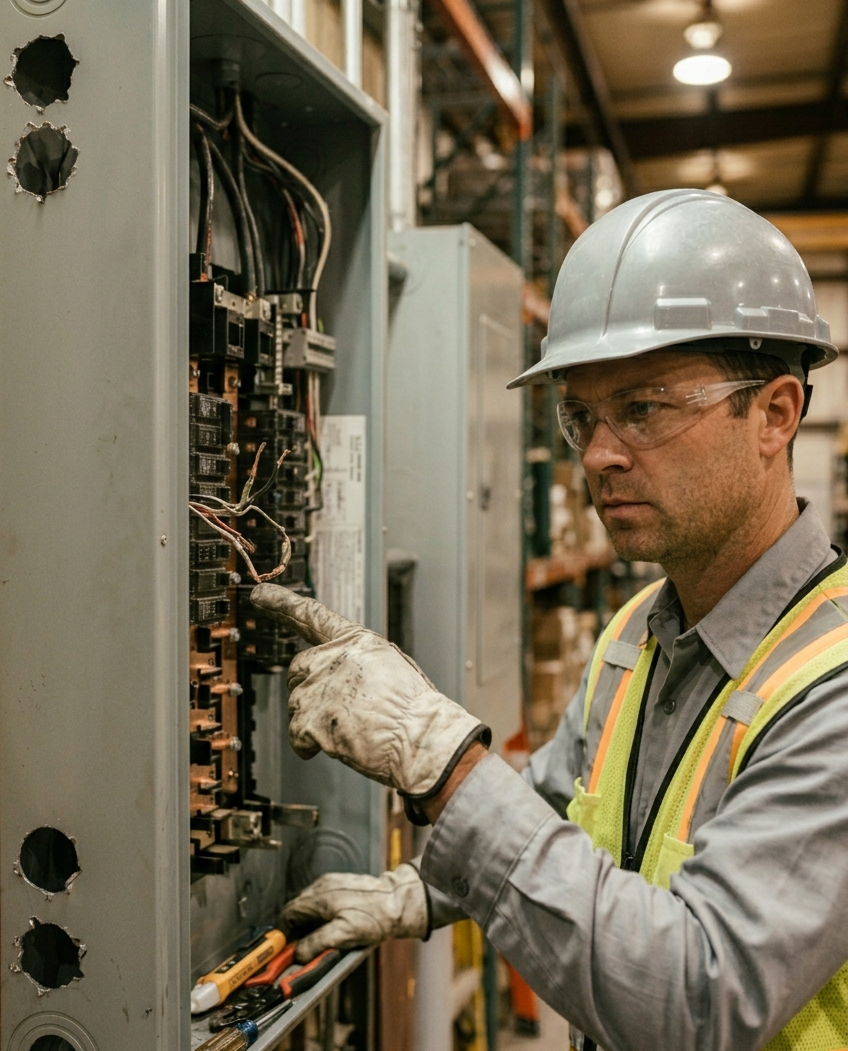
A damaged or missing cover on an outlet, junction box or breaker panel, an open knockout, or an empty breaker space can look like a small maintenance item. A knockout is a pre-formed circular section of an enclosure that can be removed so conduit or cable can enter. If it is removed and nothing is installed, the opening is left open. Each of these conditions is a hazard to report, because an opening gives people, tools and debris a path toward energized parts.
Electrical boxes and panels contain energized components that can cause severe injury or death on contact. A metal tool or piece of conduit can slip and fall into an open panel. A wire draped over a box edge can shift and touch energized parts through an open knockout. A conductive fastener dropped near an open enclosure can bridge a live terminal. These events happen without anyone intending to reach into the panel.
Common Hazards Caused by Unsealed Electrical Panel Openings
Contact With Energized Parts
Moisture & Corrosion
Combustible Debris
Pests & Animals
Examples for Discussion: Open Electrical Enclosures
These examples are for discussion. They show how open enclosure conditions can lead to injury or equipment problems. Important: an enclosure can look normal and operate normally and still have an exposed opening.
What Every Worker Must Know and Do About Open Electrical Enclosures
The most important rule: If you see an open hole, missing cover, open knockout or empty breaker space in a panel or enclosure, do not try to close or repair it yourself unless your employer has authorized you and you have the training and demonstrated skills for that equipment. Report it to your supervisor, safety representative or a qualified person so it can be corrected.
Electrical Panel Safety: Open Holes and Enclosure Inspection
- During your pre-task walkthrough, look for open knockouts, missing covers, missing filler or blank plates, damaged covers and enclosures that do not close properly.
- Report what you find to your supervisor or safety representative. Say where it is and what you saw.
- If your employer directs it, keep other workers away from the area with barricades or warning tape until the repair is made.
- Pay extra attention in areas with moisture, dust, debris or heavy jobsite activity.
- Keep tools, fasteners and wire scraps away from open enclosures.
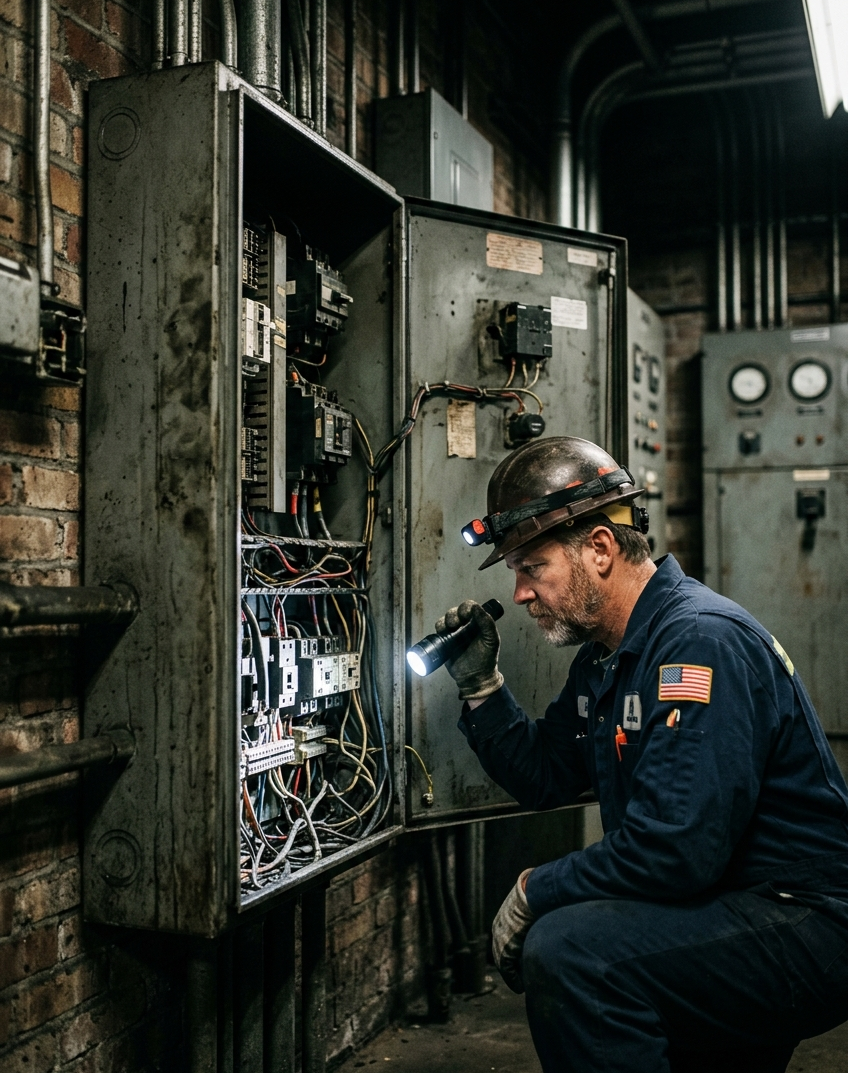
Electrical Panel Safety: Never Leave Open Knockouts or Enclosures
- Do not close an opening, install a filler plate or replace a cover in an energized panel unless your employer has authorized you and you have the training and demonstrated skills for that equipment.
- Do not use tape, cardboard, plastic or other improvised materials as a cover. They are not made for this use.
- Do not assume an open enclosure is safe because the equipment is still working.
- Do not delay reporting an open enclosure because it looks minor. Conditions can change on a busy jobsite.
Before you leave today's safety meeting: Please sign the sign-in form on the back of the printed handout. The form records attendance only, not qualification or completion of required training. Keep the completed record with your site's training files.
OSHA Requirements for Unused Openings in Electrical Enclosures
OSHA requires unused openings in cabinets, boxes and fittings to be effectively closed: 1910.305(b)(1)(ii) in general industry and 1926.405(b)(1) in construction. Both rules also require openings where conductors enter to be effectively closed. Related rules cover pull boxes, junction boxes and fittings, which must have covers (1910.305(b)(2)(i); 1926.405(b)(2)), and outlet boxes, which need a cover, faceplate or fixture canopy in completed installations under 1910.305(b)(2)(i) and in energized installations under 1926.405(b)(2). Live parts at 50 volts or more must be guarded against accidental contact (1910.303(g)(2); 1926.403(i)(2)).
The National Electrical Code and other codes may also apply to your equipment. Ask your employer which requirements apply. This talk helps workers recognize and report open enclosures. It does not replace required training.
Explore Related Electrical Safety Toolbox Talks
Download This Free Electrical Panel Safety Toolbox Talk PDF
Download this discussion aid and attendance sign-in form. Review the actual panels and boxes at your site with the crew. The form records attendance, not qualification or completion of required training. No registration is required.
General safety information only. This material does not replace required training, a site-specific hazard assessment, or professional safety advice. Before using it, verify current requirements with OSHA (osha.gov) and your employer. Follow applicable regulations, equipment manufacturers’ instructions, and your employer’s safety procedures.